
Overview
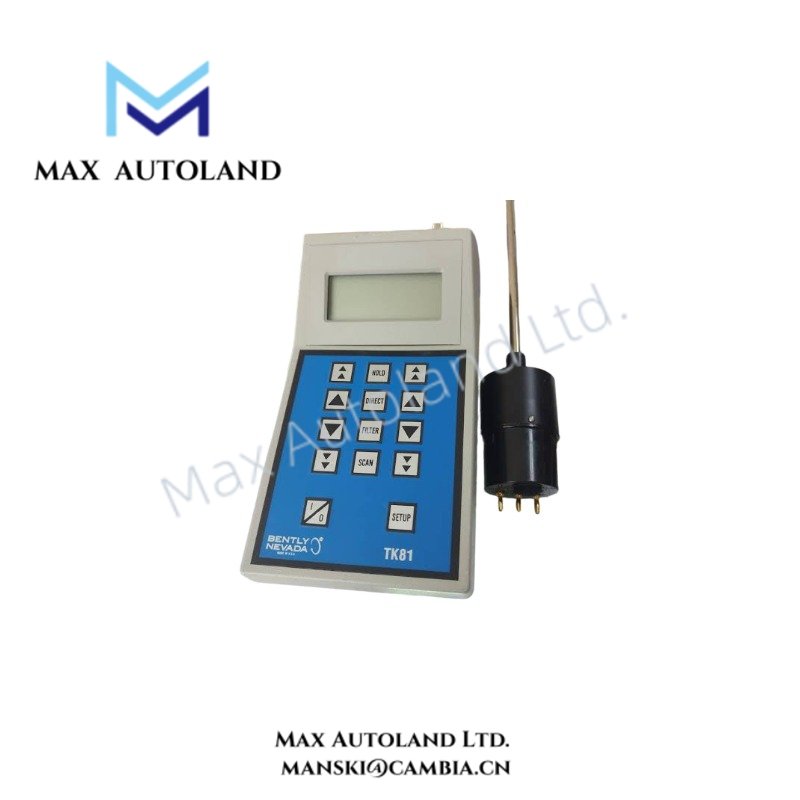
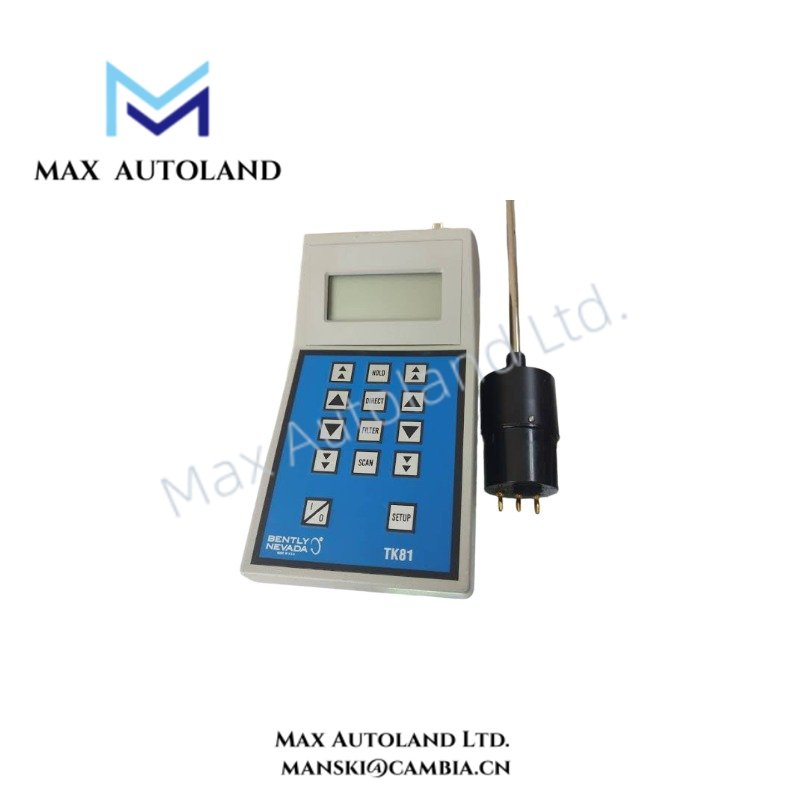
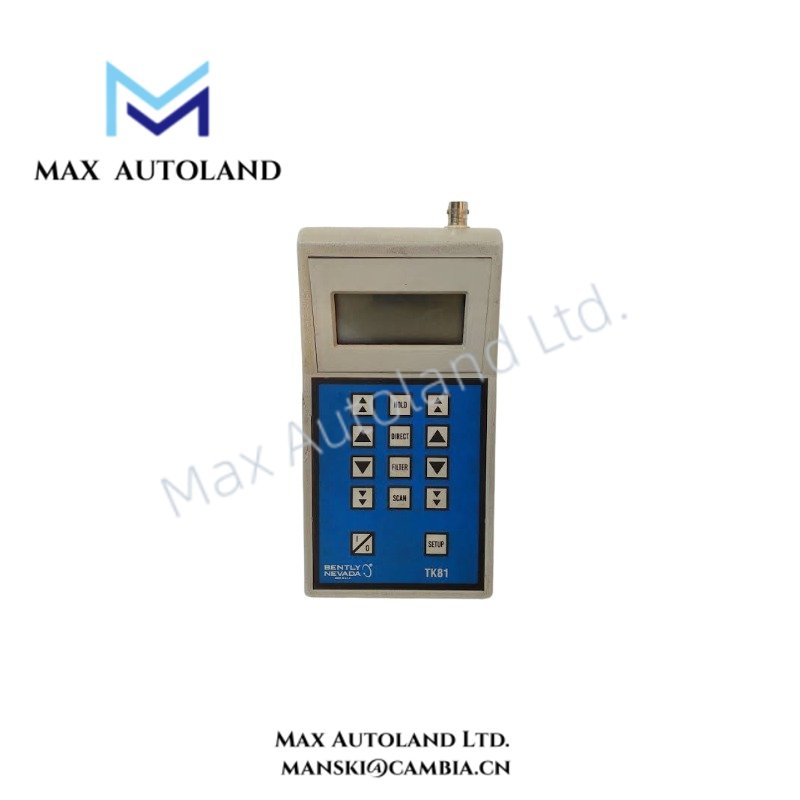
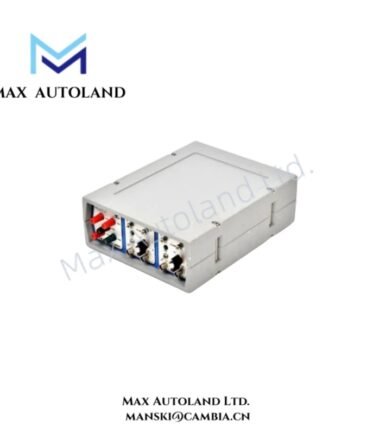
The Bently Nevada 80466-02, also cataloged as the TK81 Tunable Filter and Vibration Meter, operates as a portable measurement device for vibration signal analysis and frequency isolation in rotating machinery diagnostic tasks.
Hardware Specifications
| Parameter | Specification |
|---|---|
| Model | 80466-02 (TK81) |
| Brand | Bently Nevada |
| Product Type | Portable Tunable Filter and Vibration Meter |
| Origin | USA |
| Weight | 316 g |
| Dimensions | Height: 191 mm; Width: 102 mm; Depth: 58 mm |
| Operating Temp | 0 deg C to +40 deg C |
| Storage Temp | -20 deg C to +70 deg C |
| Relative Humidity | Up to 90% non-condensing |
| Power Consumption | One 9 VDC alkaline battery; approximately 20 hours operating life |
| Input Signals | Displacement, velocity, or acceleration transducer signals |
| Maximum Input | 10 V peak-to-peak |
| Input Impedance | 95 kohm |
| Scale Factor | Selectable from 5 to 9999 mV per engineering unit |
| Frequency Response | 1.66 Hz to 1666 Hz (100 to 100000 RPM) |
| Integration Function | Single integration for frequencies above 10 Hz (600 RPM) |
| Filter Type | Digital tunable filter with analog filter equivalent Q of 11 |
| Display | 4-line by 16-character LCD |
| Measurement Units | Metric or English units; peak-to-peak, zero-to-peak, or RMS display modes |
Rotor Dynamics Signal Processing
The Bently Nevada 80466-02 TK81 processes vibration inputs from displacement, velocity, and acceleration transducers without supplying sensor excitation power. The instrument applies selectable filtering to isolate individual frequency components within the 1.66 Hz to 1666 Hz measurement range.
Furthermore, the tunable filter function supports rotor dynamics evaluation by separating vibration sources associated with unbalance, misalignment, looseness, and bearing condition changes. The adjustable scale factor allows direct conversion between electrical input signals and engineering vibration units.
For Bently Nevada mechanical monitoring systems, vibration signal evaluation commonly requires accurate eddy-current probe scaling and gap voltage validation. The TK81 can support diagnostic workflows where technicians verify vibration amplitudes and confirm signal behavior before detailed machinery analysis.
Frequently Asked Questions
Q: Does the Bently Nevada 80466-02 provide power for connected vibration transducers?
A: No. The TK81 accepts external displacement, velocity, or acceleration signals but does not provide excitation power for connected transducers.
Q: What vibration signal formats can the TK81 display?
A: The device displays vibration measurements in peak-to-peak, zero-to-peak, or RMS formats with selectable Metric or English engineering units.
Q: Can the TK81 perform frequency-specific vibration analysis?
A: Yes. The digital tunable filter allows operators to isolate vibration frequencies from 1.66 Hz to 1666 Hz for diagnostic evaluation.
Field Installation Guidelines
- Connect the vibration signal input using shielded instrumentation cable to minimize electrical interference.
- Ground cable shields according to the site instrumentation grounding practice and avoid creating multiple ground paths.
- Verify the connected transducer output range before applying measurement functions.
- Confirm correct engineering unit scaling before recording vibration values.
- Keep signal cables separated from high-current power conductors to reduce electromagnetic coupling.
- Inspect connectors and cable insulation before field measurements.
- Store the instrument within the specified environmental limits when it is not in operation.




Reviews
There are no reviews yet.