
Rockwell Automation Unveils FactoryTalk Conductor to Advance AI-Driven Industrial Automation
Introduction
Rockwell Automation has introduced FactoryTalk Conductor, an AI-native orchestration platform for industrial automation. The new software aims to coordinate artificial intelligence (AI) agents, engineering tools, data, and workflows across the automation lifecycle.The company announced the platform on October 21, 2026. It will make its public debut at Automation Fair 2026 in Boston. Rockwell Automation expects commercial availability in the first quarter of 2027.FactoryTalk Conductor targets manufacturers seeking to move beyond isolated AI applications. Instead, it connects multiple software environments to support coordinated engineering activities. As a result, industrial teams can explore more integrated approaches to system design, simulation, testing, and maintenance.How FactoryTalk Conductor Supports Industrial AI
Manufacturers increasingly use AI to improve engineering productivity and operational decision-making. However, separate AI assistants often handle individual tasks without coordinating broader workflows.FactoryTalk Conductor addresses this challenge through AI orchestration. Users can describe engineering tasks in natural language, while the platform connects relevant software tools, AI capabilities, and workflows.Moreover, this approach allows multiple AI agents to contribute to complex, multi-step activities. Engineers can therefore coordinate tasks across applications instead of managing each operation independently.According to Rockwell Automation's 2026 State of Smart Manufacturing Report, one-third of manufacturing operations already use AI to augment their activities. The company expects adoption to increase as manufacturers expand their AI deployments.Integration with PLC Programming and Engineering Software
FactoryTalk Conductor will initially integrate with four Rockwell Automation software products. These integrations cover several stages of PLC development, virtual commissioning, visualization, and engineering validation.The initial supported applications include:- Studio 5000 Logix Designer: Supports PLC programming and configuration for Logix-based control systems.
- Logix Echo: Provides controller emulation capabilities for virtual testing and validation.
- Emulate3D: Supports digital twin applications and simulation of industrial automation systems.
- FactoryTalk Optix: Provides tools for developing industrial visualization and operator interface applications.
Planned Expansion Across the Automation Lifecycle
Rockwell Automation plans to extend FactoryTalk Conductor across additional software applications. The roadmap includes FactoryTalk Design Studio, FactoryTalk Historian, Plex, and Fiix.These integrations could broaden AI-supported workflows beyond PLC engineering. For example, connections with industrial data platforms and maintenance software could support workflows involving operational information and equipment maintenance.Furthermore, broader software integration could help manufacturers connect engineering processes with production and asset management activities. This approach aligns with the industry's wider move toward connected factory automation and data-driven operations.The company has not yet confirmed a complete integration schedule for the additional products. Therefore, manufacturers should treat these connections as planned developments rather than currently available capabilities.AI Agents, Custom Skills, and Industrial Expertise
FactoryTalk Conductor combines Rockwell Automation-verified AI agents and skills with options for customer-developed capabilities. Organizations can create agents and skills tailored to their engineering standards, business requirements, and operational processes.This flexibility could help manufacturers adapt AI workflows to different control system architectures and production environments. In addition, verified capabilities provide a starting point for organizations that need industrial-specific functionality.Nevertheless, AI adoption in industrial environments requires careful validation. Engineering teams must consider application permissions, change management, cybersecurity, and functional safety requirements before deploying AI-generated actions in production systems.FactoryTalk Conductor's final deployment requirements and available safeguards will depend on the product's released capabilities and configuration options.Enterprise AI Governance and Language Model Flexibility
Industrial organizations often face strict requirements for data governance, cybersecurity, and technology management. FactoryTalk Conductor aims to accommodate different enterprise AI strategies through flexible language model options.According to the announcement, customers can use AI services hosted through FactoryTalk Hub or connect their preferred large language models and small language models. The platform also supports locally hosted open-weight models.Local model deployment may help some organizations manage data boundaries and reduce recurring token consumption costs. However, actual savings depend on hardware, infrastructure, model performance, and operating requirements.Consequently, manufacturers should assess model selection, access controls, data handling, and ongoing operating costs before choosing a deployment architecture.Key Benefits for PLC, DCS, and Factory Automation
FactoryTalk Conductor focuses on coordinating AI capabilities across industrial software rather than providing another standalone assistant. Its proposed benefits extend across several engineering and automation activities.1. More coordinated engineering workflowsThe platform connects supported applications to help teams organize design, development, simulation, and verification tasks.2. Reduced software workflow complexityAI orchestration may simplify multi-step activities that involve several engineering tools. As a result, engineers could spend less time coordinating separate applications manually.3. Flexible enterprise AI deploymentSupport for different language models gives organizations more options when aligning AI services with internal technology policies.4. Reusable industrial AI capabilitiesRockwell Automation-verified agents and customer-created skills can support repeatable workflows tailored to specific engineering requirements.5. Broader lifecycle integrationPlanned integrations could eventually connect PLC engineering, industrial data, production software, and maintenance processes within a more coordinated environment.These benefits describe the platform's intended direction. Actual productivity improvements will depend on implementation quality, supported workflows, system compatibility, and the accuracy of AI-generated results.FactoryTalk Conductor and the Future of Industrial Control Systems
AI orchestration represents a developing approach to industrial software integration. Traditional PLC and DCS architectures execute control logic through established engineering and runtime mechanisms. AI orchestration instead focuses on coordinating higher-level tasks across software tools, data sources, and engineering processes.These technologies can complement each other, but they serve different functions. FactoryTalk Conductor should not be confused with a PLC runtime, a DCS controller, or a replacement for established industrial control systems.For industrial users, the main opportunity lies in connecting engineering expertise with AI-assisted workflows. Nevertheless, manufacturers must preserve established validation procedures and retain appropriate human oversight, especially when changes affect live production or safety-related systems.As the platform develops, its practical value will depend on integration depth, governance controls, engineering accuracy, and support for real industrial use cases.Automation Fair 2026: First Public Demonstrations
Rockwell Automation plans to demonstrate FactoryTalk Conductor at Automation Fair 2026 in Boston. Attendees will be able to explore the platform through several exhibition experiences and dedicated technical sessions.The demonstrations will provide an opportunity to examine the platform's proposed role in AI-assisted industrial engineering. They may also help manufacturers understand how orchestration could fit into existing automation software environments.Commercial availability is expected in the first quarter of 2027. Until then, manufacturers should monitor official product announcements for confirmed specifications, licensing details, supported integrations, and deployment requirements.Frequently Asked Questions
What is FactoryTalk Conductor?FactoryTalk Conductor is an AI-native orchestration platform designed to coordinate AI agents, skills, software applications, and workflows across industrial engineering activities.How does FactoryTalk Conductor differ from a traditional AI copilot?A conventional AI copilot typically assists with individual tasks. FactoryTalk Conductor aims to coordinate multiple agents and software tools across broader, multi-step engineering workflows.Which Rockwell Automation products will it initially support?The initial integrations include Studio 5000 Logix Designer, Logix Echo, Emulate3D, and FactoryTalk Optix.Will FactoryTalk Conductor support other industrial software applications?Rockwell Automation plans to add FactoryTalk Design Studio, FactoryTalk Historian, Plex, and Fiix. The company has not confirmed a complete rollout schedule for these integrations.Can manufacturers create their own AI agents?Yes. The announced platform supports customer-created agents and skills alongside Rockwell Automation-verified capabilities.When will FactoryTalk Conductor become commercially available?Rockwell Automation expects commercial availability in the first quarter of 2027, following its public debut at Automation Fair 2026.Conclusion
FactoryTalk Conductor marks Rockwell Automation's move toward coordinated AI workflows across industrial engineering software. By connecting AI agents with PLC programming, simulation, visualization, and planned data integrations, the platform aims to support more integrated automation processes.Its success will depend on practical engineering capabilities, enterprise governance, and compatibility with existing industrial environments. For manufacturers exploring AI adoption, the platform offers a development to watch as industrial automation moves toward more connected and coordinated engineering workflows.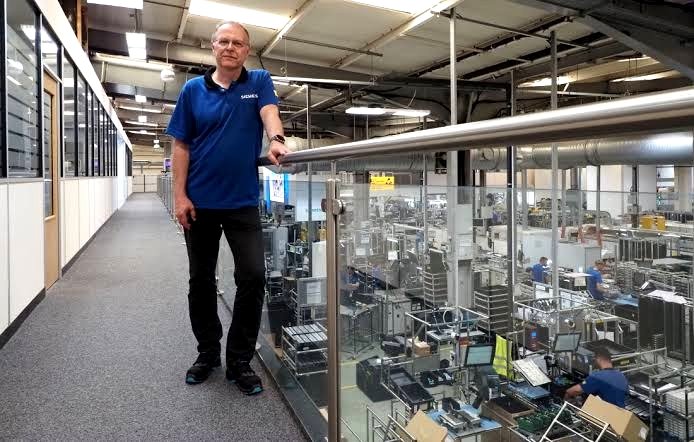
Siemens Targets 80% Factory Automation Through Industrial AI
AI Could Transform Industrial Automation
Siemens plans to increase factory automation to 70%–80% by applying artificial intelligence (AI) across manufacturing operations. The company currently estimates that automation covers approximately 30%–40% of factory production work. Cedrik Neike, a member of the Siemens Managing Board, believes AI can help close this gap. Moreover, the strategy could strengthen manufacturing competitiveness in Germany and other high-wage economies.The initiative combines industrial automation hardware, software, digital twins, and AI models. Together, these technologies aim to improve production efficiency while helping manufacturers maintain local operations.
Industrial Automation Faces Growing Productivity Pressure
Manufacturers in high-wage countries face rising labor costs and increasing international competition. Cedrik Neike estimates that factories must improve productivity by 7%–9% annually to remain competitive. However, conventional automation alone may not deliver these gains consistently across complex production environments.Therefore, Siemens sees AI as a way to accelerate factory modernization. Manufacturers can use intelligent control systems to optimize production sequences, reduce process interruptions, and improve resource utilization. In addition, AI-assisted analysis can help engineers identify bottlenecks and evaluate potential process improvements.For industrial facilities using PLC and DCS platforms, these developments could expand the role of data-driven optimization. Nevertheless, the actual benefits will depend on production requirements, equipment compatibility, and implementation quality.Digital Twins Support AI-Driven Factory Automation
Siemens and Nvidia are developing technologies that combine digital twins with AI models. A digital twin creates a virtual representation of a physical factory, production line, or industrial process. Engineers can use this virtual environment to examine operating conditions and test proposed changes before implementation.The approach reduces the need to experiment directly on production equipment. For example, engineers can simulate workflow adjustments, evaluate equipment interactions, and identify potential production constraints. They can then assess the results before introducing validated changes to the physical facility.Siemens contributes industrial software, automation equipment, and manufacturing data. Nvidia provides computing infrastructure, simulation technologies, and AI capabilities. Their collaboration focuses on physical AI, which enables AI systems to understand and interact with real-world environments.This approach could support more flexible factory automation. However, manufacturers still need accurate models, reliable operational data, and suitable engineering validation. AI recommendations must also comply with established machine safety requirements and industrial control procedures.PLC and DCS Systems in the Physical AI Era
The expansion of AI does not eliminate the need for established industrial control systems. PLCs continue to execute machine-level control logic, while DCS platforms coordinate processes across larger industrial installations. Both remain important components of modern manufacturing infrastructure.AI can complement these systems by analyzing operational data and identifying opportunities for improvement. For instance, manufacturers may combine historical production records, equipment condition data, and simulation results to refine operating strategies.However, engineers must distinguish between optimization functions and safety-critical control functions. AI-generated recommendations should not bypass validated control logic, protective interlocks, or established safety procedures. Instead, manufacturers should integrate AI through carefully designed interfaces and appropriate engineering reviews.Consequently, the future of industrial automation will likely combine conventional control systems with AI-based decision support. This model allows manufacturers to explore new capabilities without abandoning proven control architectures.Siemens Erlangen Campus: A Manufacturing Investment Through 2030
Siemens is investing €500 million to expand its Erlangen site by 2030. The development includes a technology campus, an innovation center, and additional production capacity. The company plans to strengthen its position in power electronics while expanding its AI-driven manufacturing capabilities.The existing Erlangen facility also provides a practical environment for testing digital manufacturing technologies. Siemens reports that AI, digital twins, and robotics have contributed to a 69% productivity increase and a 42% reduction in energy consumption.These figures illustrate the potential impact of coordinated digitalization. However, manufacturers should evaluate such results against their own production conditions, baseline measurements, and investment requirements.Siemens also reports more than 100 AI applications at the site. These applications demonstrate how manufacturers can introduce AI across multiple operational areas rather than treating it as a single automation project.Power Electronics and Energy Transition Manufacturing
Power electronics play an important role in electrification, renewable energy integration, and modern power conversion systems. Siemens intends to expand its manufacturing capabilities in this area through its Erlangen investment.The initiative also connects factory automation with broader industrial energy objectives. More efficient production processes can help manufacturers manage energy consumption while increasing output. In addition, digital twins can help engineers evaluate production changes before committing resources to physical modifications.For manufacturers supplying electrical infrastructure and energy technology, these capabilities may support more responsive production planning. Nevertheless, output quality, product traceability, and process stability remain important performance requirements.Automation Targets Raise Questions About Manufacturing Jobs
Siemens' automation strategy also raises questions about employment. In March 2025, the company announced plans to cut 5,600 jobs in its factory automation business by late 2027. The announcement included approximately 2,600 positions in Germany.This context highlights a central challenge for industrial manufacturers. Automation can help retain production in high-cost economies, but it can also reduce demand for certain tasks. The overall employment impact depends on investment decisions, production growth, workforce skills, and the creation of new technical roles.Therefore, companies pursuing higher automation levels must consider workforce development alongside technology deployment. Training in industrial software, robotics, data analysis, and AI integration could help employees adapt to changing production requirements.Labor representatives will likely assess Siemens' 80% automation target through its practical effects on staffing, job quality, and long-term manufacturing investment.The Global Race for Physical AI
Siemens and Nvidia are not alone in pursuing AI technologies for physical operations. Robotics developers are also exploring AI models that help machines perform tasks in changing environments. These developments include synthetic training data, spatial sensing, and foundation models for robotic manipulation.Synthetic data can help developers generate training scenarios without collecting every example from physical equipment. Meanwhile, spatial sensors provide information about surrounding objects and environmental conditions. Foundation models can help robots interpret tasks and coordinate movements.These technologies may eventually support more adaptable industrial robots and automated production lines. However, practical deployment still requires appropriate sensing, motion control, system integration, and safety validation.For industrial automation suppliers, the wider trend creates opportunities across control hardware, industrial networking, sensors, simulation software, and intelligent robotics. Manufacturers will need to assess how these technologies fit existing PLC, DCS, and supervisory control architectures.What Siemens' 80% Automation Goal Means for Manufacturers
Siemens' target reflects a broader shift from conventional automation toward AI-assisted industrial operations. Digital twins can help engineers test changes, while AI models can support analysis and process optimization. Meanwhile, established PLC and DCS platforms will continue to manage deterministic control and essential process functions.However, a higher automation percentage does not automatically guarantee better productivity. Manufacturers must also consider capital costs, equipment integration, cybersecurity, workforce training, and measurable operational results.The most practical strategy is to introduce AI where it addresses clearly defined production problems. Companies can begin with simulation, predictive analysis, and workflow optimization before expanding into more complex applications.Ultimately, Siemens' Erlangen project offers a useful example of how industrial automation and physical AI may develop together. Its long-term impact will depend on whether manufacturers can translate these technologies into measurable productivity gains while maintaining safe operations and sustainable employment.
Capital Machine Acquires KC Robotics to Expand Industrial Automation Capabilities
Capital Machine Expands Its Industrial Automation Business
Capital Machine has acquired KC Robotics, an industrial robotic systems integrator based in West Chester, Ohio. The acquisition expands Capital Machine’s industrial automation capabilities and strengthens its position in engineered manufacturing systems. The companies have not disclosed the financial terms.This transaction marks Capital Machine’s first add-on acquisition since partnering with Rotunda Capital Partners in March 2025. Moreover, it supports a broader strategy to deliver complete automation solutions. Manufacturers can combine machinery, engineering, system integration, installation and ongoing technical support through one supplier.KC Robotics Brings More Than 35 Years of Robotics Expertise
KC Robotics has over 35 years of experience designing and integrating custom robotic automation systems. The company serves manufacturers across North America with solutions for welding, cutting, finishing, material handling, machine tending, assembly and machine vision.Its in-house capabilities include engineering, fabrication and robot programming. In addition, KC Robotics holds integration credentials from major industrial automation suppliers, including FANUC, ABB, Yaskawa Motoman, KUKA, Fronius, ESAB and Miller. These capabilities support projects that require coordinated robotics, production equipment and application-specific engineering.Integrated Automation Connects Machinery and Control Systems
Capital Machine distributes and services metal fabrication equipment, including press brakes, metal cutting machinery and robotic welding systems. The company operates showrooms in Tampa, Atlanta, Dallas, Indianapolis and Harrisburg. Its field service network also covers 22 states.By integrating KC Robotics, Capital Machine can address more stages of an automation project. Customers can work with one provider to define requirements, select equipment, engineer robotic cells and coordinate installation.This approach can reduce the coordination burden associated with separate equipment suppliers and system integrators. Furthermore, integrated projects can align robot programming, machine interfaces, production processes and operator requirements more effectively. PLC-based control systems may also form part of these projects, depending on each application's technical scope.
Capital Machine Targets Growing Factory Automation Needs
Manufacturers increasingly seek automation solutions that extend beyond individual machines. They need systems that support production efficiency, consistent processes and changing manufacturing requirements.Dan DeBickero, CEO of Capital Machine, highlighted this shift in customer demand. He explained that KC Robotics brings the engineering expertise needed to design and deliver complete automation systems. Meanwhile, Capital Machine contributes its equipment portfolio and aftermarket service capabilities.Together, the companies aim to provide a more coordinated route from equipment selection to automation implementation. As a result, manufacturers can access machinery, robotic integration and ongoing support through a broader service offering.KC Robotics Retains Its Brand and Existing Team
KC Robotics will continue operating under its current name within Capital Machine. Kyle Carrier will remain in leadership, and customers can continue working with their existing engineering and project management teams.In addition, KC Robotics customers gain access to Capital Machine’s wider equipment range and aftermarket service network. This structure preserves established customer relationships while expanding the resources available for future projects.Kyle Carrier, CEO of KC Robotics, said the combination would help the company reach more manufacturers. He also emphasized the value of Capital Machine’s service network and broader business resources. Therefore, the acquisition combines KC Robotics’ specialist integration expertise with Capital Machine’s established machinery business.What the Acquisition Means for Industrial Automation
Capital Machine has supplied and serviced metal fabrication machinery since 1984. Its portfolio includes press brakes, metal cutting equipment and robotic welding systems. The acquisition adds further engineering and robotic integration capabilities to this established business.For manufacturers, the combined offering could simplify the delivery of factory automation projects. However, the technical benefits will depend on each project's requirements, system design and implementation.The acquisition also reflects a wider industrial automation trend. Equipment suppliers increasingly combine machinery, robotics, control systems and lifecycle services to meet manufacturers' project needs. For facilities planning new production lines or upgrading existing equipment, integrated engineering support can help coordinate multiple technologies within one manufacturing environment.As industrial automation requirements continue to evolve, the combination positions Capital Machine and KC Robotics to pursue projects that require both fabrication equipment and custom robotic systems.
Yorkshire Engineering Firm Introduces Robotics Rental for Industrial Automation Trials
Robotics rental targets factory automation investment uncertainty
Yorkshire-based Total Automated Solutions (TAS) has launched a robotics Proof-of-Concept Rental Service. The service helps manufacturers test robotic automation before making major capital investments.TAS operates from Tockwith, between York and Wetherby. The company provides industrial automation, electrical engineering, control systems, and systems integration services across the UK.For many manufacturers, the technical feasibility of robotics does not guarantee a strong business case. Production teams must also verify productivity, quality, safety, labor requirements, and operating costs.The new rental model addresses this evaluation challenge. Manufacturers can test a configured robotic system under real production conditions before committing to permanent deployment.Industrial automation trials use real production conditions
Customers can typically rent a robotic solution for two to six months. TAS can install the system at the customer's facility or test it within its own workshop.This approach gives engineering teams access to practical production data. Moreover, teams can evaluate cycle times, product handling, process consistency, and operator interaction.TAS engineers assess the application before configuring the robotic system. They can also program the robot and integrate suitable grippers, guarding, and safety systems.As a result, manufacturers can evaluate the complete automation concept rather than testing the robot alone.Robotics supports multiple factory automation applications
The rental service targets repetitive and labor-intensive production processes. Potential applications include:- Repetitive product handling
- Pick-and-place operations
- Machine loading and unloading
- Packing and palletizing
- Production process support
- Ergonomically demanding tasks
- Applications involving workplace safety risks
- Production bottlenecks
PLC and control systems remain important integration points
A robotic cell rarely operates as an isolated machine. In many industrial automation projects, the robot interacts with PLC control systems, machine interfaces, safety equipment, and production equipment.The PLC may coordinate machine states, interlocks, sensors, and robot signals. Industrial communications can also connect robotic equipment with existing control architectures.For larger production systems, SCADA platforms can provide additional process monitoring and production data. DCS platforms may also interact with robotic equipment in process industries, depending on the application.Therefore, a proof-of-concept should consider the complete control architecture. Testing only the robot's movement may overlook important integration constraints.Safety engineering must accompany robotics deployment
Industrial robot trials also require appropriate attention to machine safety. Guarding, safety devices, access control, and emergency-stop functions can affect the final cell design.The exact safety architecture depends on the application, equipment, and site requirements. Manufacturers should therefore assess the complete workcell rather than treating the robot as a standalone device.This consideration becomes particularly important when robots operate near production personnel. A rental trial can reveal practical issues that may not appear during an initial engineering assessment.Proof-of-concept data can support capital investment decisions
Kevin Chapman, Owner and Managing Director responsible for Robotics Rental at TAS, said manufacturers often need greater certainty before investing in robotics.A concept can look technically suitable during an initial assessment. However, production data provides a stronger basis for evaluating the proposed solution.The trial therefore creates an opportunity to measure actual results. Manufacturers can examine productivity, quality, workforce deployment, and process compatibility.At the end of the rental period, customers can choose their next step. They may purchase the system, develop a permanent robotic cell, or reconsider the application.Robotics rental may benefit smaller manufacturers
Small and medium-sized manufacturers often face tighter capital budgets than large industrial organizations. Consequently, a rental-based evaluation can reduce the commitment required during the initial assessment stage.The model also gives production and engineering teams time to understand the technology. They can identify process changes before implementing a permanent automation solution.From an industrial automation perspective, this staged approach can also expose integration requirements earlier. Teams can determine how robotics will interact with existing PLCs, control systems, machines, and operators.Yorkshire strengthens its industrial automation ecosystem
TAS's new service adds another robotics capability to Yorkshire's manufacturing and engineering landscape. The region has a broad industrial base covering manufacturing, engineering, automation, and related technologies.Moreover, robotics adoption increasingly connects with wider factory automation strategies. Manufacturers may combine robots with PLC systems, machine vision, industrial networks, SCADA, and data platforms.The practical challenge remains application engineering. Selecting a robot represents only one part of a successful automation project.Existing automation services support permanent deployment
The robotics rental service complements TAS's existing engineering capabilities. These include control panel and MCC manufacture, PLC and SCADA software, electrical installation, industrial communications, and systems integration.This combination can support a transition from an initial proof of concept to a permanent production installation.In practical projects, that transition requires more than demonstrating robot motion. Engineers must also address electrical interfaces, control logic, safety functions, communications, mechanical integration, and production requirements.Application scenario: testing machine loading automation
Consider a manufacturer that manually loads components into a production machine. The company may understand the potential value of robotic handling but lack sufficient production data.A rental cell could reproduce the loading process within the actual production environment. Engineers could then monitor the robot's interaction with the machine and surrounding equipment.The manufacturer could compare the trial against its existing process. Relevant measurements might include cycle performance, operator involvement, production flow, and process consistency.If the results support further investment, the company could then develop a permanent factory automation solution based on measured requirements.Industry perspective: automation evaluation is becoming more data-driven
Robotics projects increasingly require both engineering validation and commercial justification. A robot can perform a task successfully while still failing to deliver the expected production value.Therefore, proof-of-concept testing has an important role in industrial automation planning. It connects technical feasibility with real operating conditions and measurable production results.For manufacturers considering robotics, the most useful trial is not necessarily the most sophisticated one. Instead, the trial should reproduce the target process accurately and generate meaningful operational data.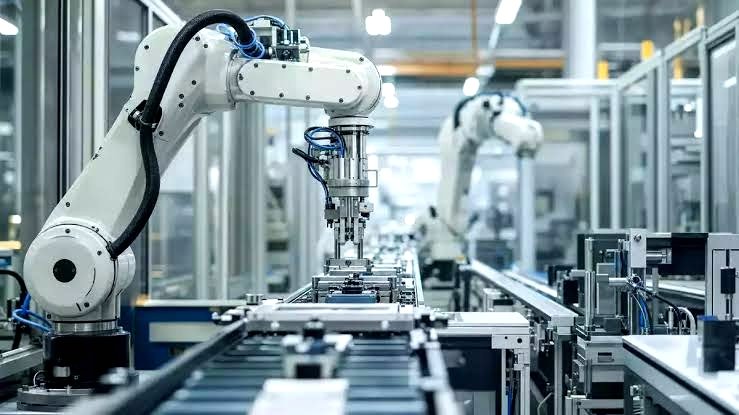
Rockwell Automation Valuation: Can Cash Flow Support Its Industrial Automation Growth?
Rockwell Automation remains a major name in global industrial automation and control systems. Its share price has also delivered a strong multi-year increase.The stock recently traded around US$415.62. That valuation raises an important question about future cash generation.Investors now need to examine whether Rockwell Automation's cash flow can support current market expectations. The company's position across PLC, industrial software, control systems, and factory automation also adds another layer to this discussion.
Rockwell Automation's Strong Share Price Performance
Rockwell Automation has generated a 55.2% share price return over the past three years. That performance has increased expectations for future business growth.However, share price appreciation does not automatically indicate stronger underlying cash generation. Investors therefore need to compare market valuation with operating performance.Rockwell Automation generates revenue from industrial automation hardware and software. Its portfolio includes programmable automation, control platforms, information systems, and factory automation technologies.These businesses serve manufacturers that increasingly connect machines, PLCs, production systems, and industrial software. As a result, automation demand can influence both revenue growth and future cash generation.Free Cash Flow Provides a Different Valuation Perspective
Free cash flow offers another way to examine Rockwell Automation's valuation. The latest twelve-month figure cited in the source stands near US$1.5 billion.A DCF model uses expected future free cash flow to estimate intrinsic business value. Therefore, the assumptions behind future cash generation strongly influence the result.The current DCF analysis still produces a value below the reported US$415.62 share price. This difference suggests that the market already reflects substantial expectations for future growth.However, DCF models remain sensitive to assumptions about revenue, margins, capital spending, and long-term growth. Small changes in these inputs can materially affect the estimated value.Industrial Automation Software Changes the Growth Equation
Rockwell Automation operates in a market that increasingly combines physical control equipment with industrial software.Modern factories connect PLCs, distributed control functions, industrial networks, drives, sensors, manufacturing software, and data platforms. These systems generate large amounts of operational data.Industrial customers increasingly use this data for predictive maintenance, production optimization, cybersecurity, and process improvement. Therefore, software can become an increasingly important part of automation investment.Rockwell Automation's work with Anthropic's Project Glasswing also highlights growing interest in AI-enabled industrial cybersecurity. The source links this work with expectations for stronger demand for secure industrial software.However, future AI-related revenue still depends on commercial adoption and actual customer spending. Market expectations should therefore remain separate from confirmed cash generation.AI and Cybersecurity Add New Opportunities for Control Systems
Industrial cybersecurity has become closely connected with factory automation and control systems.Manufacturers must protect PLCs, industrial networks, engineering workstations, remote-access systems, and production data. Cybersecurity risks can affect both information technology and operational technology environments.AI may help organizations detect abnormal system behavior and respond to emerging cyber threats. However, industrial environments impose stricter requirements than many conventional IT applications.Control-system engineers must consider system availability, deterministic communication, safety requirements, legacy equipment, and operational continuity. These factors can slow technology adoption compared with consumer or general enterprise software.Rockwell Automation's exposure to industrial software therefore provides potential growth opportunities. At the same time, investors must determine how quickly those opportunities can translate into measurable cash flow.PLC and Factory Automation Demand Remains Important
Rockwell Automation's valuation should also be viewed within the broader industrial automation cycle.PLC platforms remain central to discrete manufacturing applications. Engineers use PLCs to coordinate sensors, actuators, motors, drives, robots, and machine-level sequences.At larger production sites, PLC systems often interact with supervisory software, SCADA platforms, manufacturing execution systems, and enterprise applications.This layered architecture creates opportunities for automation suppliers to expand beyond hardware. Software subscriptions, analytics, cybersecurity, and lifecycle services can provide additional revenue streams.Nevertheless, industrial capital expenditure can fluctuate with economic conditions. Manufacturers may postpone automation projects when production demand or investment budgets weaken.DCS, Control Systems, and Software Create Longer-Term Opportunities
The wider automation market also includes DCS platforms, process control, safety systems, and machinery monitoring.These technologies support industries such as energy, chemicals, pharmaceuticals, food processing, and utilities. Their investment cycles often differ from those in discrete manufacturing.Rockwell Automation therefore competes within a broad control-system ecosystem. Customers increasingly expect automation platforms to communicate across production levels.This trend favors integrated architectures that combine control hardware, industrial networking, data management, cybersecurity, and software. However, integration also increases technical complexity and implementation requirements.From an engineering perspective, the strongest automation platforms are not defined only by hardware specifications. Long-term support, system compatibility, engineering tools, cybersecurity, and lifecycle management also influence purchasing decisions.What Could Support the Current Valuation?
The current market valuation appears to depend partly on expectations for continued industrial automation growth.Several factors could influence that outlook. These include factory modernization, industrial software adoption, cybersecurity spending, AI applications, and increasing automation across manufacturing facilities.Rockwell Automation's established position in industrial control and automation gives it exposure to these trends.However, these opportunities do not automatically translate into future free cash flow. Investors still need to monitor revenue growth, operating margins, capital requirements, and actual cash conversion.The difference between an attractive technology narrative and measurable financial performance remains important when assessing valuation.What Industrial Automation Engineers Should Watch
From an engineering perspective, several developments deserve attention.First, manufacturers continue moving from isolated automation islands toward connected production architectures. This trend increases demand for industrial communication and data integration.Second, cybersecurity increasingly affects PLC, DCS, SCADA, and industrial network design. Security requirements now influence system architecture from the initial engineering stage.Third, AI may introduce new functions around predictive maintenance, anomaly detection, engineering assistance, and industrial data analysis.Finally, customers continue seeking longer equipment lifecycles and simpler system integration. Automation suppliers must therefore support both new digital technologies and installed legacy systems.These technical trends could influence future demand. However, the financial impact depends on customer adoption and the supplier's ability to convert demand into sustainable cash flow.Practical Factory Automation Scenario
Consider a large manufacturing facility upgrading an existing production line.Engineers may replace legacy PLC hardware while retaining motors, sensors, drives, and field instrumentation. The new control system can then connect production data with higher-level software.The project may also introduce industrial cybersecurity controls and remote diagnostics. AI-based analytics could later analyze machine and production data.This approach illustrates how automation spending can expand from hardware replacement into software and services. It also explains why industrial automation companies increasingly position themselves as technology platforms rather than hardware suppliers alone.A Balanced View of Rockwell Automation's Valuation
Rockwell Automation sits at the intersection of industrial automation, PLC control, factory software, industrial cybersecurity, and emerging AI applications.Its 55.2% three-year share price return has raised the financial expectations surrounding the company. Meanwhile, the cited US$1.5 billion trailing free cash flow provides an important reference point.The DCF analysis discussed here places estimated intrinsic value below the reported US$415.62 share price. Therefore, the market appears to require substantial future business performance to support the current valuation.At the same time, industrial software, cybersecurity, factory modernization, and AI could create additional long-term opportunities.The key issue is execution. Investors and industry observers should compare future automation demand with actual revenue growth, margins, and free cash generation.For the industrial automation sector, that distinction matters. Technology adoption can create significant opportunities, but financial results ultimately determine how much economic value those opportunities produce.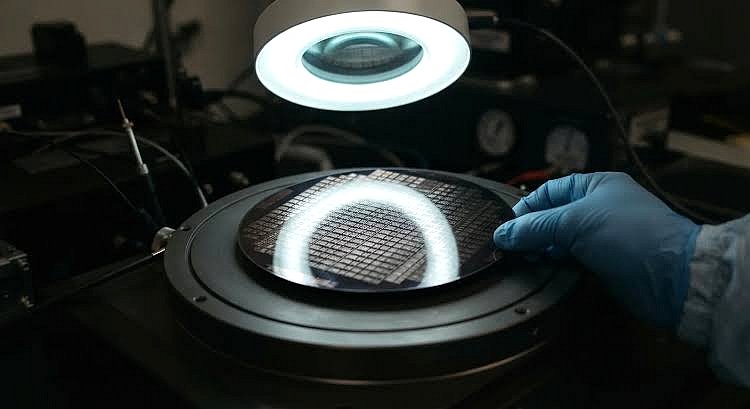
onsemi Embedded Power Platform Targets AI, EV and Industrial Automation Power Challenges
onsemi Introduces a New Power Architecture
onsemi has introduced its Embedded Power Platform (EPP) for next-generation power systems. The architecture targets AI infrastructure, electric vehicles, and industrial automation. (onsemi)The platform addresses a growing engineering problem: delivering more electrical power within smaller physical spaces. It combines semiconductor, electrical, thermal, and mechanical design within one architecture.This approach differs from conventional power electronics development. Engineers often optimize the semiconductor, package, cooling system, and mechanical structure separately. EPP instead applies a co-design strategy from the beginning.Silicon Wafer Becomes Part of the Power Package
The Embedded Power Platform uses the silicon wafer as the foundation of its package architecture. onsemi therefore treats the package as an active part of system performance.The platform can integrate silicon, silicon carbide (SiC), and gallium nitride (GaN) technologies. It can also combine FETs, drivers, controllers, and other power functions within one wafer-level architecture. (onsemi)Moreover, onsemi says the architecture replaces conventional wire-bond connections with wafer-level redistribution layers. This approach can reduce parasitic effects and improve electrical performance. (onsemi)Electrical, Thermal and Mechanical Co-Design
Power system performance depends on more than semiconductor efficiency. Thermal paths, electrical parasitics, mechanical dimensions, and switching behavior also affect the final system.EPP evaluates these factors together rather than sequentially. Therefore, engineers can identify design trade-offs earlier in development.This method can also reduce late-stage mechanical or thermal redesign. For industrial automation engineers, that matters when power electronics must fit inside compact control cabinets or drive assemblies.12-Inch Manufacturing Supports Power Integration
onsemi says EPP uses its existing 12-inch silicon wafer manufacturing capabilities. The company can therefore apply semiconductor manufacturing processes to system-level power integration. (onsemi)The platform also uses semiconductor design tools and simulation capabilities. This creates a common development environment for electrical, thermal, and mechanical analysis.From an engineering perspective, this integration could simplify development between device design and system design. However, actual production results will depend on application requirements, qualification, and system validation.Higher Power Density for AI Infrastructure
AI data centers continue to increase power demand at the rack level. Power conversion hardware must therefore handle higher currents without consuming excessive rack space.onsemi reports that EPP can provide three- to five-times higher power density, depending on the application. The company also reports improved thermal performance and lower electrical losses. (onsemi)In an early solid-state circuit breaker design, onsemi reports a size reduction of about 50%. The company also reports approximately 20% lower operating temperature compared with conventional designs. (onsemi)These characteristics could have implications for AI infrastructure. Smaller power conversion and protection hardware can potentially leave more physical space for computing equipment and cooling infrastructure.Industrial Automation Can Benefit From Compact Power Systems
Industrial automation presents similar power constraints. PLC systems, DCS platforms, industrial robots, servo drives, and motor-control equipment increasingly require compact power electronics.The EPP architecture could support more integrated power conversion within these systems. onsemi specifically identifies industrial automation as one of the platform's target applications. (onsemi)For factory automation, power density also affects cabinet design. Smaller power stages can simplify enclosure layouts and potentially reduce thermal management requirements.However, automation applications require more than high power density. Engineers must also evaluate voltage ratings, isolation, switching behavior, EMC performance, protection functions, environmental conditions, and lifecycle requirements.Potential Impact on PLC and DCS Control Systems
EPP does not replace a PLC or DCS controller. Instead, its potential role sits within the power and protection layers surrounding control systems.A PLC may control a motor drive, power converter, or production machine. The power stage must then convert and regulate electrical energy according to the control command.A more integrated power architecture could reduce the physical footprint of this supporting hardware. Therefore, future factory automation platforms could combine control, sensing, power conversion, and protection within increasingly compact equipment.The same principle applies to DCS-based process plants. Compact power architectures could support distributed control equipment, remote I/O systems, instrumentation power, and industrial networking infrastructure.SiC and GaN Expand the Architecture Options
The ability to combine silicon, SiC, and GaN technologies gives EPP a broader semiconductor foundation. Each technology can address different voltage, frequency, switching, and efficiency requirements.SiC is already widely used in high-power automotive and industrial applications. GaN can support high-frequency power conversion in suitable voltage ranges.The practical benefit comes from selecting the appropriate semiconductor technology for each power stage. EPP provides an architecture that can accommodate multiple technologies rather than forcing every application into one device technology. (onsemi)Subaru Evaluates EPP for Future Electric Vehicles
Subaru Corporation has entered a strategic technology engagement with onsemi to evaluate EPP for future electrified vehicle architectures.The collaboration gives Subaru access to engineering samples, simulation models, and technical expertise. Subaru will use these resources to evaluate power integration and system-level performance. (onsemi)For electric vehicles, onsemi reports up to four-times higher power density and 15% lower power losses in traction inverter applications compared with conventional approaches. (onsemi)These figures represent onsemi's reported performance claims. Engineers should still evaluate them against specific inverter topology, operating voltage, cooling design, switching conditions, and qualification requirements.Faster Development Could Change Power Electronics Engineering
onsemi says EPP can shorten development cycles to as little as four months. The company attributes this potential improvement to integrated simulation, manufacturing, and system-level co-design. (onsemi)This could change how engineering teams approach power electronics projects. Instead of developing electrical, thermal, and mechanical elements independently, teams can evaluate their interaction earlier.In industrial automation projects, this approach could reduce iterations between electrical engineering, mechanical design, and control-system integration.However, the stated development timeline should not be interpreted as a universal project duration. Qualification, certification, customer validation, and production requirements can significantly affect actual schedules.What EPP Means for Factory Automation
Factory automation is moving toward higher machine density and greater electrical efficiency. Servo systems, robotic cells, automated material handling, and industrial drives all increase the demand for compact power electronics.In this environment, power architecture becomes part of the overall automation design. Engineers must consider not only PLC scan time and network performance, but also power conversion efficiency and thermal limits.EPP could support this trend by moving more power functions into a compact semiconductor-based architecture. Its value will depend on how effectively the technology integrates with existing industrial power and control designs.Engineering Perspective: Power Density Is Becoming a System Constraint
From an industrial automation engineering perspective, power density is becoming a system-level design parameter rather than a simple semiconductor specification.A higher-density power stage can reduce cabinet volume. Lower electrical losses can reduce heat generation. Better thermal paths can also influence cooling requirements.However, engineers should avoid evaluating power density in isolation. EMC, insulation, fault protection, serviceability, thermal cycling, and long-term reliability remain important design considerations.The broader significance of EPP therefore lies in its co-design methodology. The architecture attempts to connect semiconductor technology with the complete power system rather than optimizing each layer independently.Application Scenario: AI Data Center Power Protection
An AI data center can use high-voltage distribution followed by multiple conversion stages. Each stage occupies physical space and generates heat.An EPP-based solid-state circuit breaker could potentially reduce the size of power protection hardware. It could also improve thermal management within dense rack environments.The result could be a more compact power distribution architecture. Engineers would still need to validate protection response, fault interruption, thermal behavior, and system coordination.Application Scenario: EV Traction Inverters
A traction inverter converts battery DC power into controlled AC power for the vehicle motor. Its efficiency and thermal performance directly affect the vehicle powertrain.EPP could integrate multiple semiconductor and control functions within a compact architecture. onsemi says this approach can increase inverter power density and reduce power losses. (onsemi)The Subaru collaboration provides an early automotive application for evaluating these system-level benefits. (onsemi)Application Scenario: Industrial Motor Drives
Industrial motor drives represent another potential application. A drive must manage switching devices, gate control, sensing, protection, and thermal dissipation.A more integrated power architecture could reduce the physical size of the power stage. It could also support higher switching frequencies in suitable applications.For PLC-controlled machinery, this could create opportunities for smaller drive cabinets and more compact machine architectures. Actual benefits will depend on motor power, supply voltage, cooling method, and application duty cycle.EPP Sampling Expected During 2026
onsemi expects EPP to begin sampling with strategic customers and ecosystem participants during 2026. The initial focus includes automotive and AI applications. (onsemi)The technology therefore remains at an early stage of commercial deployment. Industrial automation users should distinguish current demonstrations from fully qualified production solutions.As more customer evaluations become available, engineering teams will have better data for comparing EPP with conventional power modules and discrete architectures.Conclusion: Power Architecture Becomes Part of Automation Design
onsemi's Embedded Power Platform represents a shift toward integrated power-system engineering. It combines semiconductor devices, packaging, thermal paths, and electrical design within a common architecture.For AI infrastructure, EVs, and industrial automation, the central objective is similar: deliver more power within less space while controlling heat and electrical losses.The technology does not eliminate conventional engineering requirements. Instead, it provides another architecture for engineers evaluating high-density power conversion and protection.As factory automation becomes more electrified and computationally intensive, power electronics will increasingly influence PLC cabinets, motor drives, robotics, control systems, and machine architecture.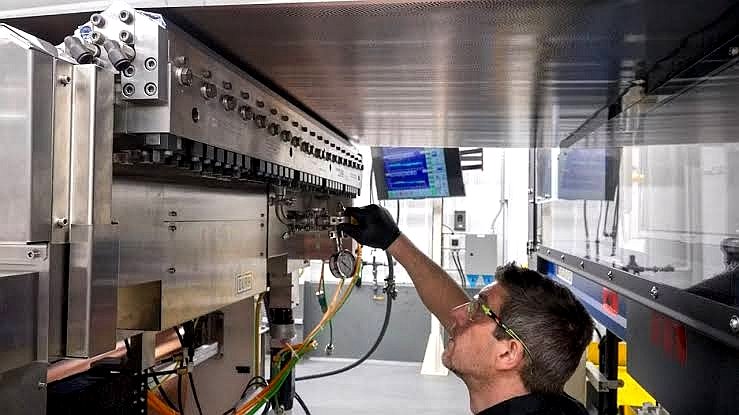
Siemens and Sparepartsnow Expand Refurbished Industrial Automation Access in Europe
Siemens Brings Refurbished Automation Equipment to a Wider Market
Siemens has partnered with Sparepartsnow to expand access to refurbished industrial automation equipment in Europe.The partnership adds manufacturer-refurbished Siemens products to the Sparepartsnow B2B marketplace. The initial portfolio includes drives, controllers, and HMI panels.Siemens performs the refurbishment before the equipment reaches the marketplace. Therefore, customers can source used automation hardware through a channel supported by the original manufacturer.This approach addresses a common issue in factory automation. Many plants still operate control systems that remain technically suitable after years of service.Replacing every installed PLC, drive, or HMI can also require engineering changes. It may affect application software, wiring, commissioning procedures, and spare-part strategies.For these applications, refurbished equipment can provide another lifecycle option.Siemens Links Refurbishment With Industrial Automation Lifecycle Management
The partnership reflects a broader shift toward lifecycle management in industrial automation.Factories often maintain Siemens PLCs, distributed control equipment, drives, operator panels, and other control-system hardware for long periods.However, product availability can become difficult as platforms age. Original production may end before the surrounding machine or process reaches the end of its operational life.Refurbishment can therefore support maintenance teams that need compatible replacement hardware without immediately redesigning an entire control architecture.Siemens describes its refurbished products as previously used automation equipment restored to the original technical specifications and performance characteristics.The distinction matters for engineers. Refurbishment does not mean adding new functions or increasing the original performance.Instead, the objective remains restoring the equipment to its specified operating condition.What Happens During the Siemens Refurbishment Process?
Siemens uses a standardized refurbishment process for qualifying automation products.The process can include technical repair, replacement of worn components, required hardware updates, and required software updates.Siemens also cleans the equipment and restores damaged housing components when necessary.The company then performs functional and quality testing against its specifications and established quality requirements.This process creates an important difference from ordinary used-equipment resale.A conventional used PLC or drive may only receive a basic visual inspection. Manufacturer refurbishment applies a defined technical assessment and testing process.For maintenance departments, that distinction can simplify the evaluation of replacement hardware.Refurbished PLC and Control System Hardware Can Support Existing Plants
The potential value becomes clearer in long-running production facilities.A machine may still depend on an established Siemens PLC platform because its application software already works correctly.Replacing the complete control system could require programming changes, I/O verification, panel modifications, and production downtime.A refurbished compatible controller can provide another option when the installed hardware requires replacement.The same principle applies to HMI panels and industrial drives.For example, a maintenance team may need a replacement drive for an established machine. If the surrounding motor, control logic, and cabinet design remain unchanged, compatible refurbished hardware may reduce the scope of the intervention.Engineers must still verify the exact order number, firmware requirements, electrical ratings, communication interfaces, and application compatibility.Refurbishment does not remove the need for engineering validation.Drives, Controllers, and HMI Panels Form the Initial Portfolio
The initial Siemens portfolio covers selected drives, controllers, and HMI panels.These product categories represent important components in factory automation systems.Drives interact directly with motors and machine mechanics. Controllers execute automation logic and coordinate field-level signals.HMI panels provide the operator interface for machine status, alarms, diagnostics, and process commands.Consequently, the availability of replacement hardware can influence maintenance planning across several layers of a control system.Siemens and Sparepartsnow plan to expand the product range and regional availability over time.Cybersecurity and Compliance Remain Part of the Lifecycle Discussion
Industrial automation refurbishment also raises questions beyond physical condition.Control-system hardware operates within electrical, functional, communication, and cybersecurity environments.Siemens states that its refurbished products retain their original product characteristics. The company also addresses applicable safety, conformity, and cybersecurity requirements from the original market placement.However, plant operators should still evaluate the complete system.A refurbished PLC may be technically functional while the installed firmware remains unsuitable for a newer cybersecurity architecture.Likewise, an older HMI may require compatibility checks with current engineering software.Therefore, maintenance teams should evaluate the replacement part together with the surrounding control system.Refurbishment Can Reduce Pressure on Industrial Spare-Part Strategies
Industrial maintenance teams commonly maintain spare inventory for equipment with long operating histories.This strategy becomes harder when manufacturers discontinue older hardware families.A refurbished marketplace can add another sourcing channel between new production and conventional used equipment.That option can matter for plants operating legacy PLC, DCS, motion-control, or factory-automation systems.The benefit depends on product availability, technical compatibility, testing requirements, and the plant's maintenance policy.Therefore, procurement teams should compare refurbished equipment with new, replacement, and retrofit options for each application.Circularity Is Becoming More Relevant to Factory Automation
The Siemens and Sparepartsnow partnership also reflects a wider interest in circular industrial technology.Industrial automation hardware contains electronic components, metals, plastics, and other resources.Extending equipment use can reduce the need for immediate replacement of complete assemblies.The environmental benefit depends on the actual refurbishment process, transport requirements, replacement components, and additional service life.Therefore, circularity should be assessed across the complete equipment lifecycle rather than through refurbishment alone.For industrial users, lifecycle extension can also support maintenance continuity.Keeping suitable hardware available can help plants avoid unnecessary system changes when existing equipment still meets process requirements.Practical Application: Maintaining a Legacy Siemens Production Line
Consider a production line that uses an established Siemens controller, HMI, and variable-speed drive system.The machine remains mechanically suitable for production. However, one controller fails after years of operation.A complete automation migration could involve hardware replacement, software conversion, cabinet work, testing, and commissioning.A compatible refurbished controller could provide another maintenance route.The engineering team would first confirm the exact order number and hardware configuration.It would then verify firmware, communication interfaces, I/O requirements, and application compatibility.After installation, engineers would perform functional checks before returning the machine to production.This approach does not eliminate modernization planning. Instead, it can provide additional time for a controlled migration strategy.Refurbished Automation Does Not Replace Modernization
Refurbishment and modernization serve different engineering objectives.Refurbishment focuses on extending the useful service life of existing hardware.Modernization usually changes the control architecture, hardware platform, software environment, or communication technology.A plant may therefore use both strategies during different lifecycle stages.For example, a refurbished PLC can maintain production while engineers prepare a larger migration project.This staged approach can help separate immediate maintenance requirements from long-term automation investment.The correct choice depends on equipment condition, production requirements, engineering resources, lifecycle status, and system compatibility.Siemens and Sparepartsnow Could Expand the Secondary Automation Market
The partnership creates a direct connection between OEM refurbishment capability and a specialized B2B marketplace.That model could influence how industrial users source discontinued or previously used automation hardware.The initial European focus also provides a defined starting point for the program.Siemens says the portfolio and geographic availability will expand progressively.From an engineering perspective, the most important factor will be product-level availability.Industrial buyers rarely need refurbishment as an abstract concept. They need a specific controller, drive, HMI, or spare module that matches an installed system.Therefore, searchable part numbers, technical documentation, test information, and compatibility data will remain important to the success of this model.Industry Perspective: Lifecycle Availability Matters as Much as Product Performance
From a maintenance perspective, industrial automation hardware has value beyond its original purchase date.A controller can remain part of a validated machine architecture for many years.When that controller becomes difficult to source, the plant faces a lifecycle-management problem rather than a simple purchasing problem.Manufacturer refurbishment addresses part of this challenge by keeping selected equipment in circulation.At the same time, engineers should continue to assess obsolescence, cybersecurity exposure, software support, and spare-part availability.In practice, the strongest maintenance strategy often combines short-term replacement planning with longer-term modernization planning.What This Means for Industrial Automation Buyers
The Siemens and Sparepartsnow agreement gives European industrial customers another route for sourcing refurbished Siemens automation products.The initial offering covers selected drives, controllers, and HMI panels.Siemens performs the refurbishment and testing before the products enter the marketplace.For plants running established Siemens control systems, this model may support longer equipment lifecycles.However, buyers should verify every replacement against the installed system.Part number, hardware revision, firmware, electrical ratings, communication interfaces, software compatibility, and application requirements all deserve review.As industrial automation moves toward longer and more managed lifecycles, refurbishment may become one component of a broader spare-parts and modernization strategy.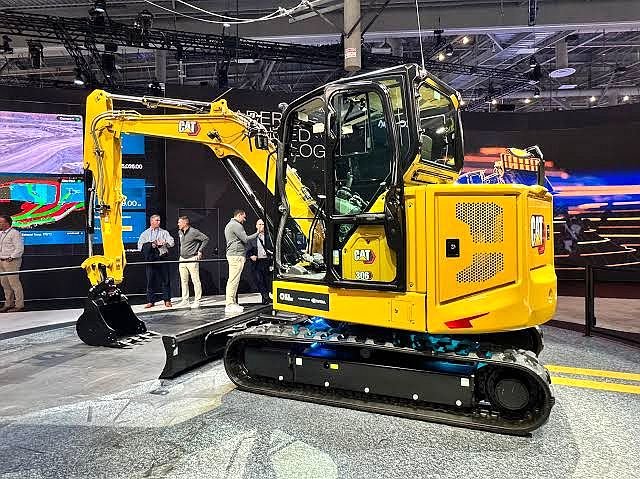
Caterpillar and FieldAI Advance AI-Powered Industrial Automation for Heavy Industry
Caterpillar and FieldAI Combine Physical AI with Industrial Automation
Caterpillar and FieldAI have announced a collaboration focused on AI-powered industrial automation across construction, mining, and manufacturing environments.The partnership combines Caterpillar's engineering knowledge, manufacturing experience, and operational data with FieldAI's physical AI and autonomous robotics technologies.Together, the companies aim to improve productivity, safety, and operational visibility in demanding industrial environments.Moreover, the initiative addresses growing labour shortages and increasing pressure on industrial organisations to improve efficiency.The collaboration also reflects a broader shift toward intelligent industrial automation systems that combine robotics, AI, real-time data, and autonomous decision-making.Physical AI Expands the Scope of Industrial Automation
Traditional industrial automation often relies on PLC, DCS, sensors, and predefined control systems.However, complex industrial sites present challenges that conventional factory automation cannot always address efficiently.Construction sites, mines, and large manufacturing facilities constantly change their operating conditions.Physical AI provides autonomous machines with the ability to perceive their surroundings and respond to changing conditions.FieldAI develops robot-agnostic autonomy technologies for complex physical environments.Therefore, autonomous platforms can potentially support different machines, robotic systems, and industrial applications without requiring identical hardware architectures.This approach could help industrial operators integrate AI capabilities across diverse equipment fleets.Autonomous Inspection Supports Safer Industrial Operations
One early application involves autonomous inspection across industrial sites and facilities.Industrial inspections often require workers to enter difficult or potentially hazardous areas.Autonomous robots can collect operational data while reducing unnecessary human exposure to certain workplace risks.These systems may inspect equipment, infrastructure, production areas, and operational conditions.In addition, AI-powered analysis can help identify abnormal conditions more quickly.For example, autonomous inspection systems could support monitoring of heavy equipment, electrical infrastructure, production machinery, and remote industrial assets.The collected data can then support maintenance planning and operational decision-making.From an industrial automation perspective, autonomous inspection could become an additional data layer above existing PLC and DCS architectures.Digital Twins Create Real-Time Industrial Visibility
Digital twin technology represents another major focus of the Caterpillar and FieldAI collaboration.A digital twin creates a virtual representation of physical equipment, facilities, or complete industrial operations.The system can combine operational data from sensors, machines, control systems, and other connected assets.As a result, engineers can gain a more complete view of industrial processes.For construction and mining operations, digital twins may represent equipment locations, infrastructure conditions, and workflow activities.For manufacturing facilities, digital twins can support production analysis, material flow evaluation, and equipment performance monitoring.Moreover, digital twins can connect operational technology with simulation and AI-driven analytics.This combination gives engineers new tools for evaluating operational changes before applying them in physical environments.AI Enhances Situational Awareness for Industrial Control Systems
Industrial operations generate large volumes of information from equipment, sensors, PLC systems, DCS platforms, and enterprise software.However, collecting data alone does not automatically improve operational performance.Operators need systems that convert complex information into useful insights.The Caterpillar and FieldAI initiative will explore enhanced situational awareness technologies for industrial environments.These tools can help identify changing conditions and potential operational risks more quickly.Therefore, engineers and operators can receive better information when making decisions.In practical applications, AI systems may analyse multiple data streams simultaneously.For example, an AI platform could combine equipment status, environmental data, location information, and operational history.This approach could complement existing industrial control systems rather than replace them.PLC and DCS platforms will continue managing deterministic control functions.Meanwhile, AI can support higher-level analysis, optimisation, and autonomous operations.Operational Optimisation Combines Simulation and AI
The partnership will also explore operational optimisation technologies.These technologies can combine simulation, automation, and AI-driven analysis.Industrial organisations often need to balance productivity, equipment availability, energy use, workforce resources, and safety requirements.AI systems can analyse operational patterns and identify possible improvement opportunities.Simulation tools can then evaluate different operational scenarios.For example, engineers could analyse alternative equipment schedules or production workflows.They could also evaluate material movement and machine utilisation.As a result, industrial teams may improve planning before making operational changes.This capability could become increasingly valuable for large facilities with complex equipment interactions.Caterpillar Continues Its Industrial Digital Transformation Strategy
Caterpillar has already outlined its long-term vision for more intelligent industrial operations.The company focuses on connected machines, integrated workflows, operational data, and improved productivity.The FieldAI collaboration adds physical AI and autonomous robotics to this broader strategy.According to Jaime Mineart, Caterpillar's chief technology officer, AI should support practical improvements across industrial operations.The company specifically focuses on improving safety, productivity, and operational value.This direction aligns with current developments across industrial automation.Manufacturers increasingly combine traditional control systems with edge computing, AI analytics, robotics, and connected industrial platforms.However, successful implementation requires strong integration between these technologies.Manufacturing Automation Moves Beyond Conventional Factory Systems
The collaboration also targets Caterpillar's manufacturing operations.Modern manufacturing increasingly depends on connected equipment and data-driven decision-making.Factory automation traditionally uses PLC systems, motion controllers, industrial networks, and supervisory control platforms.Today, manufacturers are adding AI technologies to these established architectures.AI can support production analysis, quality improvement, predictive maintenance, and workflow optimisation.In addition, autonomous systems can perform inspections and repetitive operational tasks.John Tuntland, senior vice president of Caterpillar's integrated components division, highlighted the company's focus on technology and continuous improvement.The company aims to improve visibility across manufacturing operations and respond more effectively to changing requirements.This approach demonstrates an important trend within factory automation.Manufacturers no longer evaluate individual machines in isolation.Instead, they increasingly optimise complete production systems.FieldAI Brings Robot-Agnostic Autonomy to Heavy Industry
FieldAI brings a different technology capability to the collaboration.The company focuses on autonomous systems for complex physical environments.Its robot-agnostic approach allows autonomy software to operate across different types of robotic platforms.This flexibility may benefit industrial organisations with mixed equipment fleets.Heavy industry rarely uses a single equipment type or automation platform.Mining operations may include mobile equipment, fixed infrastructure, autonomous vehicles, and remote monitoring systems.Construction sites also involve constantly changing physical environments.Therefore, adaptable autonomy software could provide advantages over highly specialised robotic solutions.FieldAI also uses foundation models designed for physical and operational environments.These technologies aim to transform large volumes of industrial data into actionable operational insights.NVIDIA Technologies Support Digital Twins and AI Computing
The collaboration will also use NVIDIA accelerated computing and NVIDIA Omniverse technologies.These platforms can support simulation, AI development, and high-fidelity digital twin applications.High-performance computing plays an important role in modern industrial AI systems.Digital twins can require significant computing resources when processing complex operational data.Moreover, simulation environments can model equipment interactions and operational scenarios before physical deployment.NVIDIA technologies can provide computing infrastructure for these applications.The combination of AI computing, digital twins, robotics, and industrial automation creates a more integrated technology environment.However, companies must still establish strong data governance and cybersecurity practices.Industrial data accuracy remains particularly important for AI-driven operational decisions.Industrial Automation Requires Strong Integration with PLC and DCS Systems
AI and robotics will not eliminate the need for established industrial control systems.PLC and DCS platforms remain responsible for many deterministic control and safety-related functions.For example, a PLC can manage machine sequences, interlocks, and real-time control signals.A DCS can coordinate complex process control across large industrial facilities.AI technologies can operate above or alongside these systems.They can analyse historical and real-time data to identify patterns and optimisation opportunities.Therefore, the strongest industrial architectures will likely combine conventional control systems with AI capabilities.A typical architecture may include field sensors and instruments at the lowest level.PLCs, DCS systems, and industrial controllers manage control functions.Industrial networks connect equipment and operational systems.Edge platforms process selected data near the physical environment.AI platforms then analyse larger operational datasets and support optimisation.This layered architecture can help organisations introduce AI without replacing existing automation infrastructure.Application Scenario: Autonomous Mining Operations
Mining operations represent a strong application area for this technology collaboration.A mining site may include autonomous equipment, conveyor systems, processing plants, and remote infrastructure.Autonomous inspection robots could monitor equipment conditions across difficult areas.Sensors and control systems could provide operational data from pumps, motors, conveyors, and processing equipment.Digital twins could then create a virtual representation of the complete operation.AI platforms could analyse equipment utilisation and workflow patterns.As a result, operators could gain improved visibility across multiple operational areas.Engineers could also simulate changes before modifying physical operations.This approach may support better equipment utilisation and more efficient maintenance planning.Application Scenario: Intelligent Manufacturing Facilities
Manufacturing facilities could also benefit from the combined technologies.An intelligent factory may include PLC-controlled production equipment, industrial robots, machine vision systems, and connected manufacturing software.Autonomous systems could perform inspections and collect operational information.Digital twins could model production lines and equipment relationships.AI analytics could identify bottlenecks and workflow inefficiencies.In addition, simulation could help engineers evaluate production changes.For example, a manufacturer could test alternative material flows before changing the physical production layout.This process may reduce implementation risks and improve engineering efficiency.Industry Perspective: Physical AI Could Become the Next Automation Layer
The Caterpillar and FieldAI partnership highlights an important industrial technology trend.Industrial automation is moving beyond fixed sequences and predefined machine responses.The next development stage may combine deterministic control with systems that understand changing physical environments.Physical AI could become an additional intelligence layer for industrial operations.However, industrial organisations should adopt these technologies carefully.AI systems require accurate operational data and well-defined deployment objectives.Companies should first identify specific operational problems.They should then evaluate whether AI, robotics, digital twins, or conventional automation provides the best solution.In many cases, the strongest results will come from combining several technologies.For example, PLC systems can manage machine control.DCS platforms can manage process operations.Digital twins can support simulation and visibility.AI can analyse complex operational information.Autonomous robots can extend data collection into physical environments.Therefore, successful industrial automation will increasingly depend on technology integration rather than individual products.Conclusion: AI, Robotics and Digital Twins Reshape Heavy Industry
The Caterpillar and FieldAI collaboration demonstrates how heavy industry is adopting new forms of industrial intelligence.The partnership combines engineering knowledge, operational data, autonomous robotics, physical AI, and digital twin technologies.Its initial focus includes autonomous inspections, situational awareness, digital twins, and operational optimisation.These applications could support construction, mining, and manufacturing organisations facing productivity and workforce challenges.Moreover, the collaboration shows how industrial automation continues to evolve.Future industrial sites may combine PLC, DCS, control systems, autonomous machines, AI platforms, and real-time digital twins.The technology alone will not guarantee better performance.However, well-integrated systems can provide engineers with better operational visibility and decision support.For industrial organisations, the key challenge will be integrating AI into existing automation architectures safely and practically.The companies that successfully connect physical operations with digital intelligence may gain significant long-term operational advantages.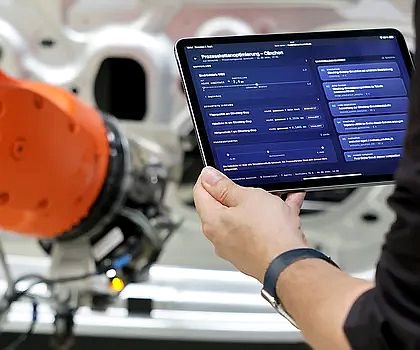
Siemens and Sparepartsnow Expand Industrial Automation Circularity with Refurbished Products
Siemens Brings Refurbished Automation Products to a Digital Marketplace
Siemens has partnered with Sparepartsnow to expand access to refurbished industrial automation products. The partnership connects Siemens' refurbishment capabilities with Sparepartsnow's digital B2B marketplace.As a result, industrial customers can purchase manufacturer-refurbished Siemens automation equipment through a dedicated online channel. The initial portfolio includes drives, controllers, and HMI panels.The cooperation supports industrial automation users seeking alternatives for aging equipment and discontinued product generations.Refurbished by Siemens Supports Longer Product Lifecycles
The new refurbished by Siemens approach focuses on extending the operational life of previously used automation equipment. Siemens restores eligible products and returns them to defined technical and performance requirements.The refurbishment process includes technical repair and required hardware updates. In addition, Siemens performs software updates when necessary.Technicians also complete visual restoration when the product condition requires it. Siemens then conducts comprehensive quality and functional testing.Therefore, customers receive products refurbished directly by the original equipment manufacturer.