

Overview
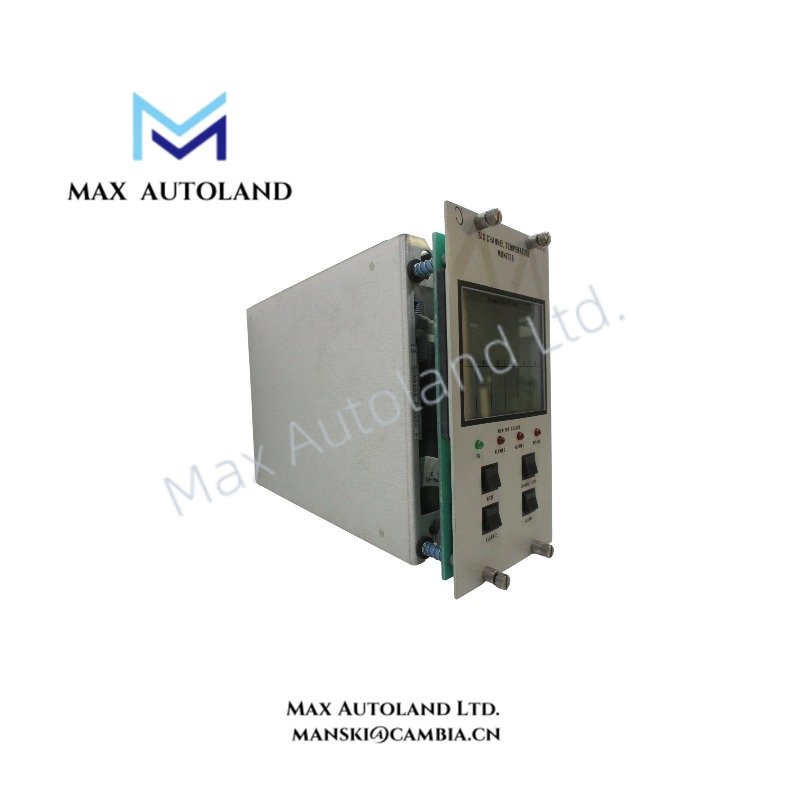
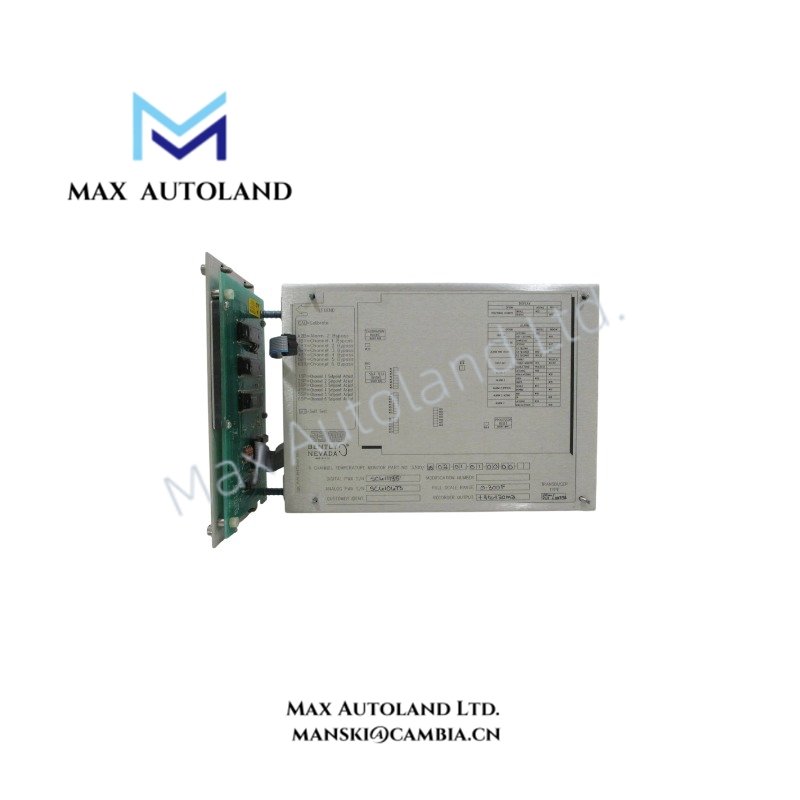
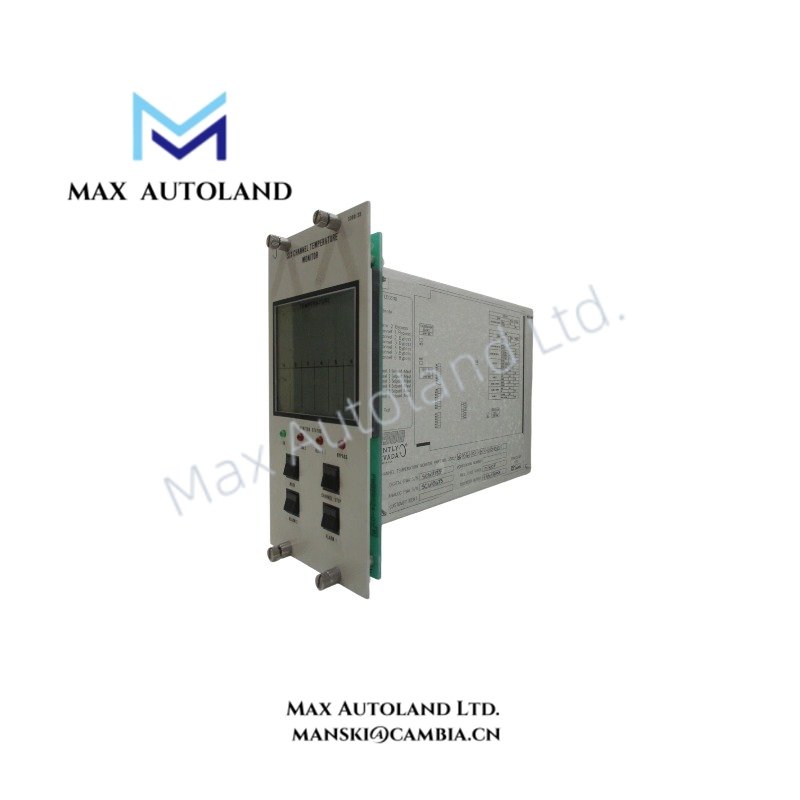
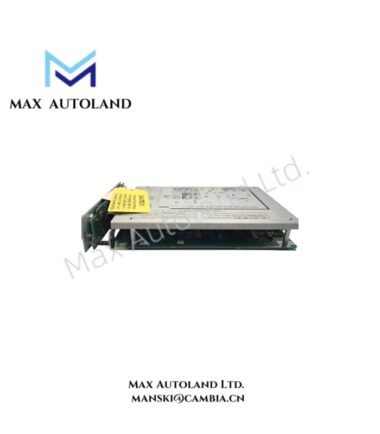
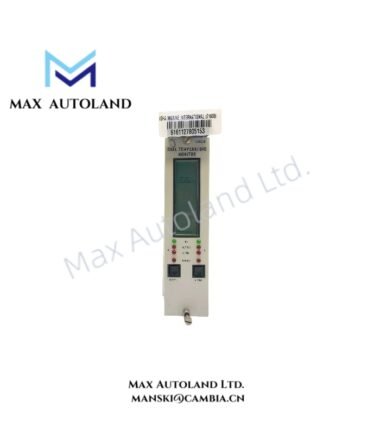
The Bently Nevada 3300/35, also cataloged as the 3300/35 Six-Channel RTD Temperature Monitor, operates as a dedicated hardware component for temperature signal acquisition and alarm processing within the Bently Nevada 3300 System.
Hardware Specifications
| Parameter | Specification |
|---|---|
| Model | 3300/35 |
| Brand | Bently Nevada |
| Origin | USA |
| Product Type | Six-Channel RTD Temperature Monitor |
| Weight | 2.8 kg (6.2 lbs) |
| Operating Temp | 0 deg C to +65 deg C |
| Power Consumption | Nominal 4 Watts |
| Sensor Inputs | Six independent RTD channels |
| RTD Configurations | 3-wire and 4-wire RTD inputs; 2-wire connection with jumper configuration |
| Supported RTD Types | 100 ohm Platinum alpha 0.00385, 100 ohm Platinum alpha 0.00392, 120 ohm Nickel, 10 ohm Copper |
| Temperature Measurement Range | Platinum: 0 deg C to +500 deg C; Nickel: 0 deg C to +150 deg C; Copper: 0 deg C to +100 deg C |
| Display Type | 4-digit 7-segment LCD |
| Display Resolution | Selectable 0.1 deg C/deg F or 1 deg C/deg F |
| Measurement Accuracy | +/- 1 deg C with tenths display; +/- 1.5 deg C without tenths display |
| Recorder Outputs | Programmable 4-20 mA, 0 to -10 VDC, or 1 to 5 VDC |
| Alarm Functions | Alarm 1 over-alarm and Alarm 2 programmable over or under alarm |
| Rack Installation | Occupies two full positions in a 3300 rack |
| Environmental Humidity | Up to 95%, non-condensing |
| Storage Temperature | -40 deg C to +85 deg C |
Eddy-Current and Temperature Signal Processing Characteristics
The Bently Nevada 3300/35 processes RTD input signals through the 3300 System signal conditioning architecture and provides channel-level temperature measurement, alarm comparison, and recorder output conversion.
The module supports configurable sensor inputs for different RTD materials. Therefore, field technicians must recalibrate the unit through internal plug-in jumpers when converting between Platinum, Nickel, and Copper RTD types.
The 3300/35 temperature monitoring function operates alongside Bently Nevada machinery monitoring modules that evaluate rotor conditions and thermal behavior. The system architecture allows temperature data to support rotor dynamics analysis by correlating thermal changes with vibration and machine operating conditions.
The module design follows Bently Nevada measurement practices, including signal validation methods similar to gap voltage validation used in eddy-current probe systems. These methods maintain controlled signal interpretation between field sensors and monitoring electronics.
Frequently Asked Questions
Q: How many RTD channels does the Bently Nevada 3300/35 support?
A: The module supports six independent RTD input channels and accepts 3-wire or 4-wire RTD configurations.
Q: Can the 3300/35 accept different RTD materials without recalibration?
A: No. The module requires recalibration through internal plug-in jumper settings when changing between Platinum, Nickel, and Copper RTD sensor types.
Q: What recorder output signals does the 3300/35 provide?
A: Each channel provides programmable recorder outputs including 4-20 mA, 0 to -10 VDC, and 1 to 5 VDC formats.
Field Installation Guidelines
Install the 3300/35 module in the designated two-slot position of a compatible Bently Nevada 3300 rack.
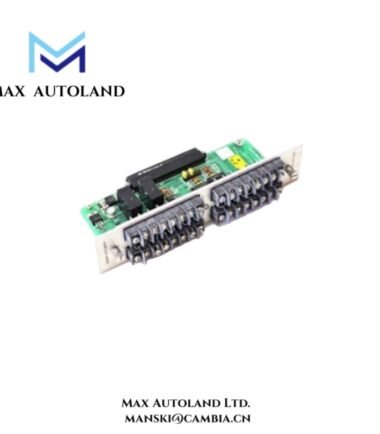
Connect RTD field wiring according to the selected 3-wire or 4-wire configuration. Verify terminal assignments before applying power to prevent incorrect resistance measurement.
Use shielded instrumentation cables for RTD signal wiring in environments with electrical noise sources. Connect cable shields according to the site grounding standard and avoid routing RTD wiring parallel to high-current power conductors.
Confirm the selected RTD type and calibration jumper configuration before commissioning. After installation, verify channel temperature readings, alarm thresholds, and recorder output scaling against the connected field sensors.






Reviews
There are no reviews yet.