
Overview
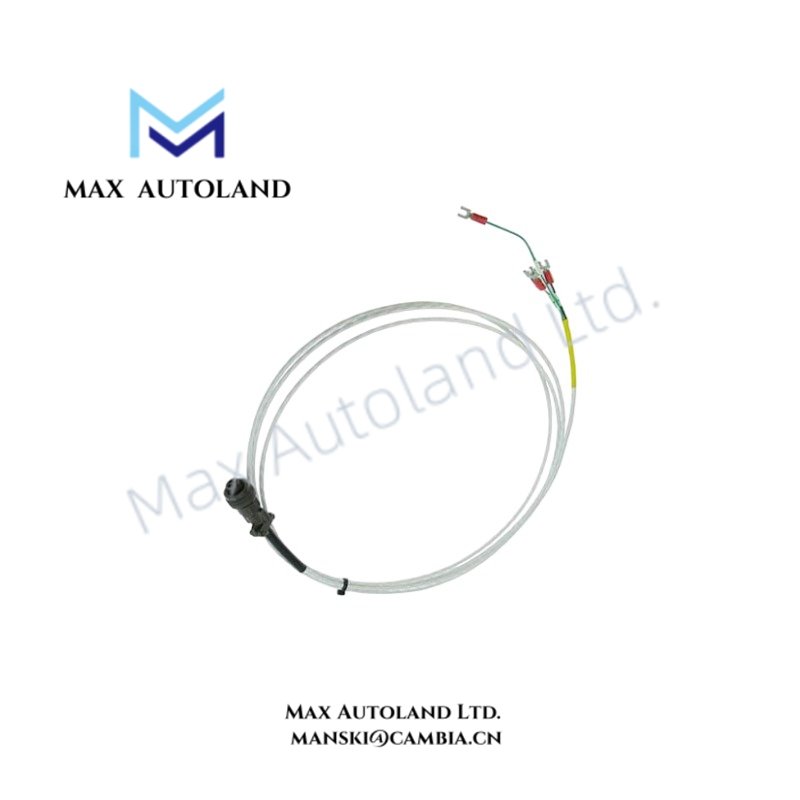
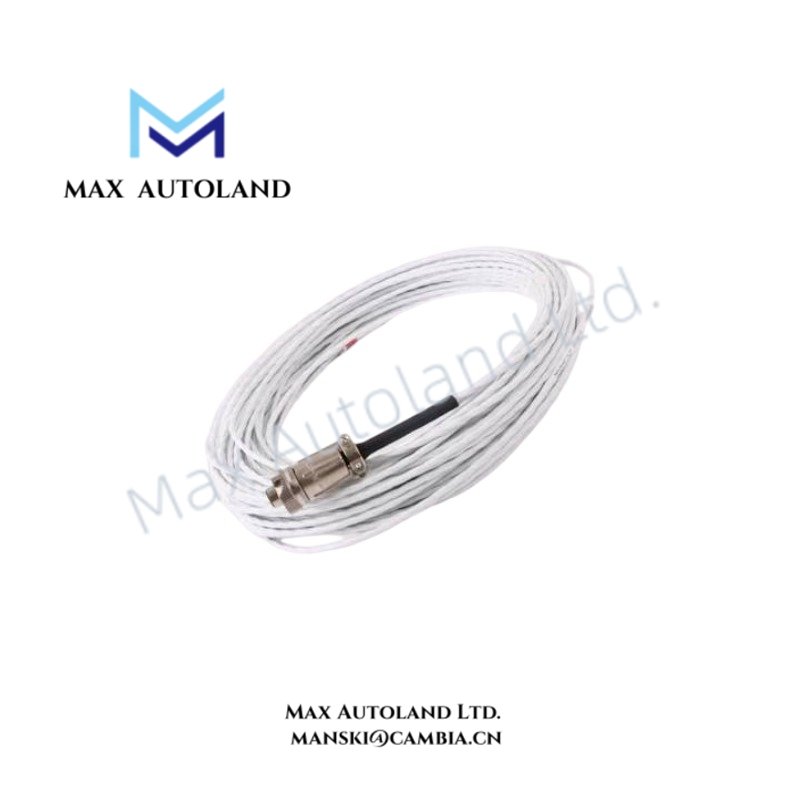
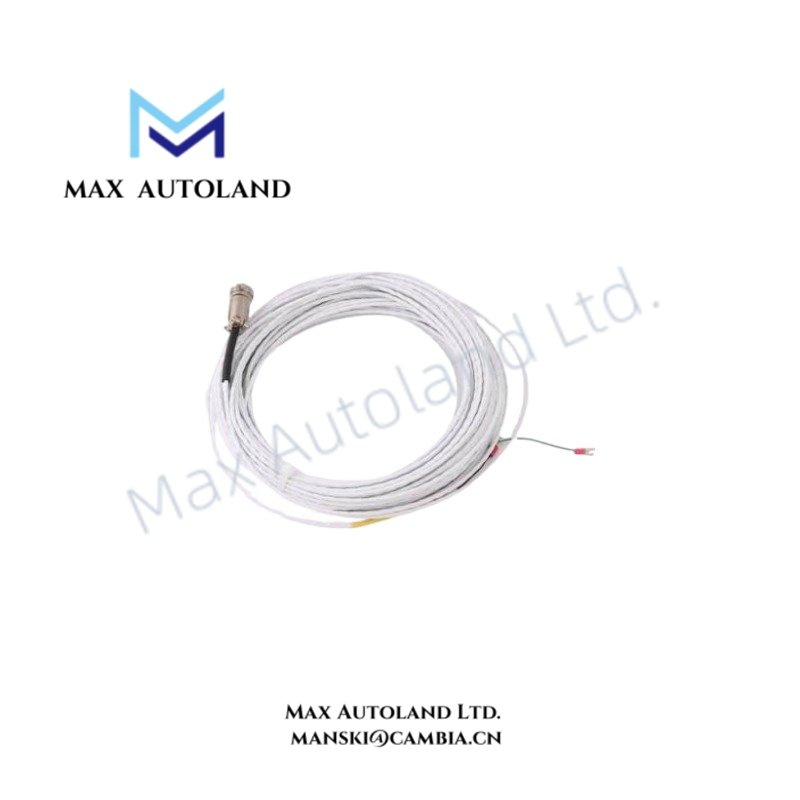
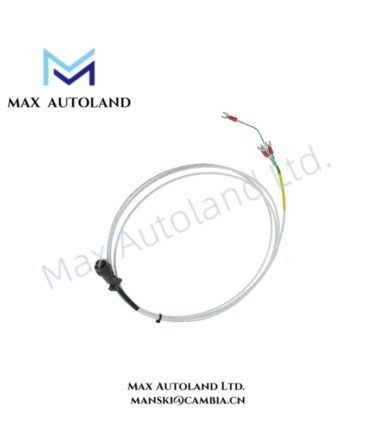
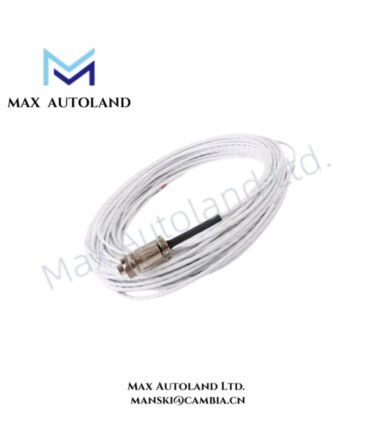
The Bently Nevada 16925-10, also cataloged as the 16925-10 Interconnect Cable, operates as a dedicated hardware component for sensor signal connection and electrical transmission within Bently Nevada proximity monitoring systems.
Hardware Specifications
| Parameter | Specification |
|---|---|
| Model | 16925-10 |
| Brand | Bently Nevada |
| Product Type | Interconnect Cable |
| Origin | USA |
| Weight | 0.15 kg |
| Dimensions | 27 x 25 x 3 cm (shipping size) |
| Cable Length | 10 ft (3.05 m) |
| Cable Impedance | 50 Ohm +/- 2 % |
| Voltage Rating | 300 V AC |
| Temperature Coefficient | < 0.02 % / deg C |
| Operating Temp | -55 deg C to +200 deg C |
| Storage Temp | -60 deg C to +205 deg C |
| Humidity | 0 – 100 % RH, condensing |
| Power Consumption | Passive cable component, no external power required |
| Cable Construction | Armored or non-armored 22 AWG cable, or non-armored 18 AWG cable with elastomer boot |
| Tariff Code | 8537101190 |
Eddy-Current Probe Signal Integrity and Rotor Dynamics Interface
The Bently Nevada 16925-10 Interconnect Cable transfers proximity probe signals between field sensors and monitoring electronics. Therefore, the cable maintains controlled impedance characteristics to support eddy-current probe scaling and accurate displacement measurement.
The cable assembly supports gap voltage validation procedures where proximity probe systems verify operating conditions around standard -10 VDC target values. In addition, the controlled cable structure minimizes signal distortion during rotor dynamics monitoring applications.
The cable construction options, including armored and non-armored versions, allow engineers to select mechanical protection levels according to installation requirements. Furthermore, the cable design reduces unwanted signal coupling and supports cross-talk suppression in multi-channel vibration monitoring installations.
Frequently Asked Questions
Q: Can the 16925-10 Interconnect Cable provide power to a proximity probe system?
A: No. The 16925-10 is a passive signal interconnect cable. The monitoring system provides excitation power and processes the returned proximity probe signal.
Q: What type of sensor connection does the 16925-10 support?
A: The cable is designed for Bently Nevada proximity probe signal interconnection, including applications requiring controlled impedance transmission.
Q: Does cable shielding or armor affect installation requirements?
A: Yes. Installers must follow site grounding practices and maintain proper cable routing separation from high-voltage power conductors to reduce electrical interference.
Field Installation Guidelines
- Verify the cable length and connector configuration before installation to match the proximity probe and monitoring module interface.
- Route the cable away from high-current power wiring, motor feeders, and sources of electromagnetic interference.
- Maintain proper cable bending practices to avoid mechanical stress on the conductor and insulation layers.
- Connect cable shields according to the system grounding design specified for the Bently Nevada monitoring installation.
- Confirm signal continuity and insulation condition before commissioning the machinery protection circuit.
- Use armored cable versions where mechanical protection is required in exposed installation areas.




Reviews
There are no reviews yet.