
Overview
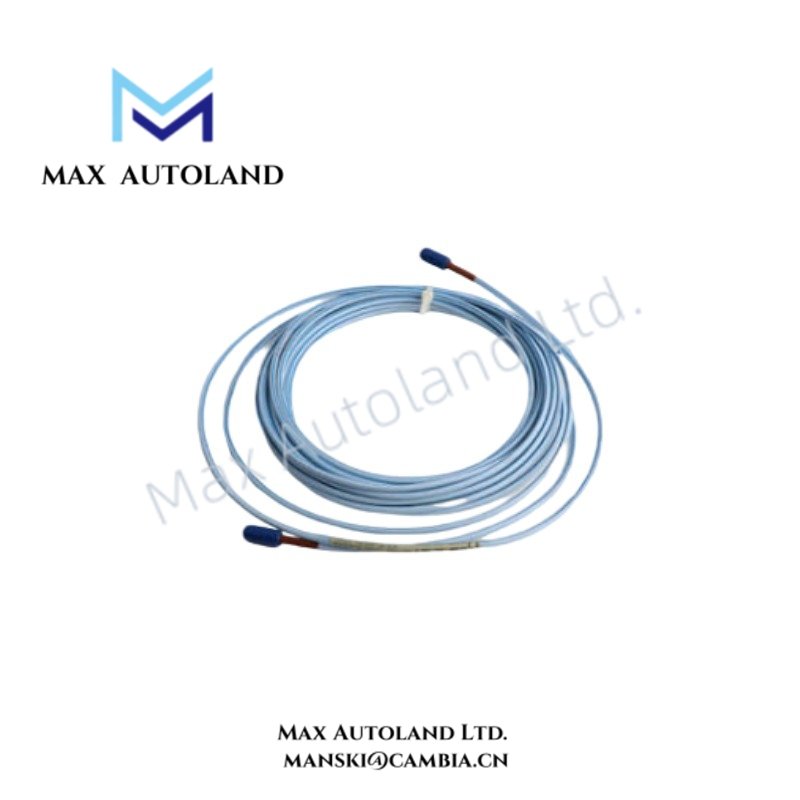
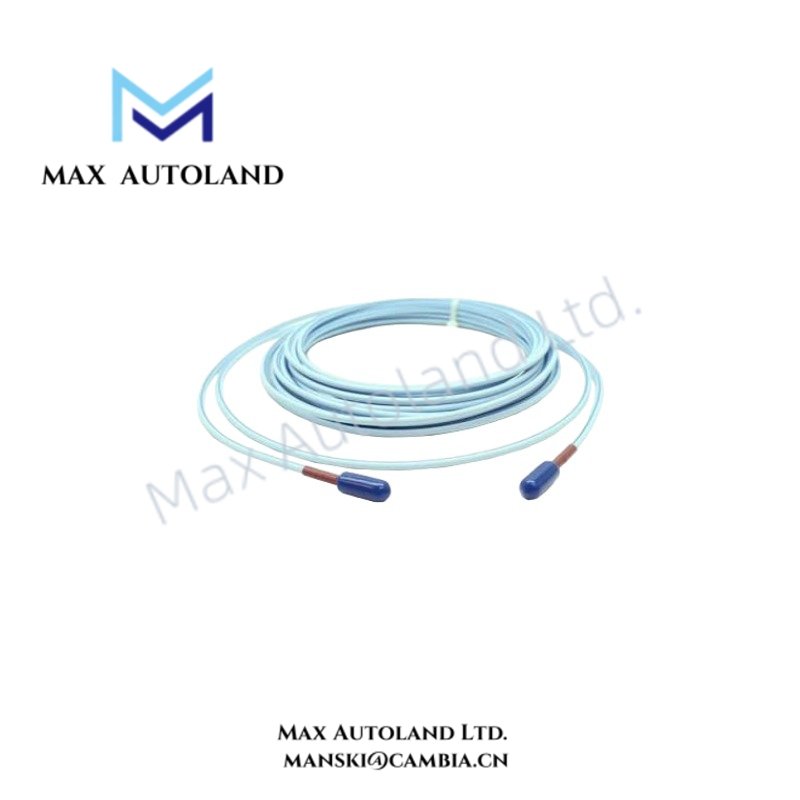
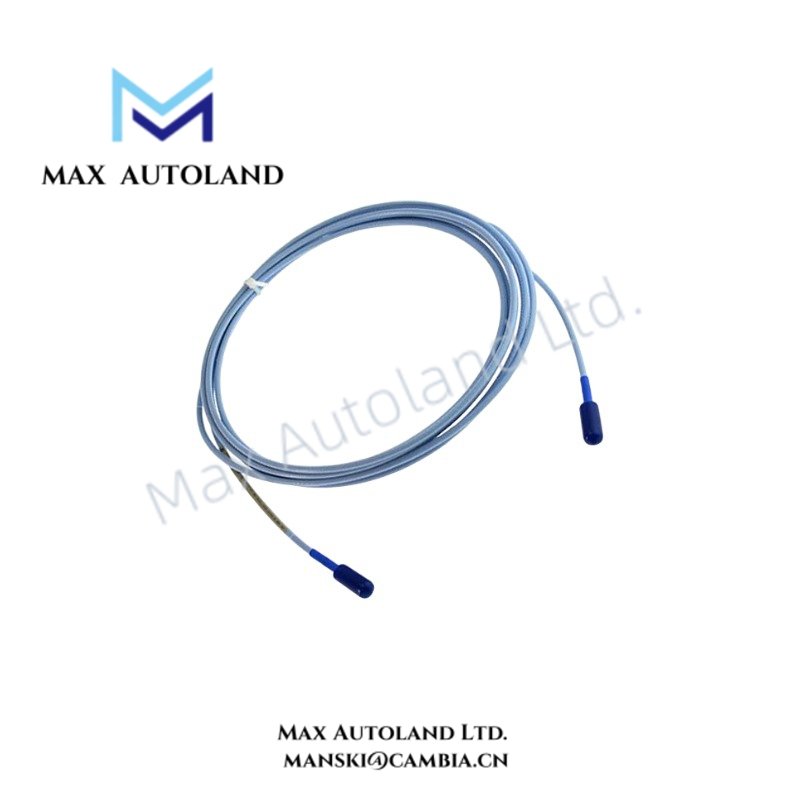
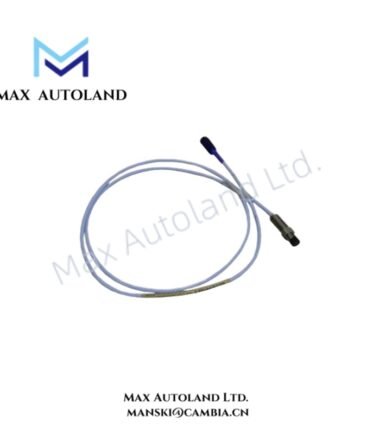
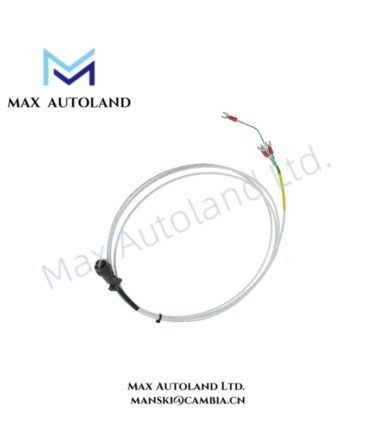
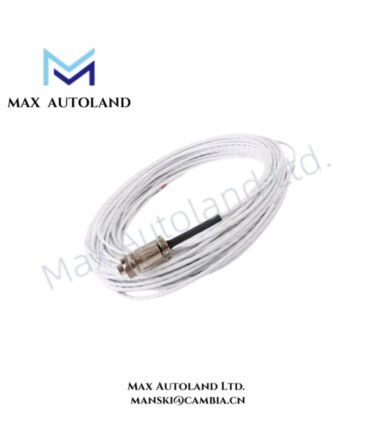
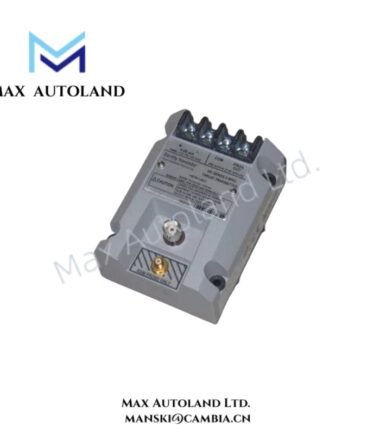
The Bently Nevada 330877-080-36-00, also cataloged as the 330877 3300 XL 50 mm Extension Cable, operates as a dedicated hardware component for signal transmission between proximity probes and Proximitor sensors within the 3300 XL Proximity Transducer System.
Hardware Specifications
| Parameter | Specification |
|---|---|
| Model | 330877-080-36-00 |
| Brand | Bently Nevada |
| Product Type | 3300 XL 50 mm Extension Cable |
| Origin | USA |
| Weight | 0.94 kg |
| Dimensions | 28 x 28 x 3 cm (estimated shipping size) |
| Operating Temp | -51 deg C to +200 deg C |
| Storage Temp | -51 deg C to +200 deg C |
| Power Consumption | Passive signal cable, no external power consumption |
| Cable Length | 8.0 meters (26.2 feet) |
| Cable Type | FluidLoc cable |
| Cable Insulation Material | Perfluoroalkoxy (PFA) |
| Shielding | Triaxial Shielded Construction |
| Characteristic Impedance | 75 Ohm +/-2% |
| Typical Capacitance | 69.9 pF/m (21.3 pF/ft) |
| Agency Approval | No Approvals |
Eddy-Current Signal Transmission and Rotor Dynamics Interface
The 330877-080-36-00 extension cable transfers eddy-current probe signals between the 3300 XL 50 mm proximity probe and the Proximitor sensor. Therefore, the cable maintains the electrical characteristics required for shaft displacement and vibration measurement circuits.
The triaxial shielded construction reduces external electromagnetic interference and improves signal stability in rotating equipment monitoring loops. Additionally, the PFA insulation supports continuous exposure to elevated temperatures while maintaining cable dielectric properties.
The cable assembly supports Bently Nevada measurement practices, including eddy-current probe scaling, gap voltage validation, and rotor dynamics analysis. Proper cable impedance and capacitance matching help maintain accurate signal conditioning between the probe and monitoring electronics.
Frequently Asked Questions
Q: Does the 330877-080-36-00 extension cable require external power supply?
A: No. The cable is a passive connection component and does not consume external power. The connected Proximitor sensor provides the required excitation for the eddy-current measurement circuit.
Q: What shielding method does this extension cable use?
A: The cable uses triaxial shielded construction to control electromagnetic interference and maintain signal integrity in vibration monitoring applications.
Q: Can this cable operate in high-temperature environments?
A: Yes. The cable insulation and construction support an operating temperature range from -51 deg C to +200 deg C.
Field Installation Guidelines
- Install the extension cable according to the 3300 XL Proximity Transducer System wiring requirements.
- Maintain correct connection between the proximity probe, extension cable, and Proximitor sensor to preserve electrical calibration.
- Avoid routing the cable parallel to high-current power conductors to reduce electromagnetic interference.
- Connect cable shielding according to the monitoring system grounding practice and avoid improper shield termination.
- Protect the cable from mechanical damage, sharp bends, excessive pulling force, and chemical exposure outside the specified material limits.
- Verify cable condition before commissioning and confirm stable vibration or displacement signal output after installation.
.




Reviews
There are no reviews yet.