




Overview
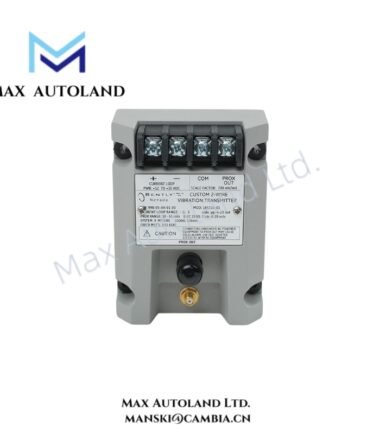
Configured for thrust position signal conditioning in a Bently Nevada mechanical monitoring system, the Bently Nevada 991-01-XX-01-00 MOD: 284318-01 (991 Thrust Transmitter) accepts one non-contacting 3300 NSv Proximity Probe and extension cable. The transmitter operates from a +12 to +35 VDC supply at the transmitter terminal and provides the specified thrust measurement interface.
Suffix Breakdown & Model Matrix
The supplied configuration identifies the following system options:
| Code | Specification |
|---|---|
| 50 | 5.0 meters (16.4 feet) system length |
| 70 | 7.0 meters (23.0 feet) system length |
| 01 | 35 mm DIN-rail clips |
| 00 | Agency approval not required |
The supplied model uses MOD: 284318-01. The source data does not define a separate electrical function for each suffix beyond the listed configuration options.
Hardware Specifications
| Parameter | Specification |
|---|---|
| Model | 991-01-XX-01-00 MOD: 284318-01 |
| Base Model | 991 |
| Product Type | Thrust Transmitter |
| Brand | Bently Nevada |
| Origin | USA |
| Place of Shipment | Xiamen, China |
| Weight | 0.5 kg |
| Dimensions | 10 x 7.4 x 5.8 cm estimated shipping size |
| Operating Temp | Not specified in supplied data |
| Power Consumption | Requires +12 to +35 VDC input at transmitter terminal |
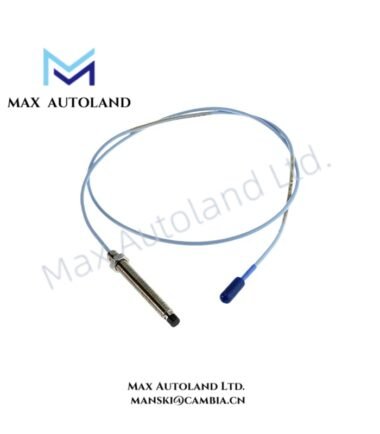
| Input | 1 non-contacting 3300 NSv Proximity Probe and extension cable |
| System Length | 5.0 meters or 7.0 meters |
| Mounting | 35 mm DIN-rail clips |
| Current Limiting | 23 mA typical |
| Agency Approval | Not required |
| Tariff Code | 8537101190 |
Eddy-Current Probe Interface and Thrust Measurement
The 991 Thrust Transmitter interfaces directly with one non-contacting 3300 NSv Proximity Probe and its extension cable. The probe provides the physical displacement signal associated with axial shaft position. Therefore, installation should preserve the specified probe, extension cable, and transmitter signal path as one measurement circuit.
The transmitter requires +12 to +35 VDC at its terminal. In addition, the specified current limiting value is 23 mA typical. Because the supplied data does not define output scaling, frequency response, or detailed terminal assignments, those parameters should be verified against the applicable Bently Nevada documentation before commissioning.
Frequently Asked Questions
Q: What probe does the transmitter accept?
A: The transmitter accepts one non-contacting 3300 NSv Proximity Probe with its associated extension cable.
Q: What supply voltage does the transmitter require?
A: The transmitter requires +12 to +35 VDC at the transmitter terminal.
Q: What mounting method does the supplied configuration specify?
A: The configuration specifies 35 mm DIN-rail clips for transmitter mounting.
Field Installation Guidelines
- Install the transmitter on a mechanically stable 35 mm DIN rail and verify that the clips engage the rail correctly.
- Route the proximity probe and extension cable separately from high-current motor conductors, switching power circuits, and other high-noise wiring where practical.
- Maintain correct probe-to-extension-cable connections throughout the measurement circuit. Do not modify cable length or termination without confirming compatibility with the 3300 NSv measurement system.
- Apply the specified +12 to +35 VDC supply directly at the transmitter terminal. Verify supply polarity and voltage before energizing the unit.
- Connect the transmitter signal wiring according to the applicable terminal assignment documentation. Do not infer unlisted terminal functions from the model suffix.
- Use appropriate shield termination practices for the installed monitoring system. Avoid creating unintended ground loops through multiple shield connection points.
- After installation, verify the probe signal, supply voltage, and transmitter response before placing the thrust measurement channel into service.
- The supplied data does not specify an operating temperature range. Therefore, confirm the applicable environmental rating from the Bently Nevada installation documentation before installing the unit in temperature-critical locations.











Reviews
There are no reviews yet.