
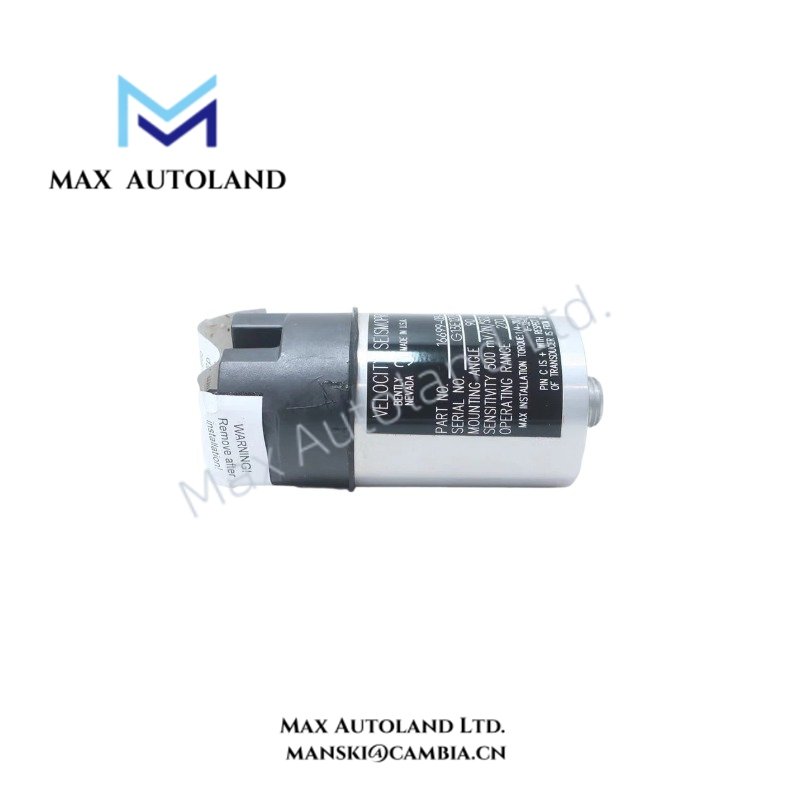
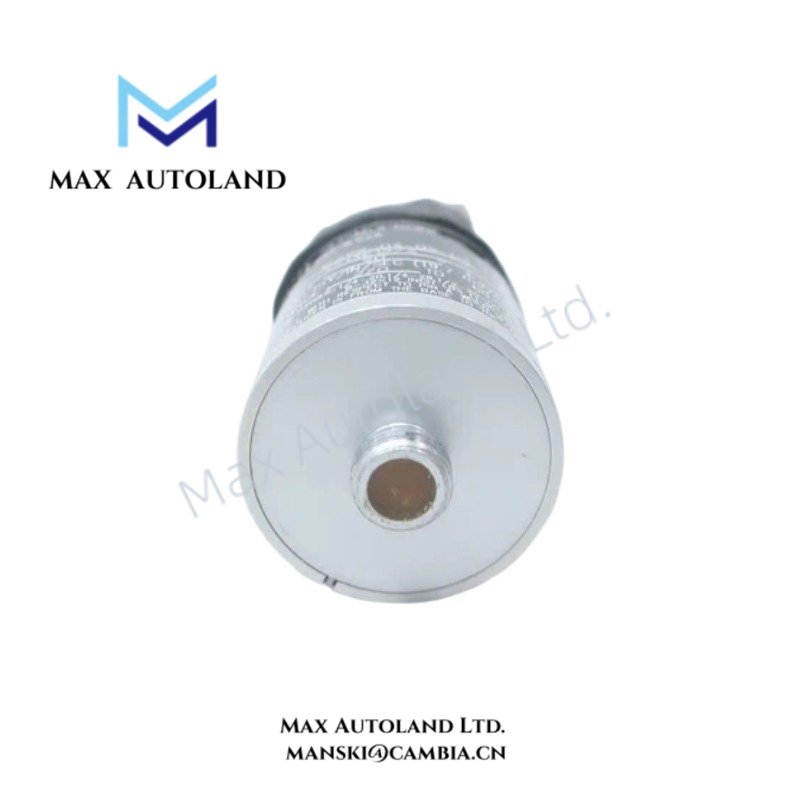
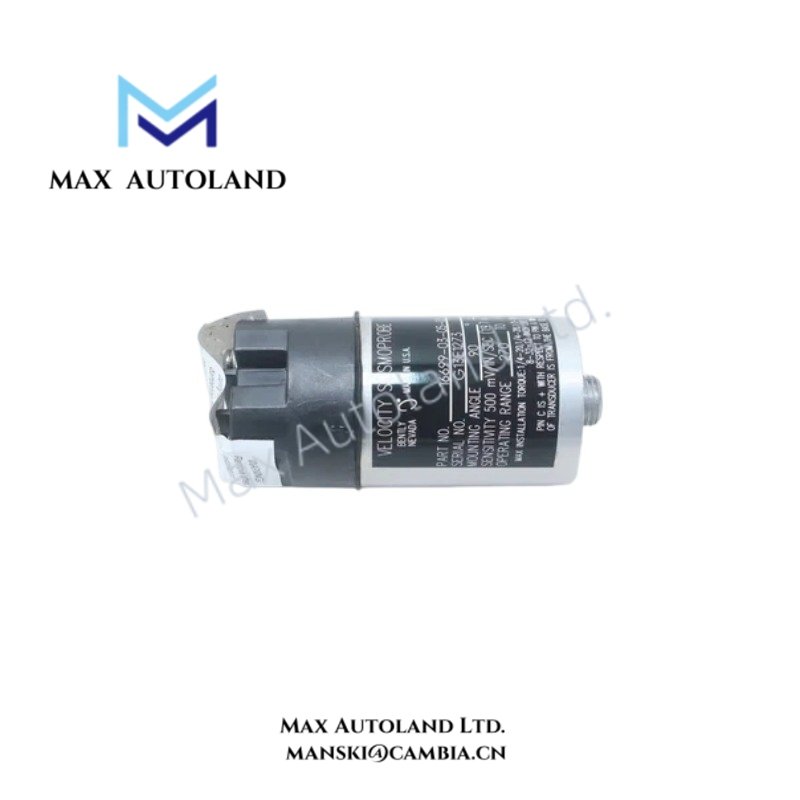

Overview
Hardware Specifications
| Parameter | Specification |
|---|---|
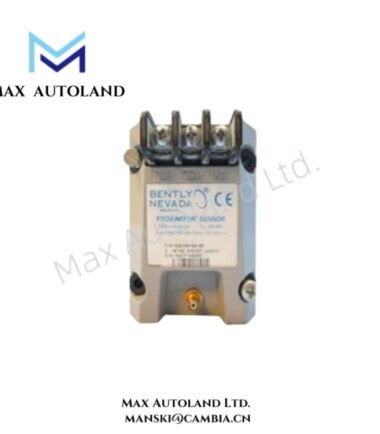
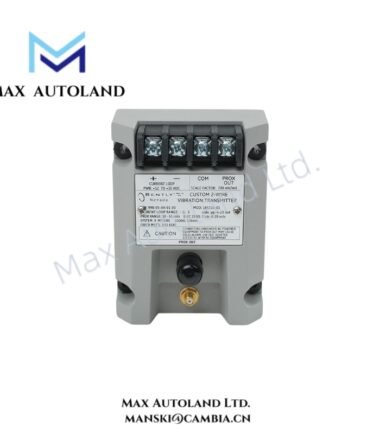
| Model | 16699-03 |
| Brand | Bently Nevada |
| Product Type | Velocity Seismoprobe / Vibration Sensor |
| Origin | USA |
| Power Consumption | Passive sensor design, no external power consumption required |
| Transducer Type | Moving-coil velocity transducer |
| Sensitivity | 500 mV/in/sec (19.7 mV/mm/sec) |
| Frequency Range | Typically 4.5 Hz to 15 Hz operating range depending on configuration |
| Mounting Method | Circular or flanged mounting base options |
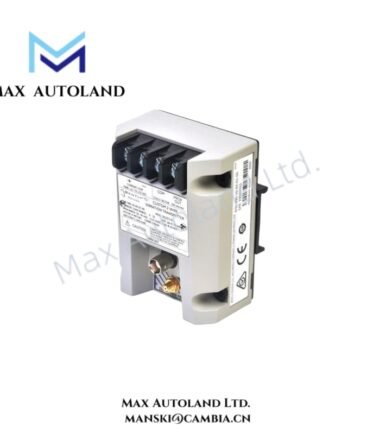
| Electrical Termination | Top-mounted terminal block with screw terminals |
| Signal Output | Analog velocity vibration signal |
| Measurement Parameter | Absolute casing and structural vibration velocity |
Rotor Dynamics and Vibration Signal Processing Characteristics
The Bently Nevada 16699-03 provides velocity output signals for machinery vibration analysis applications. Therefore, the sensor directly measures casing motion without requiring relative shaft displacement measurement.
For TSI monitoring applications, the vibration signal evaluation process can be combined with rotor dynamics analysis, including vibration amplitude assessment, mechanical looseness identification, and unbalance detection. Additionally, installation practices should maintain signal integrity to reduce external noise influence and measurement deviation.
Unlike eddy-current probe systems that require gap voltage validation and scaling adjustment with typical -10 VDC targets, the 16699-03 uses a moving-coil velocity sensing principle and does not require probe gap calibration. The sensor architecture supports direct vibration velocity measurement for casing-mounted monitoring points.
Frequently Asked Questions
Q: Does the Bently Nevada 16699-03 require external excitation power?
A: No. The 16699-03 uses a moving-coil velocity transducer design that generates an electrical output signal from mechanical vibration movement.
Q: Can the 16699-03 replace an eddy-current proximity probe in a TSI system?
A: No. The 16699-03 measures absolute casing vibration velocity, while eddy-current probes measure relative shaft displacement using a different sensing principle.
Q: What installation factors affect measurement accuracy?
A: Proper mechanical mounting, secure terminal connections, correct cable routing, and appropriate grounding practices affect vibration signal quality.
Field Installation Guidelines
- Install the sensor on a rigid machine casing surface to maintain accurate vibration transfer.
- Ensure the mounting surface is clean and free from mechanical looseness before installation.
- Route signal cables separately from high-current power cables to reduce electromagnetic interference.
- Connect cable shields according to site grounding standards and avoid creating ground loops.
- Verify terminal block connections before commissioning the vibration monitoring circuit.
- Confirm the measurement direction matches the intended vibration monitoring axis.
Reviews
There are no reviews yet.