
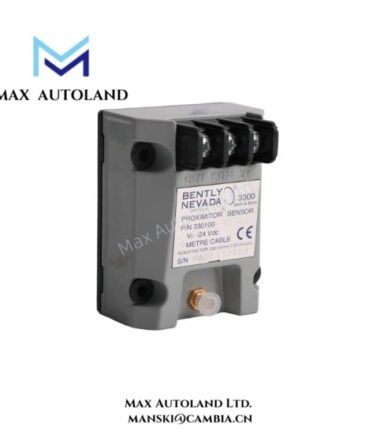
Overview
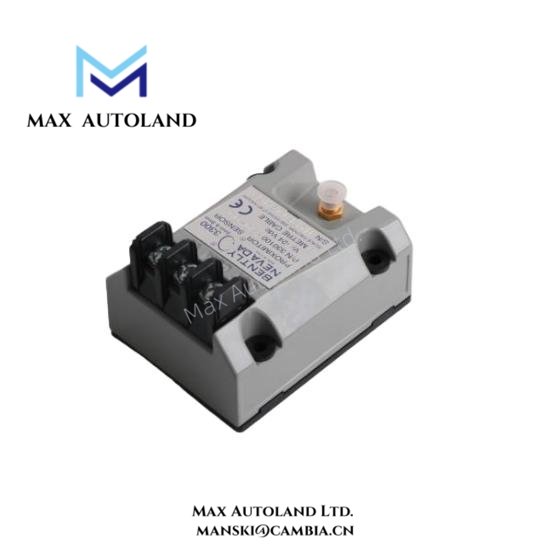
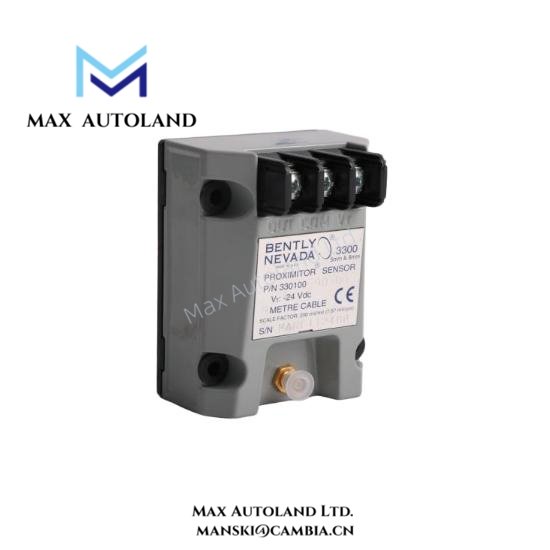
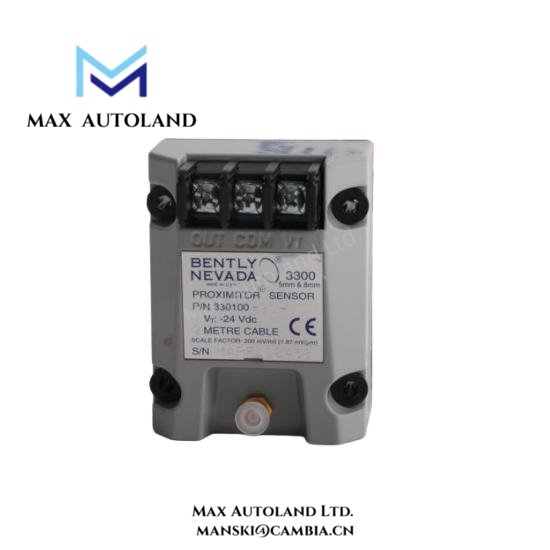
This Proximitor Sensor converts raw signals from an 8 mm proximity probe into stable voltage output for protection and condition monitoring systems. As a result, operators gain accurate insight into shaft vibration, axial position, and rotor dynamics under varying operational conditions.
Moreover, the 3300 XL platform is widely trusted for long‑term stability, repeatability, and conformity with machinery protection standards worldwide. In addition, its robust design ensures consistent performance even in demanding industrial environments.
Specification
| Parameter | Specification |
|---|---|
| Manufacturer | Bently Nevada (Baker Hughes) |
| Model Number | 330100‑90‑01 |
| Product Series | 3300 XL |
| Product Type | Proximitor Sensor / Proximity Transducer |
| Compatible Probe | 8 mm 3300 XL proximity probes |
| Measurement Principle | Eddy current, non‑contact displacement sensing |
| Output Signal | Analog voltage proportional to displacement |
| Typical Measurement Range | Up to ~2 mm system range |
| Sensitivity | ~7.87 V/mm typical for 8 mm systems |
| Frequency Response | Suitable for vibration and position monitoring |
| Power Requirement | -17.5 Vdc to -26 Vdc (nominal -24 Vdc) |
| Current Consumption | Low-power continuous duty design |
| Mounting Options | DIN rail or control panel mount |
| Environmental Conditions | Industrial control cabinet environments |
| Connector Type | Secure ClickLoc or equivalent connectors |
| Typical Service Life | Designed for long‑term industrial operation |
FAQ
A1: It converts raw proximity probe signals into stable voltage outputs for machinery monitoring.
Q2: Which probes are compatible with this sensor?
A2: It works with Bently Nevada 3300 XL 8 mm proximity probes.
Q3: Can this sensor operate continuously in vibration monitoring systems?
A3: Yes, it is engineered for continuous operation in demanding rotating machinery environments.
Q4: Does it require bench calibration before use?
A4: No, components within the 3300 XL system are interchangeable without individual bench calibration.
Q5: What types of machinery commonly use this sensor?
A5: It is commonly used in turbines, compressors, pumps, and large electric motors.
Q6: How does this sensor support predictive maintenance?
A6: It enables real‑time vibration and position tracking that helps identify wear or imbalance early.


Reviews
There are no reviews yet.