


Overview
Hardware Specifications
| Parameter | Specification |
|---|---|
| Model | Bently Nevada 3500/70M |
| Brand | Bently Nevada |
| Product Type | Recip Impulse Velocity Monitor |
| Origin | Not specified in the supplied data |
| Channels | 4 channels |
| Input Signal | Seismic transducers, velocity or acceleration |
| Number of Inputs | 1 to 4 |
| Acceleration Input Impedance | 10 kOhm |
| Velocity Input Impedance | Greater than 1 MOhm |
| Transducer Supply Voltage | -22 VDC minimum |
| Transducer Supply Current | 40 mA maximum |
| Recorder Output | 4-20 mA proportional to monitor full-scale |
| Recorder Load | 600 Ohm maximum |
| Recorder Output Accuracy | Within +/- 0.05 mA over temperature range |
| Measurement Accuracy | Impulse acceleration typically within +/- 0.33% of full scale; +/- 1% maximum, excluding filters |
| Alarm Setpoints | 0 to 100% of full scale |
| Alert Time Delay | 1 to 60 seconds |
| Danger Time Delay | 0.1 to 60 seconds |
| Monitor Functions | Impulse Acceleration, Acceleration 2, Recip Velocity, Low Frequency Recip Velocity |
| Configuration | Channel pairs configurable through 3500 Rack Configuration Software |
| Buffered Outputs | Front-panel coaxial connectors for raw vibration signals |
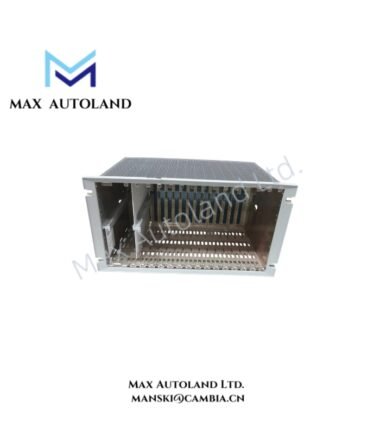
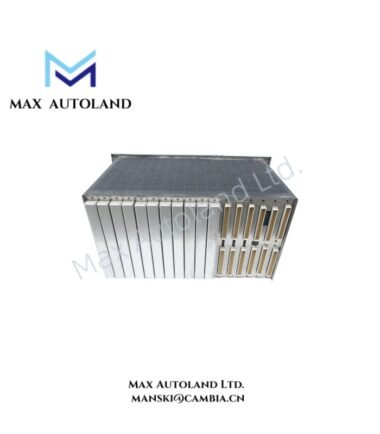
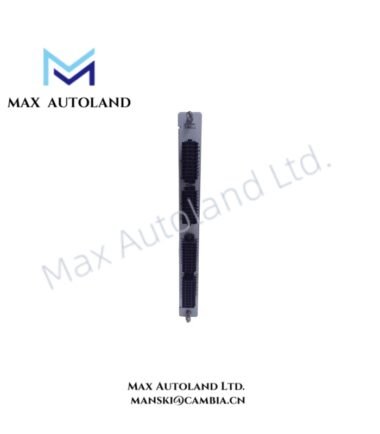
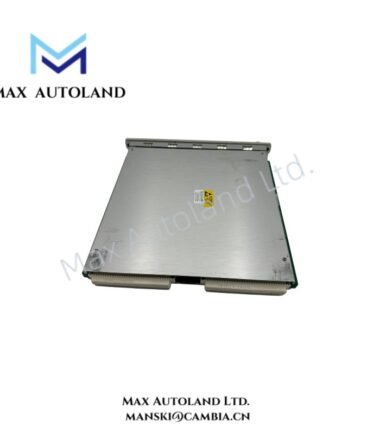
| Rack Space | 1 full-height front slot and 1 full-height rear I/O slot |
| Monitor Weight | 0.91 kg |
| I/O Module Weight | 0.20 to 0.46 kg |
| Dimensions | Not specified in the supplied data |
| Operating Temp | -30 deg C to +65 deg C |
| Storage Temp | -40 deg C to +85 deg C |
| Humidity | Up to 95%, non-condensing |
Reciprocating Machinery Signal Monitoring
The 3500/70M processes seismic velocity and acceleration inputs from reciprocating compressor machinery. Each channel pair supports configurable measurement functions, allowing the monitor to process impulse acceleration, acceleration, reciprocating velocity, or low-frequency reciprocating velocity signals.
The monitor compares measured static values with user-programmed Alert and Danger thresholds. Therefore, the system can generate protection alarms when vibration measurements exceed configured limits. Digital high-pass and low-pass filtering also conditions the measurement according to the selected operating mode.
The front-panel coaxial connectors provide buffered raw transducer signals. These outputs allow external diagnostic equipment to access the vibration waveform without using the conditioned measurement path.
Frequently Asked Questions
Q: How many seismic transducer inputs does the 3500/70M support?
A: The monitor accepts 1 to 4 seismic transducer inputs. The inputs can use velocity or acceleration transducers.
Q: What recorder output does the monitor provide?
A: The monitor provides a 4-20 mA recorder output proportional to the monitor full-scale value. The maximum load resistance is 600 Ohm.
Q: Can the measurement functions be configured?
A: Yes. Channel pairs can be configured through the 3500 Rack Configuration Software for Impulse Acceleration, Acceleration 2, Recip Velocity, or Low Frequency Recip Velocity.
Field Installation Guidelines
- Install the monitor in the designated 3500 rack front slot and install the associated I/O module in the corresponding rear slot.
- Verify the seismic transducer type before connecting each input channel.
- Route vibration signal wiring separately from high-current power and switching circuits to reduce electrical interference.
- Use appropriate cable shielding and terminate the shield according to the plant instrumentation grounding practice.
- Confirm transducer supply polarity and electrical limits before energizing the input circuit.
- Verify the configured measurement function for each channel pair before commissioning.
- Check Alert and Danger setpoints against the approved machinery protection configuration.
- Verify recorder output wiring and confirm that the connected load does not exceed 600 Ohm.
- Use the buffered front-panel outputs for diagnostic measurements when external vibration analysis equipment is connected.
- Confirm operating temperature and humidity remain within the specified environmental limits.








Reviews
There are no reviews yet.