
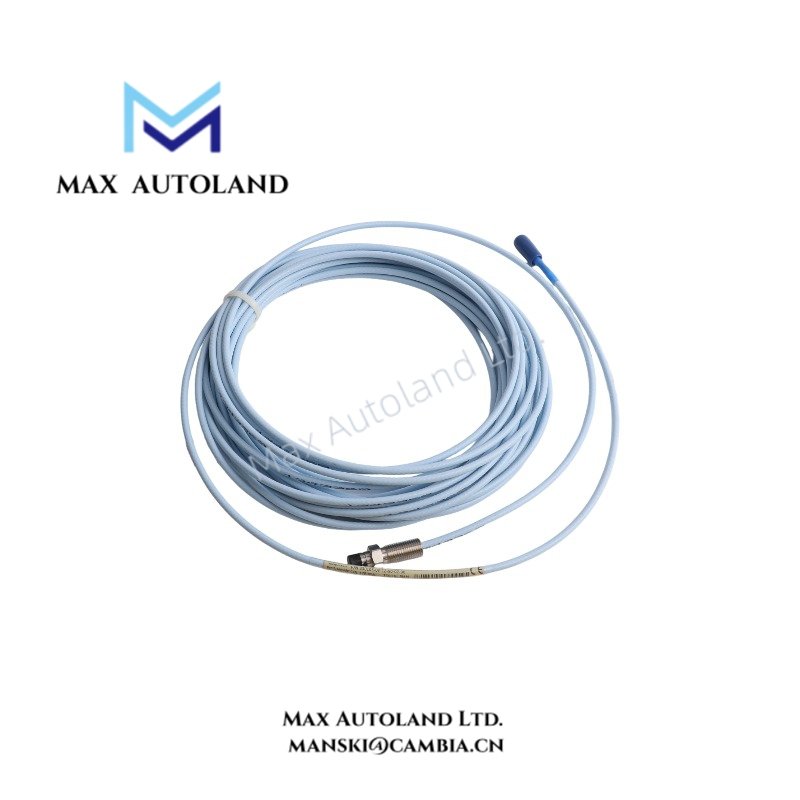
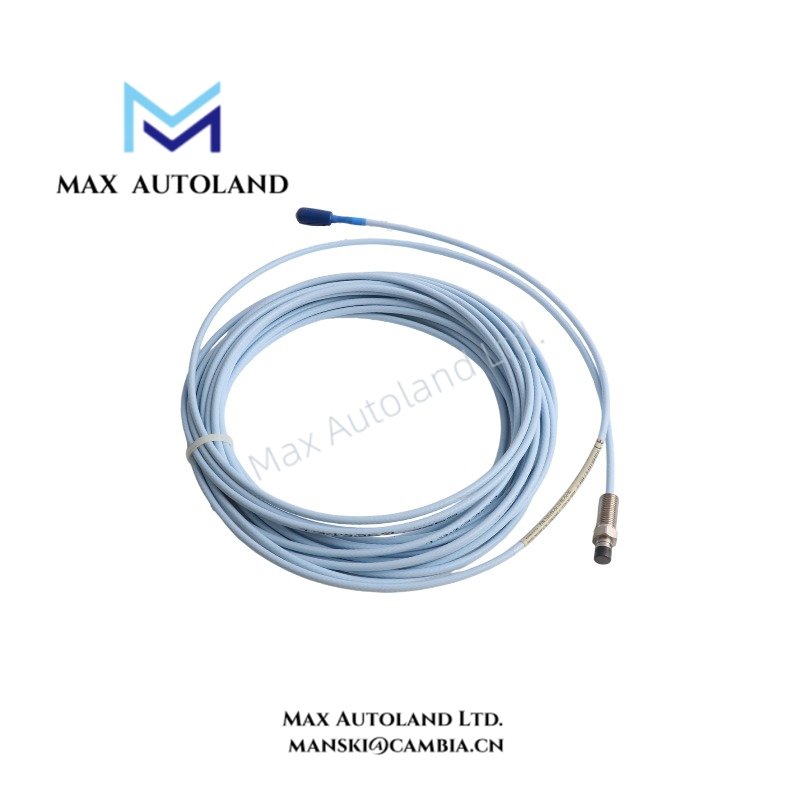
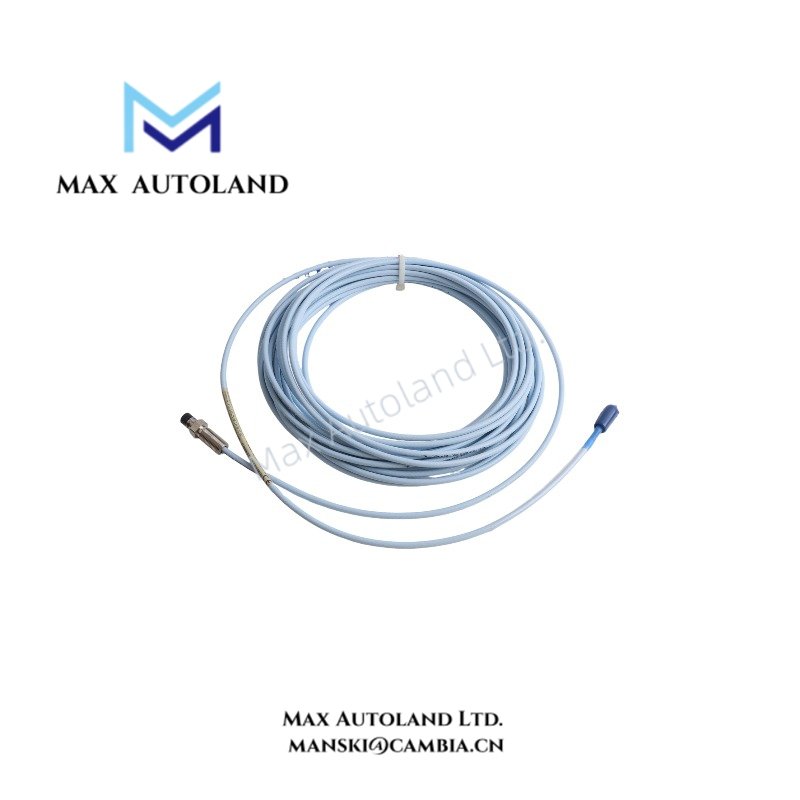
Overview
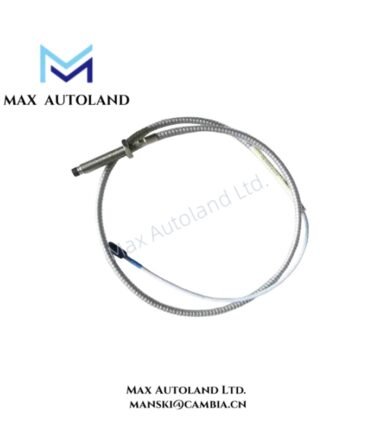
Configured for non-contact measurement of conductive-target position and vibration, the Bently Nevada 330105-02-12-90-02-00 (330105-02 Reverse Mount Proximity Probe) operates as the probe element in a Bently Nevada proximity measurement chain. It uses a 3/8-24 UNF case thread, a 9 m probe cable, and a PPS probe tip.
Hardware Specifications
| Parameter | Specification |
|---|---|
| Model | 330105-02-12-90-02-00 |
| Brand | Bently Nevada |
| Product Type | Reverse Mount Proximity Probe |
| Probe Mounting | Reverse mount |
| Case Thread | 3/8-24 UNF |
| Armor Selection | Without armor |
| Total Probe Length | 9 m |
| Cable and Connector Option | Standard cable without connector protector |
| Agency Approval Option | Not required |
| Case Material | AISI 303 or 304 stainless steel |
| Probe Tip Material | Polyphenylene sulfide (PPS) |
| Probe Cable Construction | 75 ohm triaxial cable |
| Probe Cable Insulation | FEP |
Eddy-Current Measurement and Gap Voltage
The probe forms the sensing element of an eddy-current proximity measurement chain. The probe tip establishes a non-contacting electrical coupling with a conductive machine target. The matching Proximitor Sensor converts the probe response into a usable displacement signal.
During commissioning, technicians can verify the probe circuit and installation condition through the Proximitor Sensor gap-voltage measurement. A negative DC gap voltage, commonly referenced around a -10 VDC target in Bently Nevada proximity systems, provides an installation reference when the applicable system documentation specifies that condition. Actual calibration limits must follow the matched probe, extension cable, and Proximitor Sensor combination.
The 75 ohm triaxial cable uses FEP insulation. Keep the probe cable separated from high-current power wiring and other strong electrical interference sources. The complete probe, extension cable, and Proximitor Sensor combination should use the specified matching components to maintain the intended electrical scaling.
Frequently Asked Questions
Q: Is the 330105-02-12-90-02-00 probe an active powered device?
A: No. The supplied data identifies it as a proximity probe element. The associated Proximitor Sensor provides the excitation and signal-conditioning functions.
Q: What cable construction does this probe use?
A: The probe uses 75 ohm triaxial cable with FEP insulation. The specified configuration has a standard cable without a connector protector.
Q: What mounting thread does the probe use?
A: The case thread is 3/8-24 UNF. Confirm the installed mounting arrangement before replacement.
Field Installation Guidelines
Install the probe using the specified reverse-mount arrangement and 3/8-24 UNF case thread. Keep the probe tip aligned with the intended conductive target and maintain the installation geometry specified for the applicable proximity measurement system.
Route the 75 ohm triaxial cable away from high-current conductors, switching devices, and other sources of electrical interference. Avoid sharp bends, excessive mechanical tension, and damage to the FEP cable insulation.
Connect the probe to the matching extension cable and Proximitor Sensor. Verify the complete sensing-chain configuration before commissioning. Check the probe gap condition through the applicable Proximitor Sensor procedure rather than using an assumed value as the final acceptance criterion.
The supplied configuration has no armor and no connector protector. Protect the exposed cable and connector area from mechanical damage according to the actual installation environment. Confirm all thread, lead, connector, cable, and approval requirements before installing a replacement.


Reviews
There are no reviews yet.