
Overview
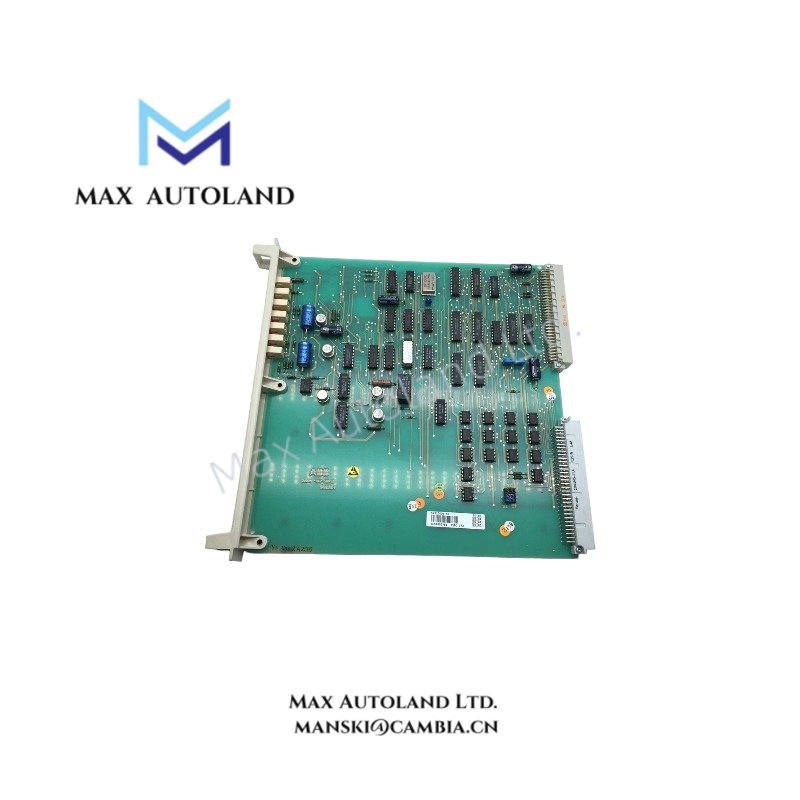
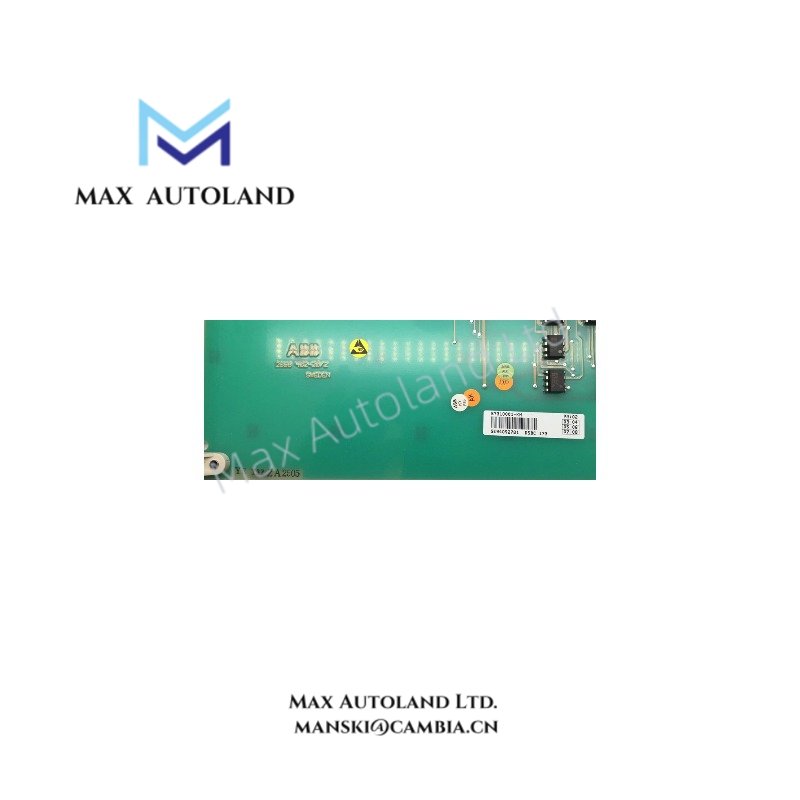
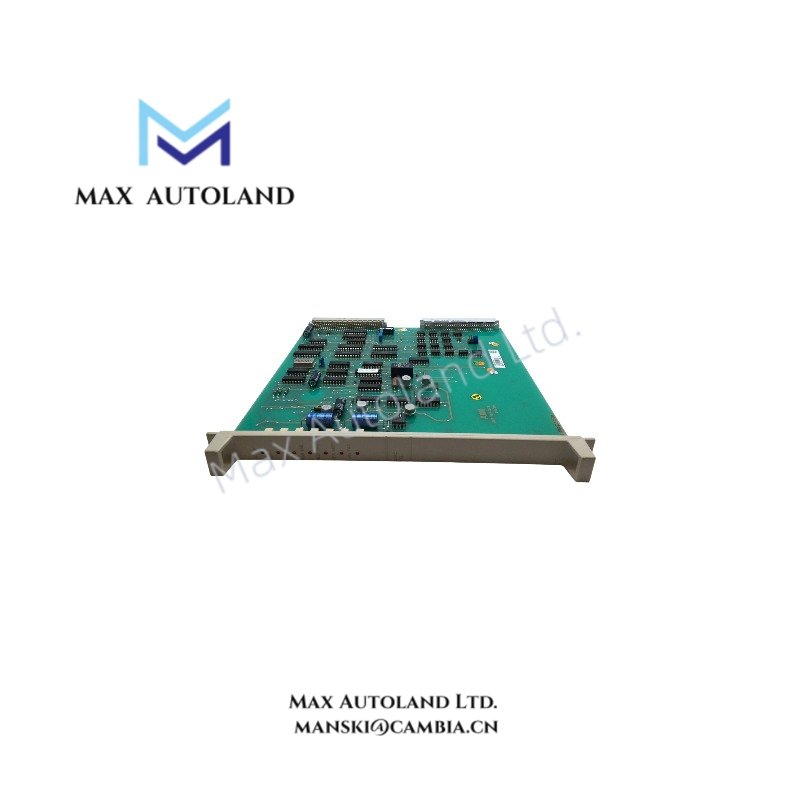
The ABB DSBC173, also cataloged as the DSBC 173 Bus Extender S100 I/O Bus module, operates as a dedicated hardware component for bus segmentation and signal regeneration within the S100 I/O communication network. The ABB DSBC173 (57310001-KH Bus Repeater Slave) provides direct physical layer execution for backplane-linked I/O bus extension and signal integrity maintenance.
Suffix Breakdown & Model Matrix
No validated manufacturer-published suffix decomposition is provided for DSBC173. The ordering code 57310001-KH is treated as an internal spare identification reference only. Functional designation is derived directly from product family classification: DSBC = S100 I/O bus communication extension hardware.
Hardware Specifications
| Parameter | Specification |
|---|---|
| Model Brand | ABB DSBC173 |
| Origin | Switzerland / EU (ABB manufacturing network) |
| Weight | 0.3 kg |
| Dimensions | 2.1 x 25 x 24.4 cm |
| OperatingTemp | Not specified by manufacturer |
| PowerConsumption | Not specified by manufacturer |
| Core Function | S100 I/O Bus signal repeating / bus extension |
| Interface Type | Backplane / S100 I/O bus coupling |
| Status Indicators | 7 LED diagnostic indicators |
| Device Role | Bus repeater slave module |
ABB S100 I/O Bus Communication Architecture Behavior
Within ABB S100 I/O systems, the DSBC173 operates at the backplane communication layer to extend and regenerate bus signals across segmented rack structures. As part of ABB PLC/DCS architecture, it participates in deterministic backplane data propagation where signal timing integrity is maintained through fixed-cycle bus arbitration. The module supports internal bus synchronization and signal reconditioning, ensuring consistent electrical propagation across distributed I/O nodes without altering logical process data.
Frequently Asked Questions
Q: Does DSBC173 support hot-swapping during S100 system operation?
A: Hot-swap capability is not defined for this module. In typical S100 architectures, insertion or removal should be performed under system power-off conditions to avoid backplane disturbance.
Q: What is the electrical role of the 7 LED indicators?
A: The LEDs provide local diagnostic states for bus activity, synchronization status, and segment communication integrity on the S100 backplane channel.
Q: Can DSBC173 operate in mixed I/O rack configurations?
A: It is designed for native S100 bus structures only. Mixed backplane architectures require validated compatibility at rack and controller level.
Field Installation Guidelines
The DSBC173 module shall be installed into a compatible ABB S100 I/O rack backplane slot with firm mechanical seating to ensure full bus connector engagement. All bus interface surfaces must remain free of oxidation or particulate contamination. Shielding continuity across rack assemblies shall be maintained through proper chassis grounding. Avoid routing high-voltage or high-frequency cables in parallel proximity to the S100 backplane path to minimize electromagnetic coupling effects on bus signal integrity. Module replacement should only be performed after complete de-energization of the rack system.
ABB Top Products
Customers Also Viewed
Contact: Manski Wong +86 18030205725 manski@cambia.cn



Reviews
There are no reviews yet.