
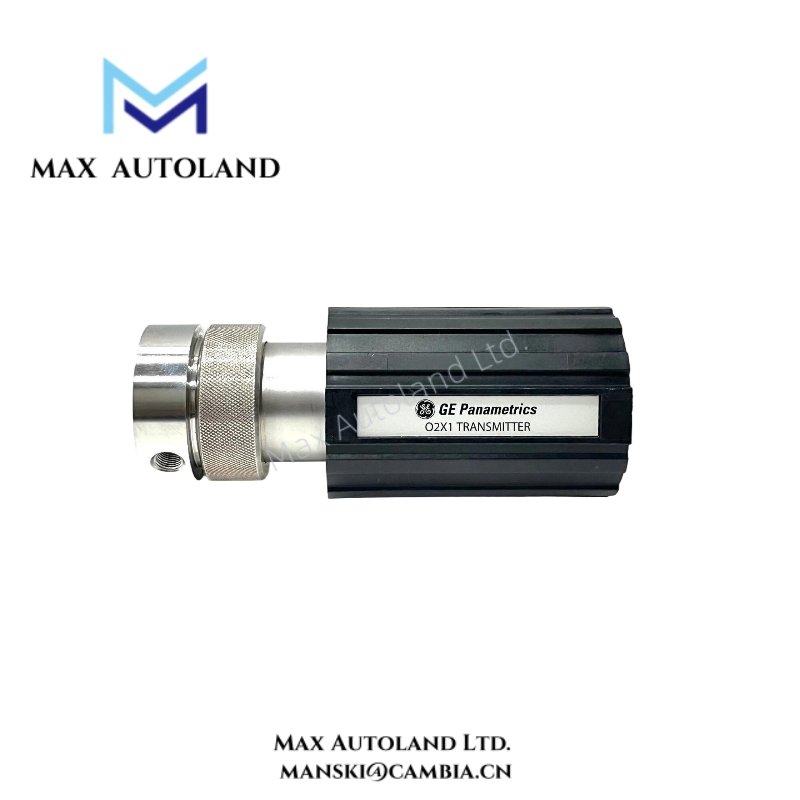
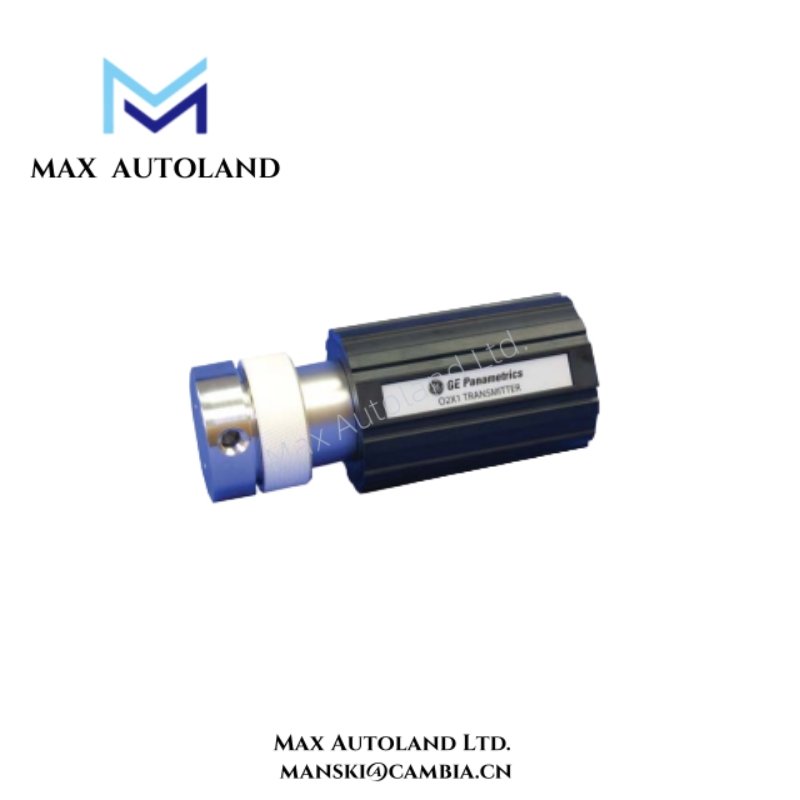
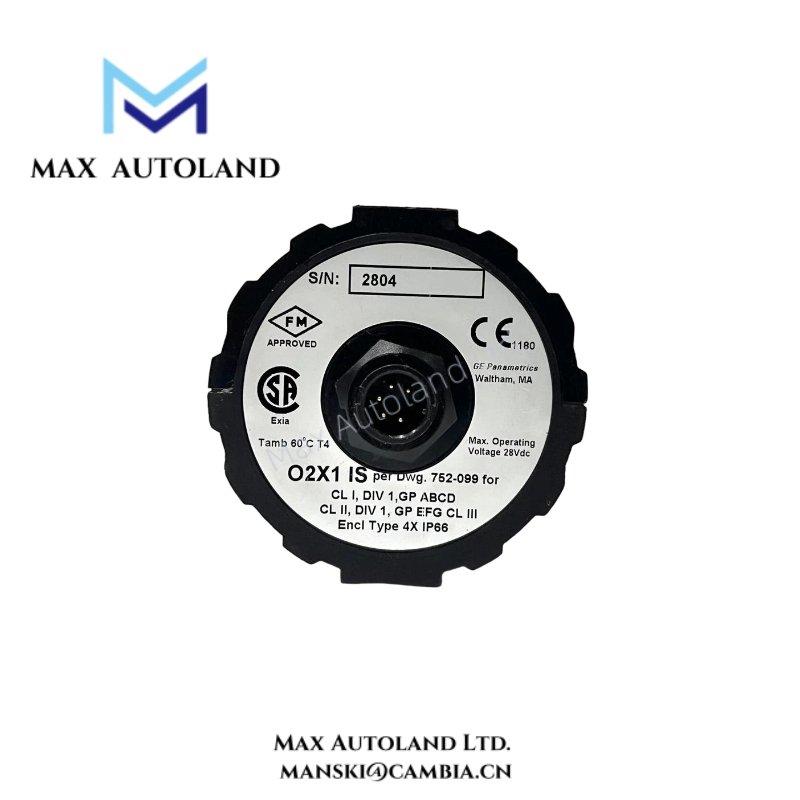

Overview
Specification
| Category | Specification |
|---|---|
| Sensor Type | Galvanic fuel-cell oxygen sensor |
| Measurement Ranges | 0–10 ppm; 0–100 ppm; 0–1,000 ppm; 0–10,000 ppm; 0–1%; 0–10%; 0–25% O₂ |
| Accuracy | ±1% of span (±2% for low-ppm ranges) |
| Repeatability | ±1% of span |
| Linearity | ±2% of span |
| Resolution | 0.1% of span |
| Response Time (T90) | Less than 15 seconds typical |
| Output Signal | Two-wire 4–20 mA analog output |
| Power Supply | 9–28 VDC loop-powered |
| Output Update Rate | 1 reading per second |
| Operating Temperature | 0°C to 45°C |
| Enclosure Material | Stainless steel or Delrin housing |
| Installation Environment | Indoor or outdoor industrial locations |
| Safety Rating | Intrinsically safe (hazardous-area versions) |
| Compliance | Meets international industrial measurement standards |
FAQ
A1: Yes, the transmitter supports multiple ranges from single-digit ppm to 25% oxygen, allowing use across many gas-analysis processes.
Q2: What type of signal does the O2X1 provide?
A2: It provides a two-wire 4–20 mA analog output that connects easily to PLC, DCS, or data loggers.
Q3: Is the O2X1 suitable for hazardous environments?
A3: Yes. Intrinsically safe versions allow installation in hazardous or explosive atmospheres.
Q4: How fast does the sensor respond to oxygen changes?
A4: The transmitter typically reaches 90% of a concentration change in less than 15 seconds.
Q5: How often must the sensor be replaced?
A5: Replacement frequency depends on gas composition and operating hours, but the galvanic design typically provides long service life with low maintenance.
Q6: Can the O2X1 operate outdoors?
A6: Yes. Its weather-resistant stainless-steel or Delrin enclosure makes it suitable for outdoor installations.


Reviews
There are no reviews yet.