



Overview
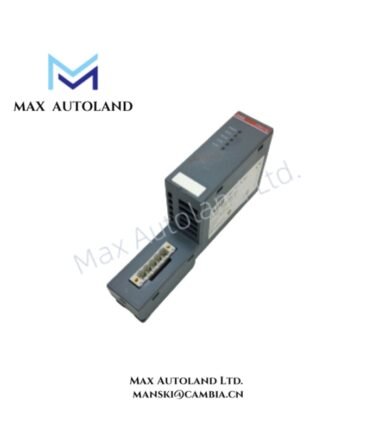
The ABB NINT-43C also cataloged as the NINT-43C interface module, operates as a dedicated hardware component for deterministic backplane signal routing and control data exchange within ABB industrial automation controller architectures.
Configured for backplane-level communication handling in ABB PLC/DCS rack systems, the ABB NINT-43C (NINT-43C interface module) provides direct electrical execution of module-to-module data transfer across system slot interconnects.
Suffix Breakdown & Model Matrix
No documented suffix segmentation or hierarchical model code structure is available for NINT-43C. The designation is treated as a fixed single-order hardware identifier.
Hardware Specifications
| Parameter | Specification |
|---|---|
| ModelBrand | ABB NINT-43C |
| Origin | Switzerland / Sweden (ABB global manufacturing network) |
| Weight | 0.12 kg |
| Dimensions | 14.2 x 11.5 x 2 cm |
| OperatingTemp | Not specified |
| PowerConsumption | Not specified |
| Function Type | Backplane Interface / Control Rack Communication Module |
| Installation Type | DIN-rail / rack-mounted (system dependent) |
ABB Backplane Communication and Control Integration Characteristics
ABB industrial control modules such as NINT-43C implement backplane bus communication velocity synchronization across rack-mounted controller environments. Signal exchange is executed through deterministic internal bus timing, supporting aligned module scan cycles and register-level data consistency.
The module architecture is compatible with industrial control network environments where Profinet and EtherNet/IP deterministic routing layers may coexist at higher system levels, while internal rack communication remains electrically isolated from field I/O segmentation. Firmware flash compatibility is dependent on host controller firmware branch alignment, ensuring version-controlled module initialization during system boot sequence. IO density scaling behavior is managed at chassis level rather than at individual module level.
Frequently Asked Questions
Q: Does the NINT-43C support hot-swap insertion under powered rack conditions?
A: Hot-swap capability is system-dependent. Backplane connector engagement must follow ABB rack sequencing rules to avoid transient bus disturbance.
Q: Is channel-to-channel electrical isolation implemented on this module?
A: Isolation is typically defined at rack and controller architecture level. The module primarily functions as a backplane communication interface without field isolation responsibilities.
Q: Can firmware mismatches prevent module recognition?
A: Yes. Controller firmware and module revision alignment is required for proper backplane enumeration during startup initialization.
Field Installation Guidelines
Ensure rack power is fully isolated before module insertion or removal. Align module guide rails with chassis slot tracks to prevent backplane connector pin stress. Maintain controlled insertion force to achieve full mating depth without partial contact states.
Backplane connectors must remain free of contamination or oxidation. Do not apply field wiring stress to module housing during installation. Verify chassis grounding integrity prior to energization to maintain stable reference potential across communication backplane.
ABB Top Products
Customers Also Viewed
Contact: Manski Wong +86 18030205725 manski@cambia.cn



Reviews
There are no reviews yet.