

Overview
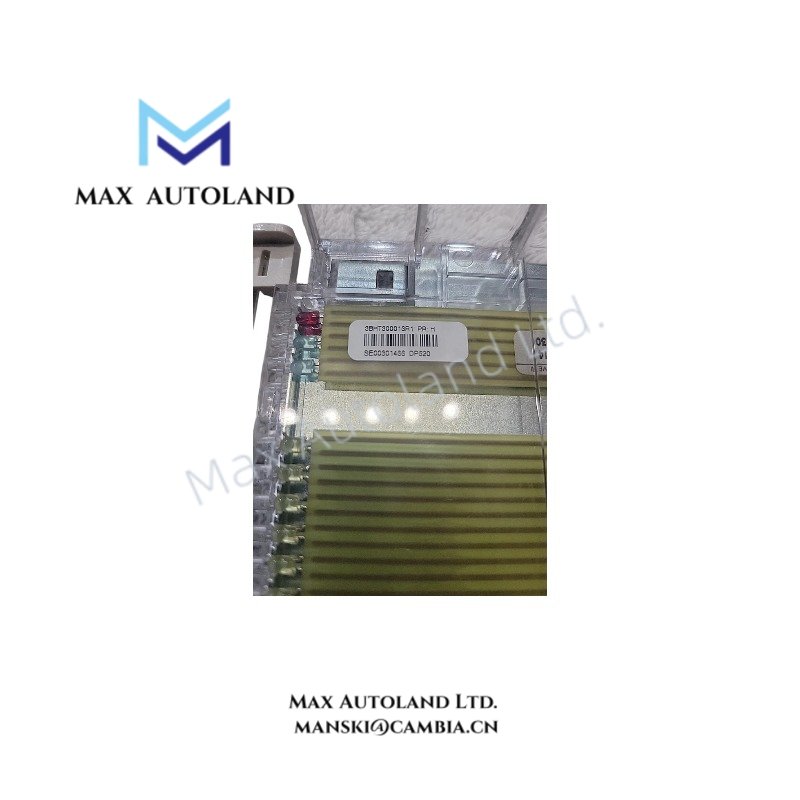
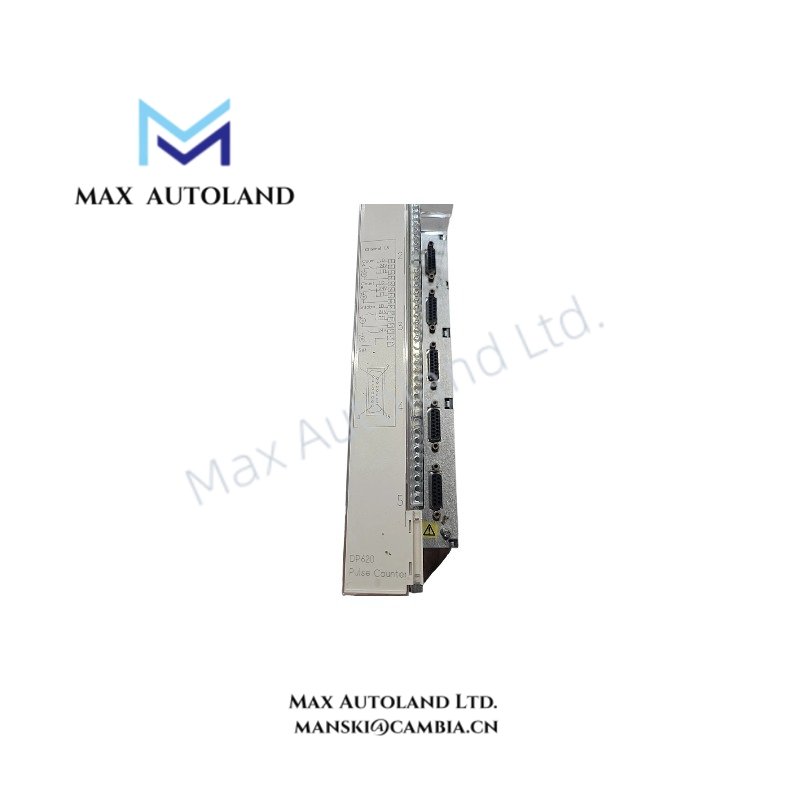
Configured for high-speed pulse acquisition in distributed control architectures, the ABB DP620 (3BHT300016R1 Pulse Counter) provides direct electrical execution of frequency and pulse accumulation tasks within ABB automation backplane environments. The module operates as a discrete counting interface for digital pulse streams, converting field-level switching events into processable counter values for controller-level integration. Signal handling is implemented through deterministic backplane communication with fixed scan synchronization behavior.
SuffixBreakdown&ModelMatrix
No structured suffix segmentation or functional variant matrix is defined for DP620 / 3BHT300016R1. The identifier is treated as a single fixed-order hardware reference without documented sub-revision decoding.
HardwareSpecifications
| Parameter | Specification |
|---|---|
| ModelBrand | ABB DP620 |
| Origin | Not specified |
| Weight | 1.44 kg |
| Dimensions | 4 x 26.5 x 27 cm |
| OperatingTemp | Not specified |
| PowerConsumption | Not specified |
| Product Type | Pulse Counter Module |
| Spare Model | 3BHT300016R1 |
| Functional Role | High-speed pulse counting input processing |
| Signal Interface | Digital pulse input channels |
Backplane Bus Synchronization & Pulse Processing Characteristics
The ABB DP620 implements backplane-coupled data transfer consistent with ABB distributed I/O architectures. Pulse accumulation is executed through synchronized scan cycles, ensuring deterministic transfer of counter values into controller memory space. The module behavior is aligned with fixed-cycle update logic, limiting jitter accumulation across high-frequency input transitions.
Channel-level pulse registration is handled via edge-detection circuitry, with internal debounce filtering applied at hardware level to suppress transient switching noise. Backplane communication timing is dependent on controller scan rate and rack arbitration timing.
FrequentlyAskedQuestions
Q: Does the DP620 support hot-swap insertion under live backplane conditions?
A: Hot-swap behavior is system-dependent. In most ABB rack implementations, removal or insertion under energized backplane conditions requires controller support for module isolation to avoid bus disruption.
Q: How are high-frequency pulses handled at the input stage?
A: Pulse inputs are processed through hardware edge detection circuits with internal filtering. Maximum count integrity depends on backplane scan synchronization and input conditioning.
Q: Is firmware upgradeable via controller communication bus?
A: No field firmware upgrade path is defined at module level. Behavior is fixed in embedded hardware logic and controller-side configuration.
FieldInstallationGuidelines
The DP620 shall be installed in a compatible ABB backplane rack with verified mechanical locking engaged on both upper and lower rail guides. Signal wiring must be separated from high-voltage conductors to minimize induced pulse distortion on input channels. Shield termination should be grounded at a single reference point to avoid ground loop formation across digital input commons. Connector seating must be fully engaged to ensure stable backplane continuity before energization of the rack system.
ABB Top Products
Customers Also Viewed
Contact: Manski Wong +86 18030205725 manski@cambia.cn


Reviews
There are no reviews yet.