



Overview
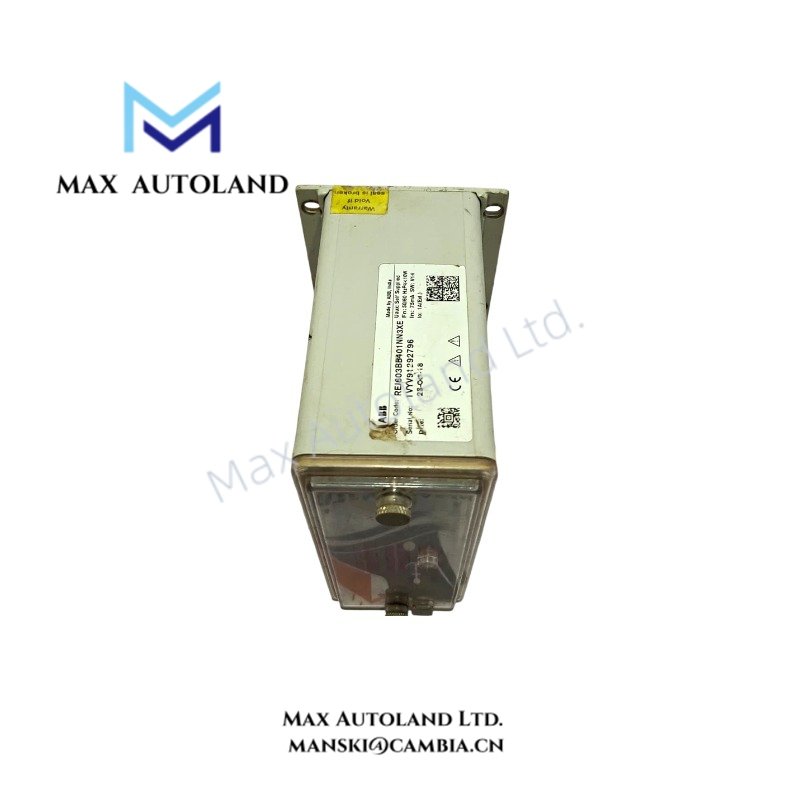
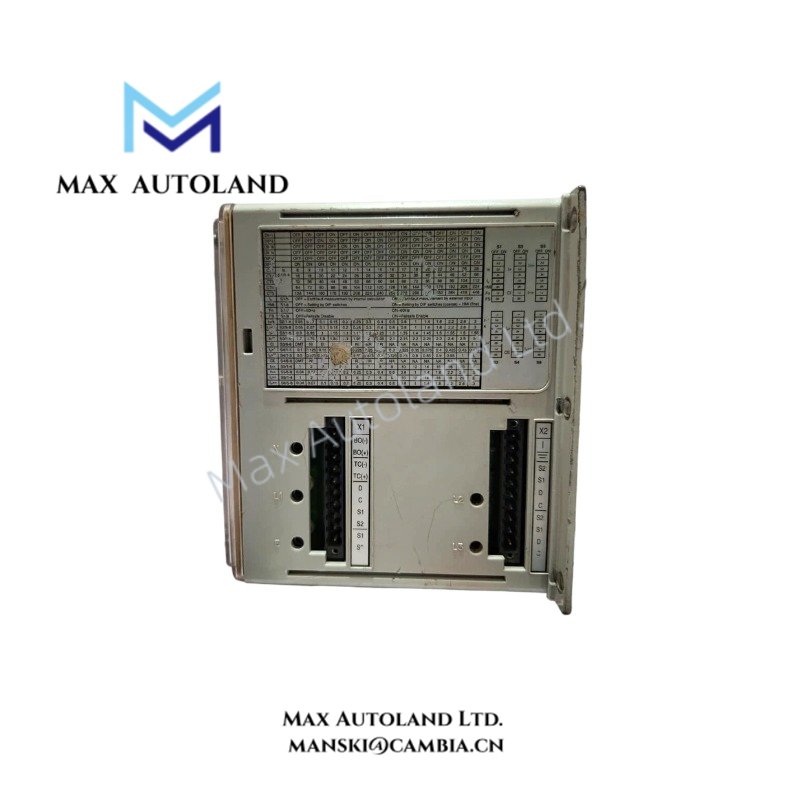
The ABB REJ603, also cataloged as the REJ603 self-powered feeder protection relay, detects phase overcurrent and earth-fault conditions in secondary distribution networks. It derives operating energy from current transformers (CTs) and executes protection tripping without a conventional auxiliary power supply, subject to the specified operating conditions.
Hardware Specifications
| Parameter | Specification |
|---|---|
| Model | REJ603 |
| Ordering Code | REJ603BB401NN3XE |
| Brand | ABB |
| Product Family | Relion |
| Product Series | 605 Series |
| Product Type | Self-Powered Feeder Protection Relay |
| Primary Function | Feeder overcurrent and earth-fault protection |
| Protection Functions | Phase overcurrent and earth-fault protection |
| Power Supply | CT-powered self-supply |
| Auxiliary Power | Not required for core self-powered protection functions, subject to operating conditions |
| Communication Interface | Front USB interface, as described in the supplied information |
| Event Recording | Event and fault records; verify configuration-specific capabilities |
| Installation | Secondary distribution switchgear and ring main units |
CT-Powered Protection and Trip Circuit Operation
The REJ603 obtains operating energy from the current transformers connected to the protected feeder. This arrangement supports protection functions in installations where a conventional auxiliary supply is unavailable.
Phase overcurrent protection evaluates measured phase current against configured protection characteristics. Earth-fault protection evaluates residual or earth-fault current according to the relay configuration and network earthing arrangement.
CT availability and current magnitude affect the relay’s ability to power its electronics and operate the trip circuit. Therefore, engineers must verify the minimum operating current, protection settings, CT requirements, and trip-output characteristics against the exact hardware variant.
As an ABB industrial protection device, the REJ603 must also be checked for configuration compatibility before replacement or integration. Do not assume that communication options, trip-coil compatibility, or setting ranges are identical across all ordering codes.
Frequently Asked Questions
Q: Can the REJ603 operate without an auxiliary power supply?
A: The REJ603 is designed for self-powered protection using energy derived from current transformers. Confirm the specified operating-current range and tripping conditions in the applicable technical manual.
Q: What should engineers verify before connecting the trip circuit?
A: Verify the trip-output type, required trip-coil characteristics, CT connections, wiring polarity, and minimum operating conditions. Confirm compatibility with the installed switchgear before energizing the circuit.
Q: Does the front USB interface provide continuous operating power?
A: The supplied information describes USB access for local data retrieval. It does not establish continuous protection operation from USB power. Confirm the interface’s supported functions in the exact model documentation.
Field Installation Guidelines
- Confirm the complete ordering code and hardware variant against the relay nameplate and approved project documentation.
- Verify CT ratios, secondary ratings, polarity, phase assignment, and earth-fault measurement connections before commissioning.
- Check the configured overcurrent and earth-fault settings against the protection coordination study.
- Verify trip-output compatibility with the installed circuit breaker or switchgear trip mechanism.
- Route CT secondary wiring separately from power conductors and high-noise switching circuits where practical.
- Apply the specified terminal torque, conductor size, insulation requirements, and enclosure clearances from the manufacturer documentation.
- Ground cable shields according to the project grounding design and the manufacturer’s instructions. Do not assume that every signal cable requires shield grounding at both ends.
- Test protection pickup, trip operation, indication, and event recording using approved commissioning procedures.
- Never open an energized CT secondary circuit. Isolate the primary circuit or use an approved CT shorting procedure before disconnecting CT wiring.
- Verify environmental limits and mounting dimensions using the applicable ABB installation manual rather than estimated values.
ABB Top Products
Customers Also Viewed
Contact: Manski Wong +86 18030205725 manski@cambia.cn



Reviews
There are no reviews yet.