
Overview
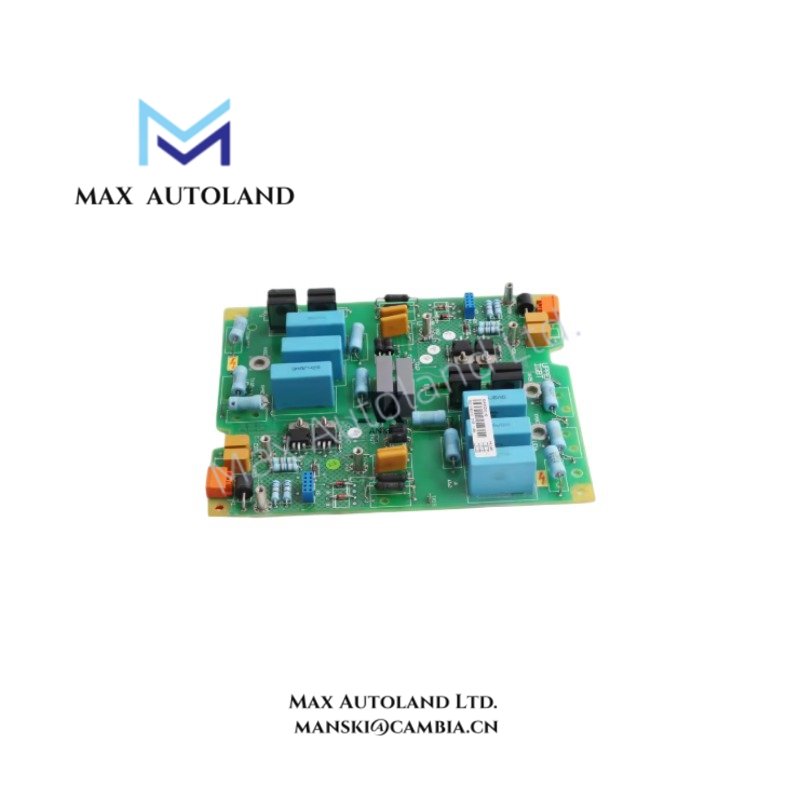
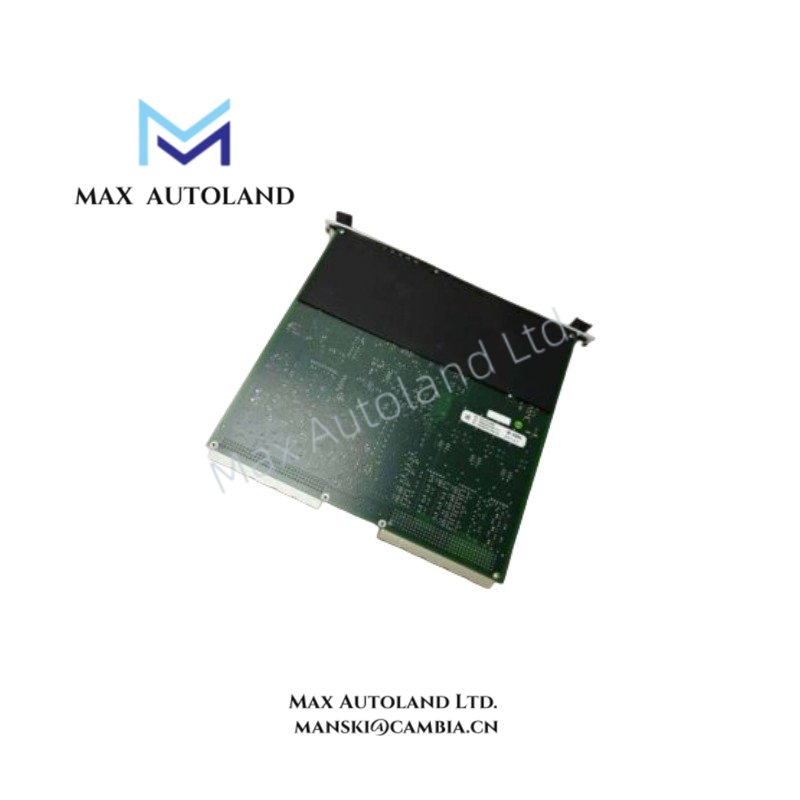
Configured for synchronization and signal interfacing within ABB legacy drive and control architectures, the ABB DYSF118B (61430001-XG) provides direct electrical execution of firing, timing, or reference signal conditioning tasks in rack-based automation systems. The ABB DYSF118B (61430001-XG) operates as a dedicated hardware component for deterministic control signal handling across ABB industrial control backplane environments.
Suffix Breakdown & Model Matrix
No official ABB public decomposition is available for DYSF118B (61430001-XG). The suffix structure is treated as a fixed ordering code identifying hardware revision and assembly variant. Internal functional segmentation is not disclosed at component level and must be derived from system-level documentation.
Hardware Specifications
| Parameter | Specification |
|---|---|
| ModelBrand | ABB DYSF118B |
| Weight | 0.3 kg |
| Dimensions | 18.5 x 15 x 2.5 cm |
| OperatingTemp | Not specified |
| PowerConsumption | Not specified |
| Product Type | Synchronization / Interface Control Module |
| Mounting | Rack / Backplane insertion module |
| System Role | Signal conditioning and timing coordination |
| Communication Layer | ABB proprietary backplane bus interface |
ABB Industrial Control Backplane Communication Characteristics
Within ABB PLC and drive ecosystems, modules of this class interface through deterministic backplane communication paths where timing alignment and slot-level synchronization govern module-to-module exchange. Firmware revision dependency may affect signal timing alignment and board-level handshake sequences. In mixed legacy architectures, compatibility is constrained by backplane voltage domain alignment and firmware flash consistency across controller and I/O segments.
Frequently Asked Questions
Q: Can DYSF118B be hot-swapped during system operation?
A: Hot-swap capability depends on the host rack design. In most ABB legacy backplane systems, removal under power is not supported due to signal line coupling and synchronization loss risk.
Q: Does the module require firmware alignment with the controller CPU?
A: Yes. Backplane synchronization and timing coordination require compatible firmware generations between controller and interface modules to maintain deterministic signaling behavior.
Q: What is the impact of backplane load on module operation?
A: Excessive backplane loading can introduce timing skew across shared communication lines, affecting synchronization accuracy and signal propagation stability.
Field Installation Guidelines
Ensure system power is fully isolated before insertion or removal of the module. The board must be aligned precisely with the rack guide rails to prevent edge connector stress. Avoid contamination on backplane contacts; oxidation or particulate buildup can degrade signal integrity. Maintain consistent grounding across the rack chassis to reduce electromagnetic coupling between adjacent slots. Verify firmware compatibility of the host controller prior to commissioning to avoid synchronization mismatch conditions.
ABB Top Products
Customers Also Viewed
Contact: Manski Wong +86 18030205725 manski@cambia.cn


Reviews
There are no reviews yet.