
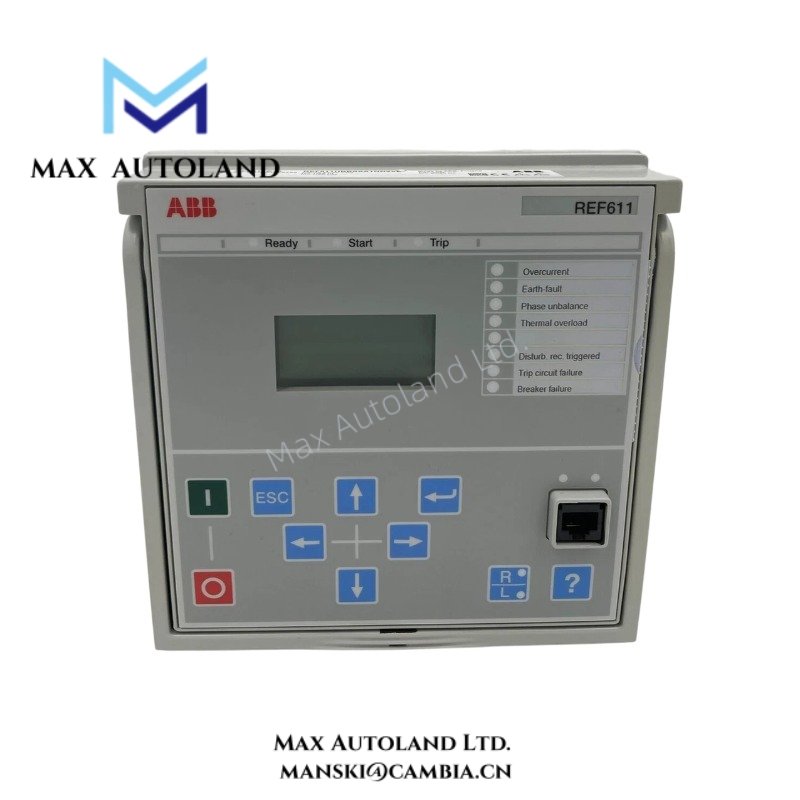
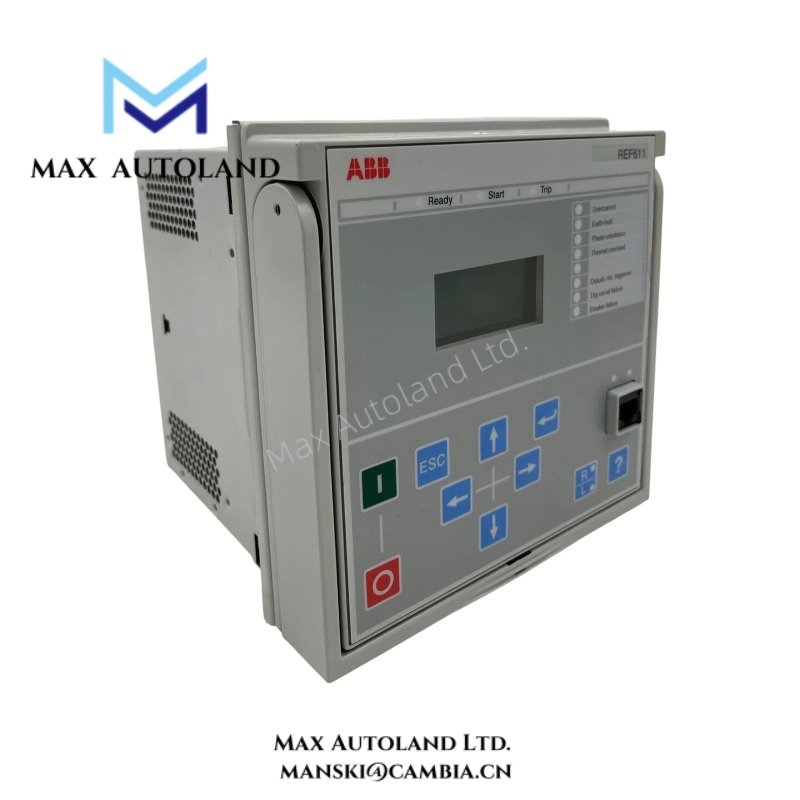
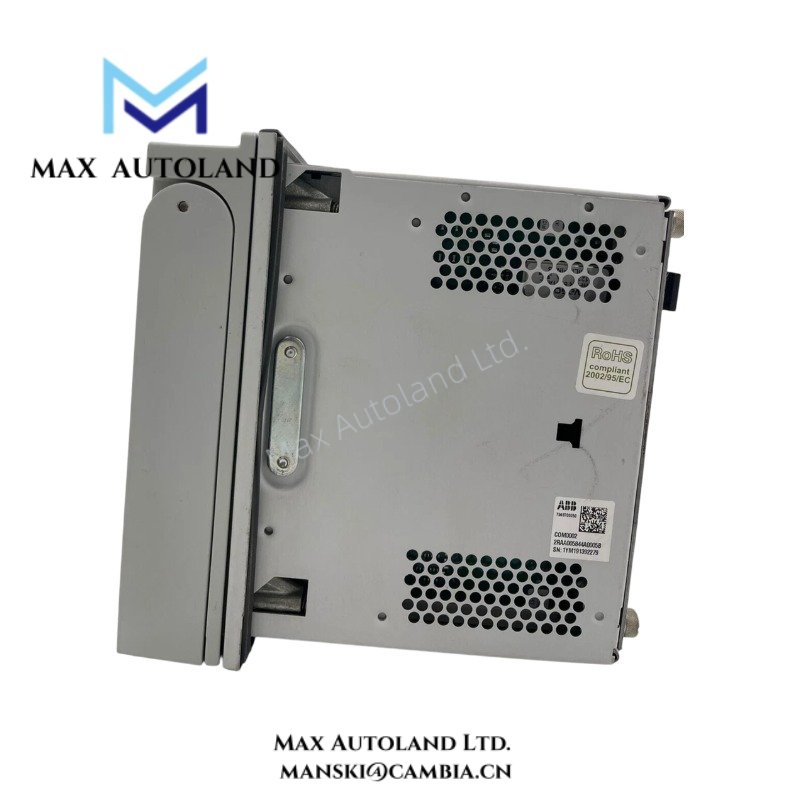
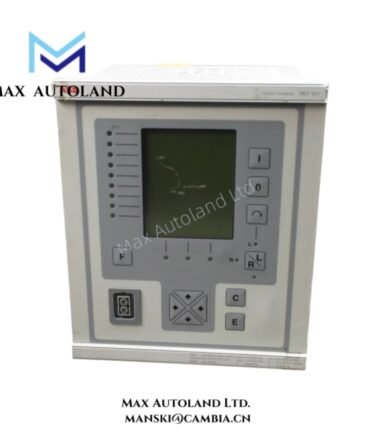
Overview
Specification
| Parameter | Specification |
|---|---|
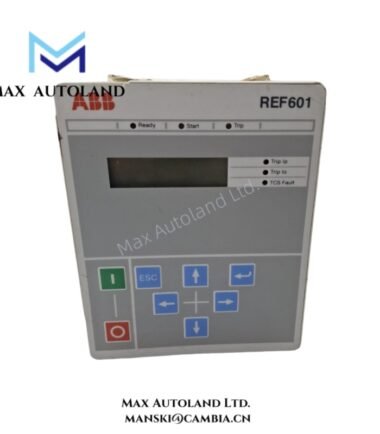
| Model | REF611 |
| Brand | ABB |
| Origin | Switzerland |
| Series | Relion REF600 Series |
| Function | Feeder Protection and Control |
| Communication | IEC 61850, Modbus, DNP3 (depending on configuration) |
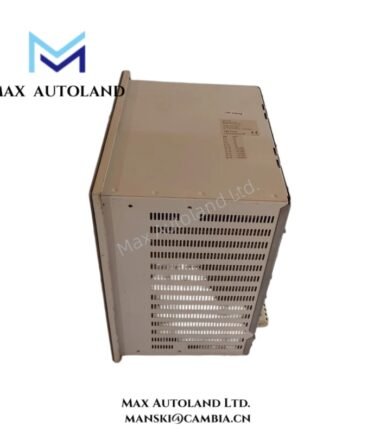
| Mounting | Panel mounted relay unit |
| Dimensions | Refer to ABB technical documentation |
| Weight | Refer to manufacturer documentation |
| Operating Temp | Refer to ABB specification sheet |
| Power Consumption | Depends on hardware configuration and I/O loading |
Firmware Flash Compatibility and Deterministic Control Behavior
Within ABB Relion REF611 architectures, firmware flash compatibility affects application loading consistency, protection parameter retention, and communication object mapping integrity. Therefore, engineers must align configuration files with the installed firmware revision before performing any upgrade or restoration procedure.
In addition, I/O density scaling depends on the number of configured binary inputs, binary outputs, and analog measurement channels. As a result, expansion of protection logic directly impacts internal signal allocation and functional resource mapping.
Moreover, deterministic communication behavior relies on station bus architecture, protocol configuration, and time synchronization settings. Engineers must verify IEC 61850 datasets, reporting structures, and logical node mapping to ensure stable network interaction.
Frequently Asked Questions
Q: Does REF611 support hot-swap replacement during energized operation?
A: Device replacement depends on panel isolation design and auxiliary power handling. Therefore, engineers must isolate control circuits and verify configuration backup before replacement.
Q: Can REF611 configuration files be reused across firmware versions?
A: Configuration reuse depends on firmware compatibility and hardware revision alignment. In addition, post-load validation of communication mapping and protection parameters is required.
Q: What wiring rules apply to communication and CT/VT circuits?
A: Communication cables and CT/VT wiring must be routed separately from power conductors. Shield termination must follow grounding scheme defined in the project electrical design.
Field Installation Guidelines
Technicians must verify terminal labeling, auxiliary supply polarity, and protective grounding continuity before energization.
In addition, installers must maintain separation between communication wiring, measurement circuits, and power cables to reduce electromagnetic interference.
During commissioning, engineers must validate protection element activation logic, trip path mapping, event recording functions, and communication status against the engineering configuration database.
ABB Top Products
Customers Also Viewed
Contact: Manski Wong +86 18030205725 manski@cambia.cn





Reviews
There are no reviews yet.