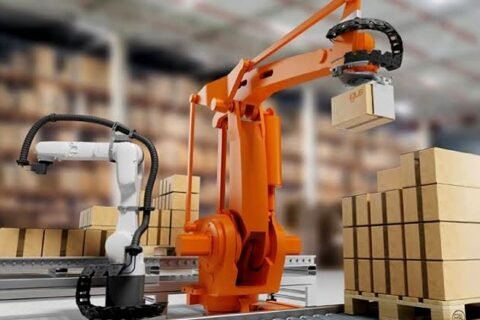
AK StepSERVO Drive Brings Motion Intelligence to Factory Automation
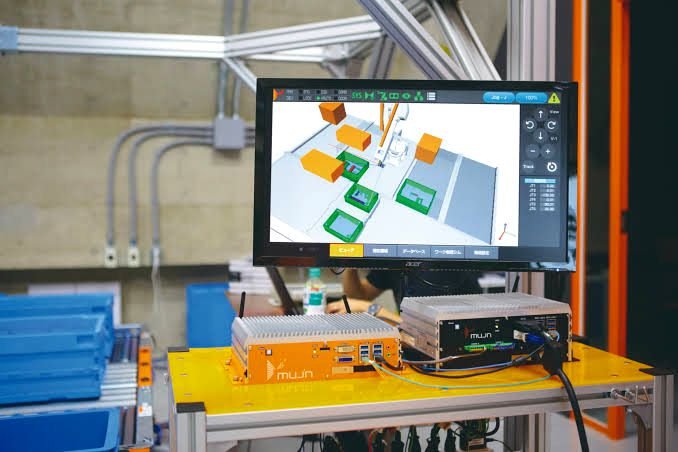
Modern factory automation systems require faster response, higher positioning accuracy, and stronger communication capabilities. The AMP AK StepSERVO Drive series addresses these demands by combining stepper motor technology with integrated servo control functions.
The AK series supports NEMA 11 to NEMA 34 frame motors and operates with a 24-48 VDC power supply. Moreover, the drive supports multiple industrial communication protocols, including EtherCAT, EtherNet/IP, CANopen, and Modbus. Therefore, engineers can integrate the system into different PLC and control system architectures.
From an industrial automation perspective, integrated motion drives reduce system complexity. Traditional stepper systems often require separate feedback devices and external motion controllers. However, the AK StepSERVO design combines these functions inside one platform, improving machine design flexibility.
Absolute Encoder Technology Improves Motion Control Performance
A key feature of the AK series is its batteryless 17-bit multi-turn absolute encoder. This encoder technology allows the drive to retain position information without requiring a backup battery.
As a result, machine builders can reduce homing procedures and simplify commissioning processes. This approach benefits applications where fast startup, repeatable positioning, and minimal maintenance are important.
In practical factory automation projects, absolute feedback systems help improve machine availability. For example, packaging machines, robotic positioning systems, and precision assembly equipment often require accurate motion control after power cycles. The integrated encoder design supports these requirements without adding external position sensors.
Motion Programming Software Simplifies Control System Configuration
The AK StepSERVO Drive works with AMP Q-Programming software for motion control applications. Engineers can configure motion sequences, machine functions, and operating parameters through the Stepper Suite II software environment.
The software supports USB-C configuration and allows both online adjustment and offline parameter preparation. In addition, an integrated oscilloscope function helps engineers monitor motion signals during commissioning.
The built-in diagnostic tools provide fault information and recommended corrective actions. Therefore, maintenance teams can identify problems faster and reduce machine downtime.
From an engineering experience perspective, software-based diagnostics have become increasingly important. Modern PLC, DCS, and motion control systems require tools that shorten troubleshooting cycles and improve operational efficiency.
EtherCAT and EtherNet/IP Enhance Industrial Communication
Industrial communication plays a major role in modern control systems. The AK StepSERVO Drive provides EtherCAT and EtherNet/IP communication versions to meet different automation requirements.
The EtherCAT model supports CoE (CAN over EtherCAT) and FoE (File over EtherCAT) communication methods. Furthermore, distributed clock technology enables synchronized operation across multiple motion axes.
This capability is especially suitable for high-performance control applications, including robotic cells, electronic camming systems, and synchronized production equipment.
The EtherNet/IP version provides more than 14 add-on instructions for PLC integration. In addition, both communication versions include six configurable inputs and three configurable outputs for flexible machine control.
MCA6 Motion PLC Supports Advanced Machine Control
Along with the AK StepSERVO Drive, AMP introduced the MCA6 Motion PLC platform. This compact motion controller uses an ARM-based processor and supports PLCopen and IEC 61131-3 programming standards.
The MCA6 can control up to 64 EtherCAT motion axes and connect with 128 additional EtherCAT devices. Therefore, it provides a scalable solution for complex machine automation projects.
For manufacturers upgrading existing control systems, motion PLC technology offers advantages compared with traditional PLC-only architectures. It combines logic control, motion coordination, and communication management within one control platform.
The growing integration between PLC systems and motion platforms represents an important trend in industrial automation. Manufacturers increasingly require unified control solutions instead of separate automation layers.
MET2 Distributed I/O Expands Control System Flexibility
The MET2 I/O system provides an EtherCAT-based distributed I/O solution for modern factory automation environments.
The platform supports up to 32 digital, analogue, and temperature measurement modules. Moreover, distributed I/O architecture allows engineers to install field devices closer to machines, reducing wiring requirements.
Compared with traditional centralized I/O structures, distributed control systems can improve installation efficiency. They also support modular machine designs where production lines require frequent expansion or modification.
In PLC and control systems, flexible I/O architecture has become a key factor for reducing engineering costs and improving system scalability.
Integrated Automation Architecture Combines Motion, PLC, and I/O Control
The AK Series, MCA6 Motion PLC, and MET2 I/O system form a complete industrial automation ecosystem.
The MCA6 controller manages machine logic and motion coordination. Meanwhile, the MET2 platform handles distributed field signals, and the AK drives provide precise multi-axis motion control.
Together, these components support advanced functions such as interpolation, electronic camming, synchronization, and robotic movement.
This integrated approach reflects the direction of modern control systems. Instead of using isolated devices from different suppliers, manufacturers increasingly prefer unified platforms that simplify engineering, programming, and maintenance.
Industrial Applications of Integrated Motion Control Solutions
Integrated motion control technology supports many industries that require precise automation performance.
Typical applications include:
- Packaging and filling machines requiring synchronized movement
- Labelling equipment requiring accurate positioning
- Robotic systems requiring coordinated multi-axis operation
- Laser processing equipment requiring high motion stability
- Medical equipment requiring repeatable mechanical movement
- Scientific research systems requiring precision control
For example, a multi-axis packaging machine can use a motion PLC for sequence management, distributed I/O for sensor collection, and StepSERVO drives for synchronized mechanical movement. This architecture improves machine performance while reducing system complexity.
Industry Perspective: Motion Control Becomes a Core Element of Smart Manufacturing
The development of integrated motion platforms reflects the evolution of industrial automation toward smarter and more connected production environments.
According to current automation trends, manufacturers are focusing on improving productivity, reducing engineering time, and increasing system transparency. Therefore, technologies that combine PLC, motion control, and industrial networking will continue to gain importance.
From a technical perspective, integrated motion solutions do not replace traditional PLC or DCS systems. Instead, they complement existing control architectures by providing specialized motion capabilities for machine-level automation.
For companies designing new production equipment, selecting a scalable control platform is critical. A well-designed automation architecture can support future expansion, improve maintenance efficiency, and reduce total ownership costs.
About AMP Motion Control Solutions
AMP provides motion control products and engineering solutions for industrial automation applications. The company focuses on stepper motor technology, servo systems, motion controllers, and integrated machine automation solutions.
Its products are applied in industries such as manufacturing, robotics, packaging, medical technology, and scientific equipment. Through motion hardware and software integration, AMP supports machine builders developing precise and connected automation systems.
About the Author
Liang Zhihao is an industrial automation technology specialist with experience in PLC, motion control, DCS, and factory automation systems. He has participated in technical documentation projects and automation solution analysis for global manufacturing applications. His professional interests include industrial networking, intelligent control systems, and next-generation automation architectures.