Rockwell Automation Wins Eight Brandon Hall Awards for Workforce Development
Rockwell Automation expands industrial automation talent development
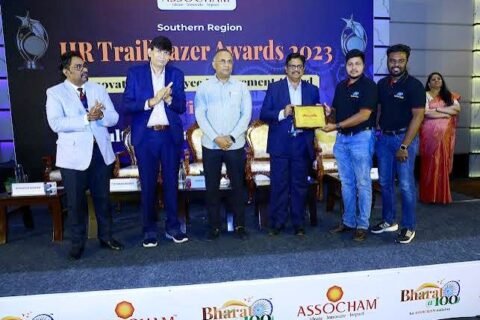
Rockwell Automation has received eight 2026 Brandon Hall Group HCM Excellence Awards for its Gurukul development program.
The program supports leadership development within Rockwell Automation India.
It also addresses future workforce requirements across industrial automation and digital transformation.
The awards span learning, talent management, leadership development, and future-of-work categories.
Brandon Hall Group announced its 2026 HCM Excellence Awards winners in August 2026. (Brandon Hall Awards)
Eight awards recognize the Gurukul learning program
The Gurukul program received three Gold awards in Learning and Development.
These awards covered competencies and skill development, blended learning, and learning team performance.
The program also received two Silver awards in Talent Management.
These categories included high-potential development and succession and career management.
In Leadership Development, Gurukul received one Gold and one Silver award.
The program also earned Silver in the Future of Work category.
That award recognized its approach to employee upskilling for future workplace requirements.
Brandon Hall Group lists these areas among its 2026 HCM Excellence Awards categories. (Brandon Hall)
Why workforce skills matter in industrial automation
Industrial automation companies face rapid changes in control systems and digital technologies.
PLC, DCS, SCADA, robotics, and industrial networking now operate within connected production environments.
Therefore, technical expertise alone may not prepare future leaders for broader responsibilities.
Engineering leaders also need commercial awareness and cross-functional communication skills.
They must understand how automation projects affect production, safety, maintenance, and business performance.
Rockwell Automation’s Gurukul program addresses this broader leadership requirement.
Gurukul prepares high-potential employees for wider roles
Rockwell Automation designed Gurukul for high-potential team leaders in India.
The program supports the company’s development toward a strategic Global Capability Center.
Rockwell Automation developed the program with Chrysalis HRD Pvt Ltd.
The nine-month program combines several learning methods.
Participants completed leadership assessments, workshops, simulations, and action-learning projects.
They also received global mentoring and professional coaching.
This blended structure connects classroom learning with practical leadership situations.
Brandon Hall Group specifically recognizes blended learning and leadership development within its 2026 award framework. (Brandon Hall)
Measurable results provide practical evidence
All 15 Gurukul participants completed the leadership program.
The reported participant satisfaction score reached 4.9 out of 5.
Eight participants received promotions during the program.
Three additional participants moved into expanded or different roles.
Managers also reported stronger enterprise perspectives among participants.
They observed improvements in collaboration and leadership ownership.
These measurements provide useful evidence beyond simple course completion rates.
For industrial organizations, career movement can offer a practical indicator of development impact.
Leadership development supports complex automation projects
Industrial automation projects often involve multiple technical and business functions.
A PLC migration can involve controls engineers, electricians, production teams, cybersecurity specialists, and managers.
A DCS modernization project can create similar cross-functional requirements.
Leadership teams must coordinate these groups while maintaining project objectives.
They also need to balance production continuity with engineering changes.
As a result, leadership development can complement technical training within automation organizations.
The value becomes more visible when employees move from specialist roles into enterprise responsibilities.
The program combines technical and organizational capabilities
Gurukul does not represent conventional product training for PLC or DCS platforms.
Instead, it focuses on capabilities that support broader organizational responsibilities.
Strategic thinking helps leaders connect technical decisions with business objectives.
Commercial awareness helps them understand project value and customer requirements.
Stakeholder influence helps them coordinate decisions across organizational boundaries.
These skills can support automation companies as engineering teams become more interconnected.
The same approach can apply to robotics, MES, industrial software, and digital transformation projects.
Why blended learning fits modern industrial organizations
Manufacturing environments rarely allow employees to rely on classroom training alone.
Production schedules, engineering projects, and customer requirements can limit traditional training time.
Blended learning provides a more flexible development structure.
Workshops can establish concepts, while simulations can recreate complex management situations.
Action-learning projects then connect those concepts with real organizational challenges.
Mentoring and coaching can provide additional feedback during implementation.
This model resembles how engineering teams often develop practical skills through projects.
Experience-based learning can strengthen automation leadership
In my view, industrial companies should connect leadership development with real operational challenges.
For example, a leadership project could address an automation upgrade or plant modernization program.
Participants could analyze downtime, maintenance requirements, cybersecurity risks, and production constraints.
They could then present improvement proposals to technical and business stakeholders.
This approach creates a direct connection between leadership skills and industrial operations.
It also gives managers clearer evidence of how participants handle complex decisions.
What the awards mean for industrial automation employers
The Gurukul results highlight a wider trend in industrial automation.
Automation companies increasingly need leaders who understand both technology and business operations.
This requirement extends beyond PLC programming or DCS configuration.
Modern leaders must also understand data, cybersecurity, robotics, software integration, and workforce development.
Therefore, industrial companies may need broader competency frameworks for future management roles.
Brandon Hall Group evaluates award entries using program design, objectives, benefits, measurable results, and supporting evidence. (Brandon Hall Awards)
Application scenario for factory automation organizations
A similar development model could support a large factory automation team.
A company could select experienced controls engineers as high-potential candidates.
The program could combine technical projects with leadership workshops and mentoring.
Participants might manage a PLC migration, DCS upgrade, or industrial network modernization project.
They could also analyze production risks and coordinate multiple engineering disciplines.
Management could then measure promotion rates, project outcomes, stakeholder feedback, and employee retention.
Such metrics would connect workforce development with measurable industrial performance.
The future of skills in industrial automation
Industrial automation will continue to combine physical equipment with software-based control and analytics.
This shift will change the skills required from engineering and management teams.
Technical specialists will increasingly work across PLC, DCS, robotics, data, and industrial cybersecurity environments.
At the same time, organizations will need leaders who can coordinate these technologies.
Rockwell Automation’s Gurukul program provides one example of this broader workforce development approach.
Its reported results also show why measurable outcomes matter in corporate learning programs.
For industrial companies, leadership development may become increasingly important as automation projects become more integrated.
About Rockwell Automation
Rockwell Automation is a global supplier of industrial automation and digital transformation technologies.
Its portfolio supports control systems, industrial software, information systems, and connected manufacturing applications.
The company operates across more than 100 countries and serves industrial customers worldwide.
Its workforce development initiatives form part of the broader capabilities required to support connected industrial enterprises.