How Factory Automation Changes Manufacturing Capacity
Industrial automation helps manufacturers increase production without expanding their workforce at the same rate. By integrating robotics, PLC control systems, and automated production equipment, factories can improve output and manage labor costs.
For decades, manufacturers relied on additional workers and production shifts to meet rising demand. However, modern factory automation offers another path. Manufacturers can increase capacity, respond to market changes, and improve resource utilization without proportional increases in headcount.
As a result, automation now influences more than production efficiency. It also changes workforce planning, operating costs, facility utilization, and long-term investment strategies.
The Challenges of Traditional Manufacturing Expansion
Traditional manufacturing models depend heavily on workforce availability. When orders increase, companies often recruit additional operators, extend working hours, or introduce new shifts.
However, recruitment takes time. Manufacturers must screen applicants, provide training, and verify production skills before new employees reach full productivity. These delays can prevent factories from responding quickly to sudden demand increases.
In addition, maintaining enough workers for peak production creates unnecessary costs during quieter periods. Conversely, staffing for average demand can leave manufacturers struggling during busy seasons. Both approaches can increase operating expenses and threaten delivery schedules.
Labor shortages create further challenges. High employee turnover and absenteeism make daily production planning less predictable. Consequently, even factories with advanced planning systems may struggle to maintain consistent output.
Some manufacturers use attendance bonuses and production incentives to improve staffing stability. Although these programs can support productivity, they also increase labor expenses. Industrial automation provides another way to reduce dependence on workforce availability.
How Industrial Automation Enables Flexible Scaling
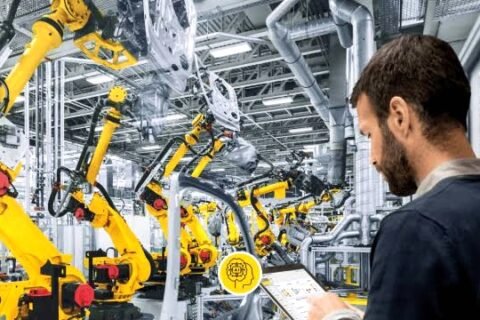
Automated manufacturing facilities use equipment capacity as a primary driver of production growth. Instead of adding workers for every increase in demand, manufacturers can expand the use of existing automated systems.
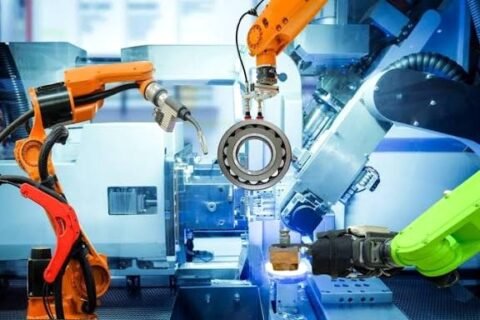
For example, a factory can activate additional robotic cells, adjust PLC-controlled production sequences, or extend equipment operating hours. These changes can increase throughput without requiring a comparable increase in operators.
Moreover, automation allows employees to focus on equipment supervision, maintenance, process optimization, and quality control. Engineers and technicians help maintain production performance while automated systems handle repetitive operations.
Manufacturers can also reduce operating hours when demand falls. Therefore, they can adjust production capacity without immediately making large workforce changes. This flexibility helps companies manage changing order volumes and control variable labor costs.
However, automation does not eliminate workforce requirements. Successful implementation still depends on suitable equipment, trained personnel, preventive maintenance, and effective production planning.
Industrial Automation Example: Comparing Labor Costs and Output
Consider a high-volume manufacturing line that upgrades from manual operations to an automated production system. The following example illustrates how automation can affect staffing, throughput, and labor costs.
Before Automation: Labor-Intensive Production
The original production line employs 23 people to produce 500 units per hour. Its workforce includes 20 production workers, two supervisors, and one maintenance technician.
The operation incurs approximately $451 in labor costs per hour. At 2,080 operating hours annually, that equals about $938,000 per year.
Consequently, the line spends approximately $902 on labor for every 1,000 units produced. This cost structure leaves the manufacturer heavily dependent on staffing levels and manual production efficiency.
After Automation: Higher Throughput With Fewer Employees
After upgrading the line, the manufacturer operates with nine employees. Four operators monitor equipment, while three technicians maintain electrical and mechanical systems.
An automation engineer manages programming and continuous improvement. Meanwhile, one supervisor oversees production activities and coordinates operational requirements.
The automated line produces 1,200 units per hour. Its stated labor cost falls to approximately $316 per hour, or $658,000 annually.
As a result, labor costs decline to roughly $263 per 1,000 units. The manufacturer achieves a 61% workforce reduction while increasing production capacity by 140%.
Calculating Automation Savings and Payback
The example indicates annual labor savings of approximately $280,000. With an initial investment of $900,000, the simple payback period reaches about 3.2 years.
Moreover, the labor cost per 1,000 units falls by approximately 71%. These results demonstrate how industrial automation can improve output while reducing direct labor requirements.
However, manufacturers should treat these figures as an illustrative scenario rather than a universal benchmark. Actual returns depend on equipment costs, utilization, maintenance, energy consumption, financing, and product quality.
A complete investment assessment should also include integration expenses, safety systems, spare parts, software, and employee training. Therefore, manufacturers should evaluate total cost of ownership alongside labor savings and production gains.
The Manufacturing Workforce Paradox
Industrial automation reduces the need for repetitive manual work, but it increases demand for specialized technical skills. This shift creates a new challenge for manufacturers planning their workforce.
Automated facilities need operators who understand equipment behavior and production processes. They also require technicians with electrical and mechanical skills, engineers who can configure control systems, and specialists who can interpret production data.
In particular, PLC programming, industrial networking, robotics, and system diagnostics have become valuable manufacturing capabilities. Depending on the application, DCS platforms, machine vision, and supervisory control systems also support automated operations.
However, companies cannot easily retrain every employee for a highly technical role. Some workers may lack the background required for complex maintenance or programming tasks.
Therefore, manufacturers often combine internal training with external recruitment. They can develop existing employees who demonstrate suitable technical aptitude while hiring specialists for positions that require deeper expertise. Natural attrition and workforce transition programs may also help companies manage organizational changes.
How Manufacturers Can Prepare for Automation
Manufacturers should begin by identifying production bottlenecks and repetitive tasks that offer measurable automation benefits. A clear baseline helps teams compare existing labor costs, throughput, downtime, and quality performance against future targets.
Next, companies should assess whether robotics, PLC-based control systems, machine vision, or other factory automation technologies suit their production requirements. They should also consider equipment compatibility, process safety, maintenance access, and integration with existing systems.
In addition, workforce planning should accompany every automation project. Employees need appropriate training in equipment operation, troubleshooting, preventive maintenance, and industrial control systems.
Finally, manufacturers should track key performance indicators after commissioning. Useful measures include units per hour, labor cost per unit, equipment availability, unplanned downtime, defect rates, and return on investment.
These metrics help management determine whether automation delivers the expected operational and financial benefits. They also provide a basis for continuous improvement and future capacity planning.
The Future of Industrial Automation and Manufacturing Capacity
Industrial automation is changing how manufacturers approach production growth. Companies can increase throughput through robotics, programmable controllers, and integrated control systems without expanding headcount at the same rate.
However, technology alone does not guarantee better performance. Manufacturers must combine appropriate equipment, skilled employees, sound maintenance practices, and realistic investment planning.
The workforce will also continue to evolve. As automated systems take on more repetitive tasks, technical expertise and problem-solving skills will become increasingly important.
Ultimately, manufacturers that align automation investments with production goals and workforce development can build more flexible operations. This approach helps them respond to changing demand while maintaining control over labor costs and production capacity.