Siemens and Machine Builders Agree on Data Alliance
Siemens Expands Industrial AI Strategy with Manufacturing Data Collaboration
Siemens has formed a major industrial AI alliance with leading machine tool manufacturers and research institutions. The partnership focuses on sharing engineering, production, and machine data to accelerate generative AI innovation in industrial automation.
The alliance includes Grob, Trumpf, Chiron, Renishaw, Heller, Voith Group, and RWTH Aachen University’s Machine Tool Laboratory (WZL).
This collaboration supports Siemens’ long-term vision for its Industrial Foundation Model, first introduced at Hannover Messe 2025.
The initiative also reflects the growing importance of AI in factory automation, PLC systems, DCS control systems, and advanced manufacturing environments.
Industrial AI Becomes a Strategic Priority for European Manufacturing
Siemens CEO Roland Busch emphasized that industrial AI offers significant opportunities for Europe’s industrial economy.
Industries such as automotive, chemicals, pharmaceuticals, energy, healthcare, transportation, and mechanical engineering increasingly rely on intelligent automation technologies. Therefore, manufacturers require scalable AI systems capable of handling complex industrial workflows.
The alliance aims to unlock new productivity levels by combining high-quality industrial data with generative AI technologies.
From an industry perspective, access to trusted manufacturing data remains one of the most important requirements for successful industrial AI deployment.
Shared Machine Data Improves Generative AI Performance
The participating companies will exchange anonymized machine and manufacturing data under strict cybersecurity and data protection standards.
This data will help train AI models specifically designed for industrial environments. Unlike general-purpose AI systems, industrial AI models must understand machine behavior, production workflows, and engineering processes.
As a result, specialized industrial foundation models can provide more accurate recommendations for factory automation and control systems applications.
Moreover, the collaboration highlights a growing trend toward secure industrial data ecosystems that support AI innovation without compromising operational security.
Automated NC Programming Enhances Manufacturing Efficiency
One important application involves the automatic generation of NC programs for machine tools.
NC programs control machining operations and provide detailed production instructions for industrial equipment. Traditionally, programmers spend significant time creating and optimizing this code manually.
Generative AI can simplify this process by creating machine programs faster while reducing coding errors. Consequently, engineers can focus more on advanced manufacturing tasks and process optimization.
For industrial automation environments, automated programming may improve production flexibility and shorten product development cycles.
AI Supports Predictive Maintenance and Adaptive Manufacturing
The alliance also plans to develop AI solutions for predictive maintenance and adaptive manufacturing.
Predictive maintenance systems analyze machine data to identify potential equipment failures before breakdowns occur. Therefore, manufacturers can reduce unplanned downtime and improve asset reliability.
In addition, adaptive manufacturing systems can adjust machine parameters automatically based on changing production conditions.
These capabilities closely align with modern smart factory strategies that integrate AI, IoT sensors, PLC controllers, and DCS infrastructure into connected production environments.
From a technical perspective, AI-driven manufacturing optimization could significantly improve energy efficiency and operational stability.
Industrial Data Quality Remains Essential for AI Success
Roland Busch highlighted that high-quality machine data from multiple manufacturers plays a critical role in industrial AI development.
Industrial environments generate enormous amounts of operational data every day. However, fragmented data structures often limit the effectiveness of AI systems.
By creating a shared industrial data ecosystem, Siemens and its partners aim to improve AI accuracy across engineering, manufacturing, and maintenance applications.
This approach may also encourage broader standardization within industrial automation and smart manufacturing industries.
IT and OT Integration Accelerates Smart Factory Development
The alliance further supports the growing convergence of Information Technology (IT) and Operational Technology (OT).
Modern manufacturing facilities increasingly connect enterprise software with factory-level control systems. Consequently, AI platforms must integrate smoothly with PLC systems, MES software, SCADA platforms, and industrial IoT networks.
Industrial AI models that understand both operational and engineering data can improve decision-making across the entire production lifecycle.
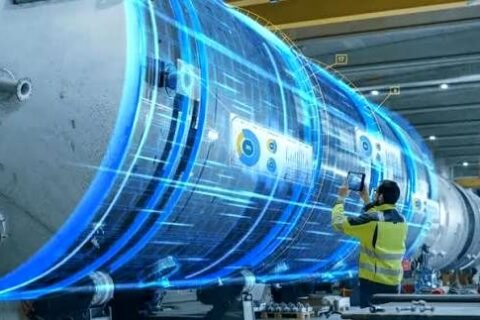
This convergence also strengthens digital twin applications, autonomous manufacturing, and real-time production analytics.
Industry Perspective: Industrial AI Could Reshape Manufacturing Operations
The manufacturing industry continues to face labor shortages, rising production costs, and stronger global competition.
Therefore, companies increasingly invest in AI-driven industrial automation technologies to improve productivity and operational resilience.
The Siemens-led alliance demonstrates how collaborative industrial ecosystems may accelerate AI adoption across multiple sectors.
From an industry viewpoint, companies that combine trusted industrial data with scalable AI infrastructure may gain long-term competitive advantages in smart manufacturing.
Moreover, Europe’s industrial sector could strengthen its technological leadership through open collaboration between machine builders, software providers, and research organizations.
Real-World Application Scenarios for Industrial AI
The alliance’s industrial AI technologies may support applications such as:
- Automated NC programming for machine tools
- Predictive maintenance in factory automation systems
- AI-driven quality inspection and process optimization
- Energy-efficiency management in industrial facilities
- Digital twin simulation for production environments
- Adaptive manufacturing using real-time machine data
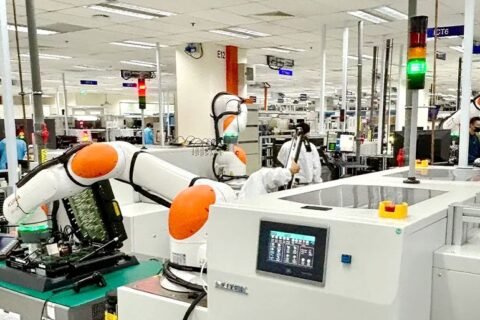
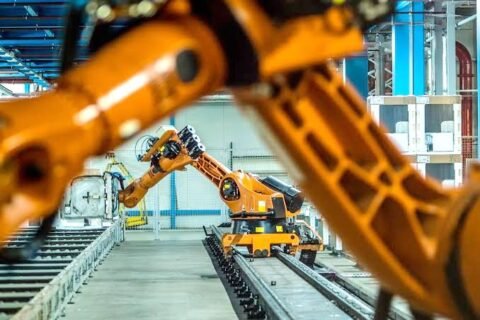
- Smart robotics and autonomous production systems
- Industrial analytics integrated with PLC and DCS platforms
In practical factory environments, these technologies can reduce downtime, improve accuracy, and accelerate production planning.
Conclusion
The Siemens industrial AI alliance marks an important milestone for smart manufacturing and industrial automation development.
By combining machine data, engineering expertise, and generative AI technologies, the partnership aims to create more intelligent and adaptive manufacturing systems.
In addition, the initiative demonstrates how industrial AI, factory automation, PLC systems, and advanced control technologies continue converging into fully connected smart factory ecosystems.
As manufacturers pursue greater efficiency, sustainability, and flexibility, industrial AI alliances like this may shape the future of global manufacturing innovation.