Captec Invests in Advanced Surface Treatment Infrastructure to Meet Highest BR 3939 Warpaint Standards
Captec Advances Industrial Automation Surface Treatment Infrastructure
Captec has expanded its advanced surface treatment capacity.
This upgrade supports higher reliability demands in modern industrial automation and defence manufacturing.
The company now aligns its processes with BR 3939 Warpaint standards.
These standards are critical for high-performance control systems and mission-critical environments.
Therefore, Captec strengthens its position in factory automation supply chains.
It also improves long-term durability for engineered subsystems used in harsh conditions.
Strategic Expansion with SurTec Chemical Processing Technology
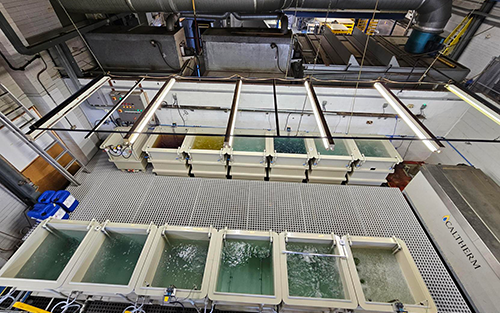
Captec developed the new facility in collaboration with SurTec.
This partnership improves chemical precision in industrial surface engineering.
The production line expanded from six tanks to twelve tanks.
As a result, process flexibility and coating consistency improved significantly.
Moreover, the system follows SurTec best-in-class chemical processing standards.
This supports higher stability for components used in PLC and DCS environments.
In addition, engineers can now achieve ultra-low surface resistance.
This is essential for high-reliability control systems in automation industries.
Compliance with BR 3939 Warpaint Standards for Critical Systems
The upgraded infrastructure fully supports BR 3939 Warpaint requirements.
These standards define advanced protection for defence and aerospace systems.
Therefore, Captec can now deliver improved corrosion resistance and surface durability.
This reduces lifecycle risks in harsh operational environments.
In industrial automation, material reliability directly affects system uptime.
However, surface degradation often remains a hidden failure factor.
This upgrade helps eliminate that risk at the manufacturing stage.
It ensures stronger performance for embedded control system components.
Industrial Automation Value for PLC, DCS, and Factory Systems
Modern PLC and DCS architectures demand stable and durable hardware.
Surface treatment directly impacts connector reliability and subsystem performance.
Moreover, factory automation systems require consistent electrical grounding surfaces.
Ultra-low resistance coatings improve signal stability and system safety.
Therefore, this development supports broader industrial automation integration.
It also enhances subsystem engineering for complex manufacturing platforms.
From an industry perspective, surface engineering is often underestimated.
However, it plays a critical role in long-term system reliability.
Industry Recognition and DSEI Exhibition Showcase
Captec will present its upgraded capability at DSEI.
The company will exhibit at Stand S5-552 within the Canadian Pavilion.
This event is a key global platform for defence and industrial technologies.
Therefore, it strengthens Captec’s visibility among international system integrators.
The demonstration will focus on advanced subsystem engineering solutions.
It will also highlight next-generation industrial automation applications.
Expert Perspective on Surface Engineering Trends in Automation
In my view, surface treatment is becoming a strategic automation discipline.
It now influences reliability as much as software or control logic.
Moreover, demand for high-assurance systems continues to grow globally.
This includes aerospace, maritime, and advanced manufacturing sectors.
Therefore, companies investing in chemical precision gain long-term advantage.
They improve both system lifespan and operational safety margins.
This trend aligns closely with Industry 4.0 principles.
It integrates material science directly into automation system design.
Application Scenarios in Industrial Automation Systems
This upgraded capability supports several real-world industrial applications.
It improves reliability in PLC-controlled aerospace subsystems.
It also enhances corrosion resistance in marine automation platforms.
In DCS environments, it ensures stable signal grounding and reduced interference.
Moreover, it supports high-performance factory automation assembly systems.
These improvements are especially valuable in mission-critical infrastructure.
Failure tolerance in these environments must remain extremely low.