Driving Global Industrial Automation and Smart Manufacturing Innovation
Singapore Becomes a Global Engine for Industrial Automation Innovation
The global industrial automation market is entering a new growth phase. Analysts expect the sector to approach US$440 billion by 2030, driven by smart manufacturing, digital transformation, and connected factory technologies.
Rockwell Automation continues to play a major role in this transformation. The company develops industrial automation solutions that help manufacturers improve production efficiency, operational visibility, and process control.
From PLC systems and industrial networks to software platforms and lifecycle services, Rockwell Automation supports manufacturers across multiple industries. Its technologies operate behind many everyday products, including medicines, vehicles, electronics, and packaged foods.
Manufacturing companies increasingly require flexible control systems that can adapt to changing production demands. Therefore, industrial automation providers must combine hardware expertise with software intelligence and data-driven solutions.
Rockwell’s Singapore operation demonstrates how a regional manufacturing center can become a global innovation platform.
Rockwell Automation Builds a Strategic Industrial Automation Presence in Singapore
Rockwell Automation established its Singapore operations in 1991 with a regional sales office. Over three decades later, the location has developed into a major hub for research, manufacturing, and regional business activities.
The Singapore facility supports Rockwell’s three core business areas:
- Intelligent Devices
- Software & Control
- Lifecycle Services
This integrated structure allows engineering teams, manufacturing specialists, and customer support professionals to collaborate more effectively.
In my experience working with industrial automation systems, successful factories rarely depend on a single technology. Instead, they combine PLC control, DCS architecture, industrial communication networks, and intelligent manufacturing software.
Rockwell’s Singapore model follows this approach by connecting product development with real factory requirements.
Moreover, Singapore provides access to advanced infrastructure, skilled engineers, and strong industrial partnerships. As a result, Rockwell can quickly respond to customer requirements across Southeast Asia, China, and India.
Smart Manufacturing Technologies Developed in Singapore Reach Global Markets
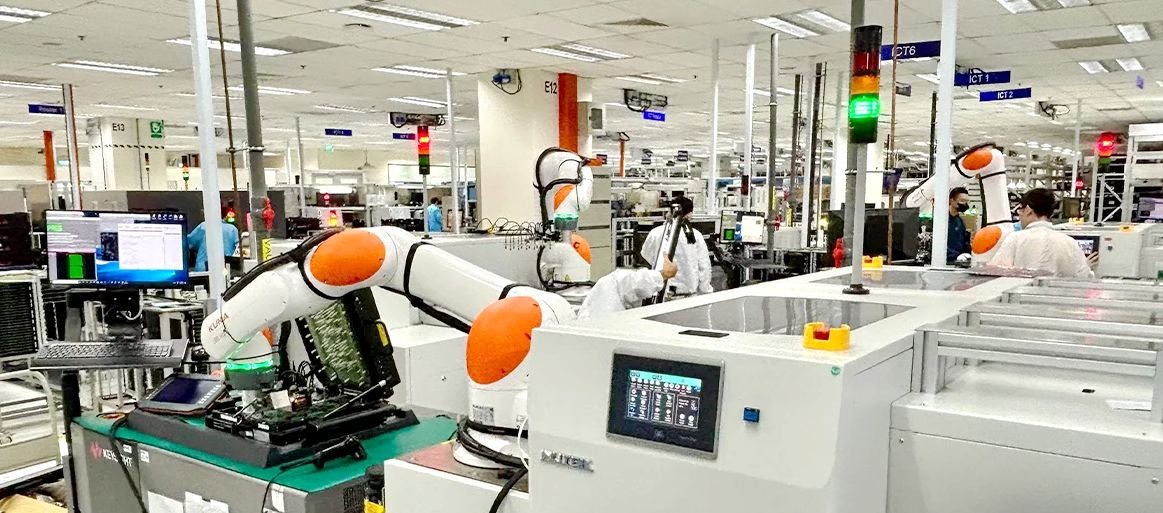
Rockwell Automation uses Singapore as a testing environment for next-generation factory automation solutions.
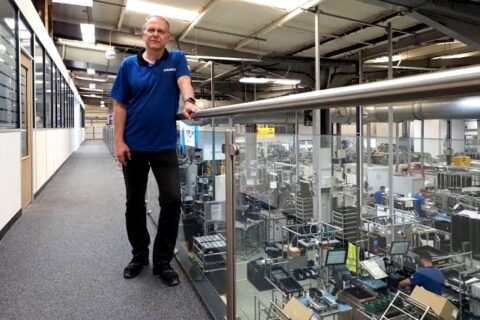
The company combines research and development with manufacturing operations at the same location. Therefore, engineers can test prototypes directly in production environments, analyze performance data, and improve designs faster.
This approach reduces development cycles and improves product validation.
For industrial automation manufacturers, this method creates an important advantage. Traditional product development often separates engineering teams from factory operations. However, direct interaction between developers and production environments helps identify practical challenges earlier.
Singapore-developed technologies have contributed to Rockwell’s global product portfolio. The company has applied operational methods from its Singapore facility across its worldwide manufacturing network.
These practices include:
- Digital production monitoring
- Automated quality inspection
- Predictive maintenance
- Industrial data analytics
- Autonomous material handling systems
Such applications represent the transition from traditional factory automation toward intelligent manufacturing ecosystems.
How Rockwell Uses PLC, Control Systems, and Digital Transformation Technologies
Modern manufacturing requires more than conventional automation equipment. Factories now need connected control systems that integrate production data, machine intelligence, and business decision-making.
Rockwell Automation addresses these requirements through its industrial automation ecosystem.
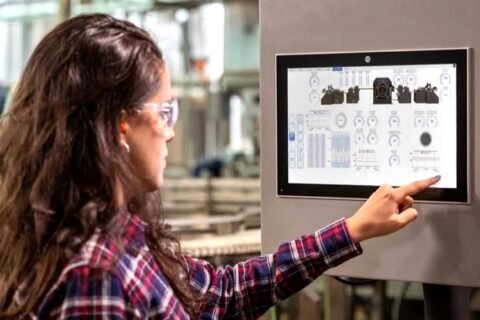
PLC technology remains a fundamental component of factory automation. Programmable logic controllers manage machine sequences, process operations, safety functions, and real-time control tasks.
However, modern plants increasingly combine PLC systems with advanced software platforms. These platforms collect operational data and provide insights for production optimization.
DCS technology also remains important in industries such as:
- Pharmaceuticals
- Energy
- Chemicals
- Food processing
These industries require continuous process monitoring, precise control loops, and high availability.
Rockwell’s solutions support manufacturers by connecting field-level devices with supervisory systems and enterprise platforms.
In practical industrial projects, the biggest challenge is not installing automation hardware. The real challenge involves integrating equipment, software, cybersecurity, and workforce capabilities into one coordinated system.
Therefore, successful digital transformation requires both technology investment and operational expertise.
Industry 4.0 Applications Improve Factory Performance and Productivity
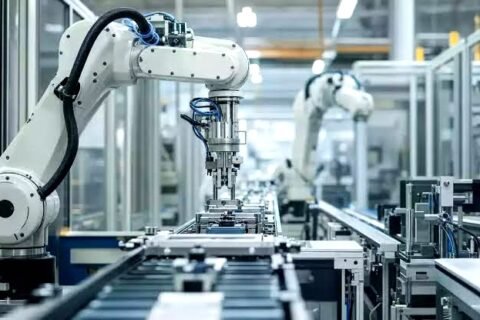
Rockwell Automation has implemented more than 50 Industry 4.0 applications at its Singapore facility.
These applications include artificial intelligence-based inspection, autonomous mobile robots, and predictive maintenance technologies.
The factory has achieved measurable improvements:
- Defects reduced by 35 percent
- Worker training time reduced by 67 percent
- Labor productivity increased by 43 percent
These results demonstrate the practical value of smart manufacturing technologies.
Predictive maintenance represents one of the most important industrial automation trends today. Instead of waiting for equipment failures, manufacturers analyze machine conditions and identify early warning signals.
For example, vibration monitoring systems, motor diagnostics, and real-time equipment data can help maintenance teams prevent unexpected downtime.
From an engineering perspective, predictive maintenance works best when manufacturers combine reliable sensors, industrial networks, and analytical software.
Technology alone cannot improve production. Companies must also develop maintenance strategies, operator skills, and data management processes.
Rockwell Singapore Facility Recognized as a World-Class Smart Factory
Operational excellence at Rockwell’s Singapore facility has received international recognition.
The site joined the World Economic Forum’s Global Lighthouse Network in 2026. This recognition highlights factories that demonstrate outstanding performance in digital transformation and advanced manufacturing.
The facility became the seventh Lighthouse factory in Singapore, giving the country one of the highest concentrations of recognized smart factories in Southeast Asia.
This achievement reflects Singapore’s broader manufacturing strategy.
The country has invested heavily in industrial digitalization, automation skills, and advanced manufacturing infrastructure.