Industrial AI Moves from Data Analysis to Autonomous Decision-Making
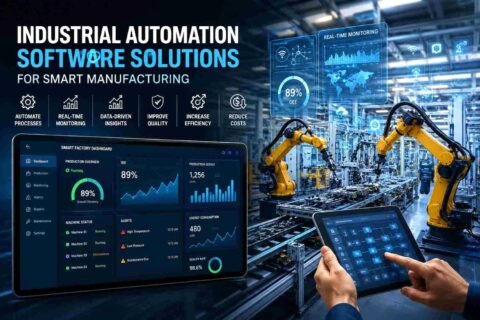
The industrial sector is entering a new stage where artificial intelligence is no longer limited to monitoring, reporting, and predictive analytics. The next generation of industrial AI is expected to actively support operational decisions, optimize processes, and even execute complex workflows with minimal human intervention.
Schneider Electric’s agreement to acquire Cognite Holding B.V. for $3.1 billion represents a strategic move toward this future. By combining Schneider Electric’s expertise in energy management and industrial automation with Cognite’s industrial data and AI capabilities, the company aims to create a stronger foundation for intelligent industrial operations.
From my perspective as an industrial automation engineer, the biggest challenge in implementing AI in factories is not the availability of algorithms. The real difficulty lies in accessing reliable, structured, and contextualized industrial data. Without a proper data foundation, even the most advanced AI models cannot deliver meaningful operational improvements.
Cognite Provides the Missing Industrial Data Foundation for AI
Founded in 2017, Cognite has developed a cloud-native industrial data platform designed to solve one of the most complex problems in modern industry: connecting fragmented industrial information.
Large industrial facilities typically contain decades of accumulated data from PLC systems, DCS platforms, SCADA systems, historians, engineering documents, maintenance records, and enterprise applications. These systems often operate independently, creating isolated data environments that limit the effectiveness of AI applications.
Cognite addresses this challenge through its unified industrial data model and knowledge graph technology. The platform can integrate engineering data, operational data, and business information into a connected digital environment, allowing AI applications to understand industrial assets and their relationships.
This capability is particularly valuable in asset-intensive industries such as energy, manufacturing, chemicals, mining, and utilities, where equipment reliability and operational efficiency directly impact profitability.
Integration with AVEVA CONNECT Strengthens Industrial Intelligence Strategy
Following the acquisition, Cognite’s technologies will become a core component of AVEVA’s CONNECT industrial intelligence platform, expanding its capabilities across the complete industrial lifecycle, including design, construction, operation, and optimization.
The combination creates a stronger ecosystem:
- Schneider Electric contributes industrial automation hardware, energy management solutions, and global industrial expertise.
- AVEVA provides engineering and operational software capabilities.
- Cognite delivers industrial data contextualization and AI-driven intelligence.
Together, these technologies create a more complete industrial intelligence platform capable of transforming raw operational data into actionable insights.
In practical industrial environments, this integration could help companies improve predictive maintenance strategies, optimize production processes, reduce downtime, and accelerate engineering decisions.
Agentic AI Could Transform the Way Industrial Systems Operate
One of the most significant aspects of Cognite’s technology is its focus on agentic AI capabilities. Unlike traditional AI systems that simply provide analysis or recommendations, agentic AI can perform more complex tasks by understanding objectives, evaluating information, and initiating actions within defined operational boundaries.
For industrial automation, this represents a major evolution.
Traditional automation follows predefined logic:
Sensor → Controller → Logic Program → Machine Action
Future intelligent automation may evolve toward:
Industrial Data → AI Understanding → Decision Process → Optimized Action
However, industrial AI must meet strict requirements for safety, reliability, cybersecurity, and human oversight. Unlike consumer AI applications, industrial systems operate critical infrastructure where incorrect decisions can have serious consequences.
Therefore, the future of industrial AI will not replace automation engineers. Instead, it will enhance engineering capabilities by providing deeper operational understanding and faster decision support.
Schneider Electric Expands Its Position in Industrial Digital Transformation
Schneider Electric has long been a major player in industrial automation, power management, and sustainability solutions. The acquisition of Cognite strengthens its position in the rapidly growing industrial software market.
According to Schneider Electric, Cognite generated more than $170 million in annual revenue in 2025, with strong growth in recurring revenue and increasing adoption of its Atlas AI platform.
The acquisition reflects a broader industry trend: leading automation companies are moving beyond traditional control systems and hardware toward software-driven industrial intelligence.
Modern factories are no longer defined only by PLCs, robots, and sensors. Competitive advantage increasingly comes from how effectively companies can collect, interpret, and use industrial data.
The Future of Industrial Automation Will Be Built on Data Intelligence
The acquisition of Cognite highlights an important transformation taking place across the industrial automation landscape. The future factory will not simply be automated; it will be intelligent, adaptive, and continuously optimized.
However, achieving this vision requires more than deploying AI models. Industrial organizations must first establish reliable data architectures, connect existing systems, and create a unified understanding of their assets.
From an engineering perspective, the most successful industrial AI implementations will likely come from companies that combine three elements:
- Strong automation infrastructure
- High-quality industrial data management
- Practical AI applications integrated into daily operations
Schneider Electric’s acquisition of Cognite demonstrates that industrial intelligence is becoming a strategic priority. As AI continues to move closer to real-time operations, the companies that successfully combine automation, data, and intelligence will define the next generation of industrial innovation.