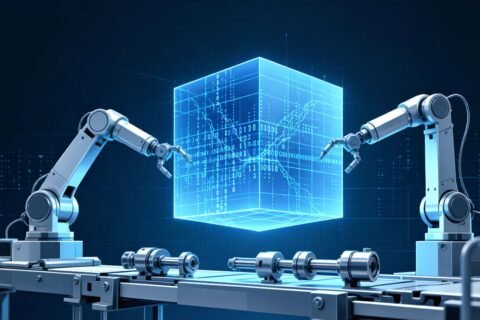
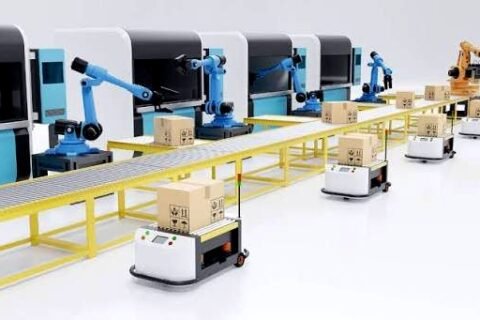
The Evolution of Industrial Automation and Modern Manufacturing Demands
Manufacturing is entering a new era where speed, precision, and flexibility determine competitiveness. Factories today are no longer focused only on increasing production capacity; they are also working to reduce downtime, improve energy efficiency, and respond quickly to changing market demands.
Industrial automation has become the foundation of this transformation. From automated assembly lines and robotic workstations to intelligent material handling systems, modern factories depend on thousands of mechanical, electrical, and control components working together with high accuracy.
However, automation performance is directly connected to the quality and availability of its components. A failed sensor, damaged transmission part, or unavailable replacement component can interrupt an entire production process. Therefore, choosing the right automation supplier is not only a purchasing decision but also a long-term operational strategy.
JLCMC: Simplifying Industrial Automation Component Procurement
JLCMC provides an integrated online platform designed to support manufacturers, system integrators, and engineering teams in sourcing industrial automation components more efficiently.
Unlike traditional procurement methods that often require multiple suppliers and long communication cycles, JLCMC brings a wide range of automation-related products together in one marketplace. The platform covers nearly 2 million SKUs, supports no minimum order quantity requirements, and offers same-day shipping for available inventory.
From my perspective as an industrial automation engineer, reducing procurement complexity is just as important as improving machine performance. A technically excellent automation system can still face delays if engineers cannot quickly access compatible replacement parts or design components.
JLCMC addresses this challenge by combining product availability, engineering resources, and flexible purchasing options into one practical solution.
Complete Component Coverage for Industrial Automation Applications
A modern automation system requires cooperation between mechanical structures, motion systems, sensors, and control components. JLCMC supports these requirements through multiple product categories that cover different stages of machine development and maintenance.
Linear Motion Components for Precision Movement Systems
Linear motion technology plays a major role in automated equipment that requires accurate positioning and smooth movement.
JLCMC provides linear motion components including linear guides, ball screws, linear bearings, linear modules, lead screws, shaft supports, and complete linear assemblies.
These components are widely applied in CNC equipment, robotic positioning systems, semiconductor machinery, inspection equipment, and automated production lines.
For engineers, selecting suitable linear motion components directly affects positioning accuracy, operating stability, and equipment service life. A properly designed motion system can significantly improve machine efficiency and reduce maintenance frequency.
Transmission Components Supporting Mechanical Power Transfer
Every automated machine requires an effective method to transfer mechanical power. Transmission components determine how efficiently energy moves from motors to mechanical structures.
JLCMC offers timing belts, pulleys, couplings, gears, sprockets, chains, conveyor rollers, and bearings to support various automation designs.
In practical industrial applications, compatibility between transmission components is often overlooked. A small mismatch in size, load capacity, or material specification can create vibration, wear, and unexpected downtime.
By providing multiple related components within one platform, JLCMC helps engineers simplify system design and maintenance planning.
Pneumatic Components for Fast and Flexible Automation Operations
Pneumatic technology remains widely used in factory automation because of its fast response, simple structure, and suitability for repetitive operations.
JLCMC supplies pneumatic cylinders, valves, fittings, tubing, and accessories used in applications such as packaging machines, assembly equipment, material handling systems, and automated gripping devices.
Although pneumatic systems are mature technologies, their performance still depends heavily on component quality. Proper selection of cylinders, valves, and fittings ensures stable operation under demanding factory conditions.
Industrial Automation Sensors Enabling Intelligent Machine Control
Sensors are the information source of automated equipment. Without accurate detection signals, even the most advanced control system cannot operate effectively.
JLCMC provides industrial sensors including proximity sensors, photoelectric sensors, limit switches, and other detection devices designed for factory environments.
These sensors allow machines to identify position, movement, object presence, and operating conditions. They support applications where dust, vibration, temperature changes, and electrical interference are common challenges.
In my experience, sensor selection is often one of the most critical stages in automation design. A reliable sensing solution improves system accuracy, reduces false signals, and helps prevent unexpected equipment failures.
Fasteners and Hardware Supporting Machine Reliability
Although fasteners are small components, they play an important role in maintaining the mechanical integrity of automation equipment.
JLCMC provides screws, bolts, nuts, washers, threaded inserts, retaining rings, and other fastening solutions in different materials and specifications.
Proper fastening directly influences equipment stability, vibration resistance, and long-term performance. In industrial environments, selecting suitable fasteners is an important engineering consideration rather than a simple purchasing task.
Hardware and Material Handling Solutions for Factory Infrastructure
Beyond individual components, automation projects require structural and supporting hardware to complete machine construction.
JLCMC offers handles, hinges, knobs, casters, structural accessories, and material handling components used in equipment frames, enclosures, and factory infrastructure.
These products help engineers create practical machine structures that support daily operation, maintenance access, and workplace efficiency.
Why Industrial Engineers Select JLCMC as an Automation Partner
The value of an automation supplier is measured not only by product variety but also by how effectively it supports engineering workflows.
JLCMC provides several advantages for automation professionals:
Fast Availability:
In-stock products can be shipped quickly, helping factories reduce downtime and shorten maintenance cycles.
Flexible Purchasing:
No minimum order requirements allow companies to purchase exactly what they need, whether for prototype development or large-scale production.
Engineering Support Resources:
Technical drawings and 3D models help engineers verify dimensions, installation requirements, and design compatibility before purchasing.
Cost Optimization:
By connecting customers with a broad supplier network, JLCMC helps manufacturers manage procurement costs more effectively.
Quality Management:
The ISO 9001:2015 certification demonstrates structured quality management processes throughout product sourcing and fulfillment.
Supporting the Future of Industry 4.0
Industry 4.0 is changing how factories operate. Automation systems are becoming more connected, flexible, and data-driven, but the foundation remains the physical components that keep machines running.
A linear guide, pneumatic cylinder, sensor, or mechanical fastener may appear to be a small part of a larger system. However, every component contributes to overall equipment performance.
Manufacturers need suppliers that understand both engineering requirements and production challenges. They need access to a wide product range, faster delivery, and technical information that supports better decisions.
JLCMC contributes to this transformation by reducing procurement barriers and providing a scalable source of industrial automation components.
Conclusion: Building Smarter Factories Through Better Component Access
Industrial automation is not built from a single technology. It is created through the cooperation of thousands of precise components working together.
JLCMC provides manufacturers, automation engineers, and system integrators with a practical way to access these components while improving procurement efficiency.
As factories continue moving toward smarter and more flexible production models, suppliers that combine product availability, engineering support, and purchasing convenience will become increasingly important.
JLCMC represents a new approach to industrial automation sourcing, helping companies build, maintain, and upgrade modern factory systems with greater efficiency and confidence.