

Overview
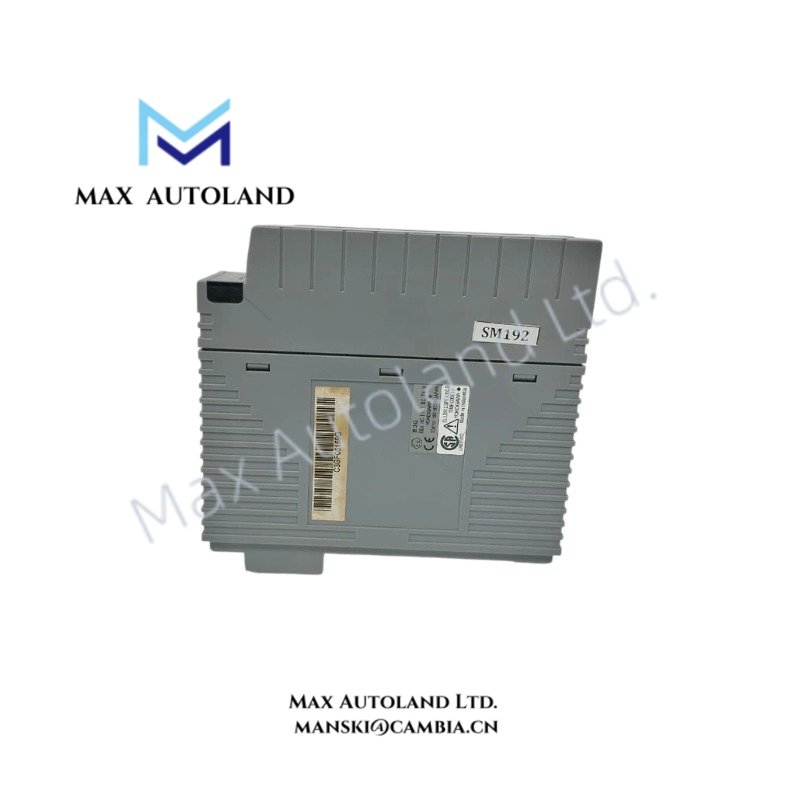
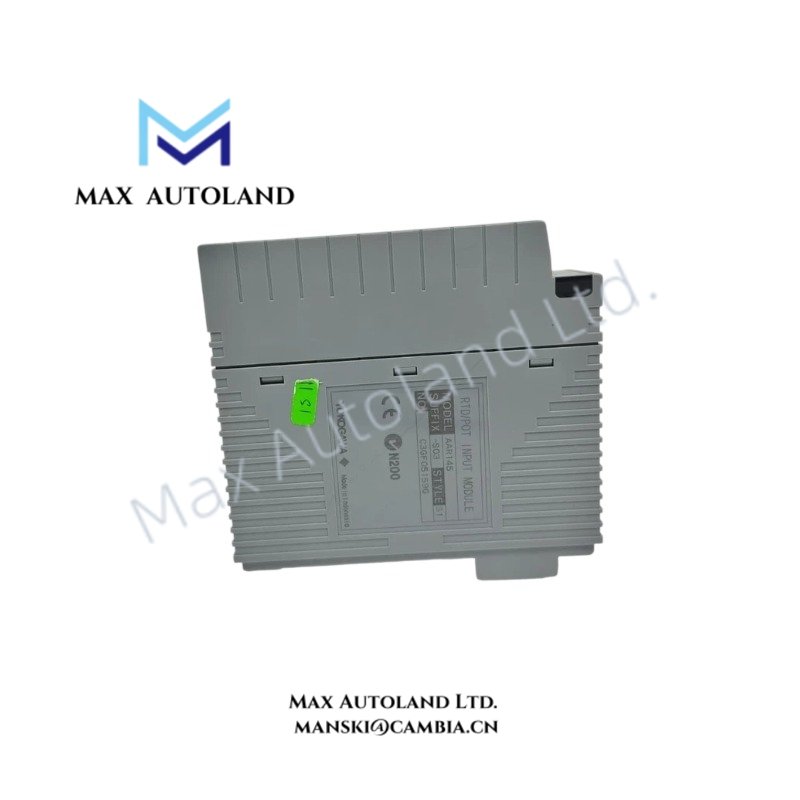
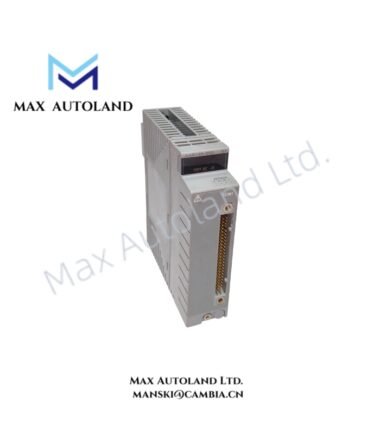
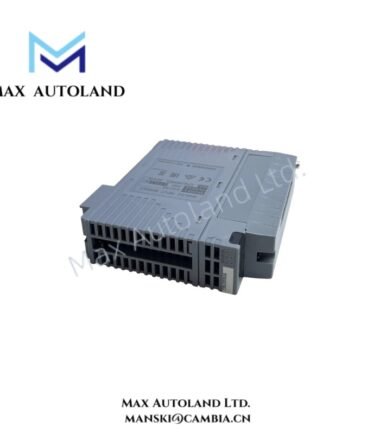
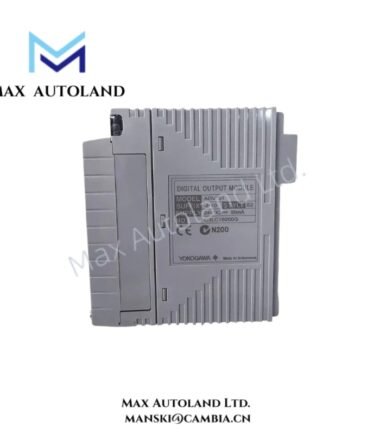
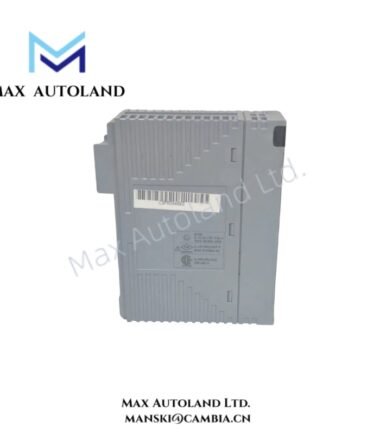
The Yokogawa AAR145-S03, also cataloged as the AAR145-S03 RTD/POT Input Module, provides direct acquisition and conversion of resistance temperature detector and potentiometer signals within Yokogawa CENTUM VP and CENTUM CS 3000 DCS platforms.
Hardware Specifications
| Parameter | Specification |
|---|---|
| Model | AAR145-S03 |
| Brand | Yokogawa |
| Product Type | RTD/POT Input Module |
| Origin | Japan |
| Input Channels | 16 channels, isolated input |
| Input Signal Type | 3-wire RTD and potentiometer input |
| RTD Standard | JIS C1604:1997 and IEC 751:1995 compatible |
| RTD Sensor Example | Pt100 |
| POT Resistance Range | 100 ohm to 10 kohm |
| POT Span Requirement | Span resistance 50% or larger of total resistance |
| Channel Configuration | Independent RTD/POT configuration for CH1 to CH16 |
| Isolation | Input-to-system galvanic isolation and channel-to-channel isolation |
| Redundancy | Dual-redundant hardware configuration supported |
| Power Supply | 5 VDC |
| Power Consumption | Approximately 350 mA |
| Operating Temp | -20 deg C to +60 deg C |
| Ambient Humidity | 5% to 95% RH, non-condensing |
| Dimensions | Approximately 3.3 cm x 10.7 cm x 13 cm |
| Weight | 0.26 kg |
| Shipping Size | 3.2 cm x 12.5 cm x 13 cm |
Yokogawa DCS Signal Conditioning and Isolation Characteristics
The AAR145-S03 processes resistance-based field signals through dedicated input conditioning circuits before transmitting converted values to the CENTUM VP or CENTUM CS 3000 control system. The module supports RTD and potentiometer measurements on each input channel, allowing flexible sensor assignment without changing hardware.
Additionally, the module implements channel-to-channel isolation to reduce electrical interference between field devices. The galvanic isolation structure separates field signal circuits from system-side electronics, which supports stable measurement performance in distributed control environments.
For Yokogawa process instrumentation applications, the module follows DCS measurement practices including signal integrity management, cold junction compensation concepts where applicable to temperature measurement systems, and isolated field wiring design.
Frequently Asked Questions
Q: Can the AAR145-S03 accept both RTD and potentiometer signals?
A: Yes. The module supports RTD and potentiometer inputs, and each channel from CH1 to CH16 can be configured independently.
Q: Does the AAR145-S03 provide electrical isolation between input channels?
A: Yes. The module provides isolation between individual input channels and between field input circuits and the system side.
Q: What power supply does the AAR145-S03 require?
A: The module requires a 5 VDC power supply and has an approximate current consumption of 350 mA.
Field Installation Guidelines
- Install the AAR145-S03 in the specified Yokogawa I/O node or base unit compatible with the CENTUM VP or CENTUM CS 3000 system configuration.
- Verify that the module power supply is disconnected before installation or removal.
- Use shielded field wiring for RTD and potentiometer connections where electrical noise conditions exist.
- Connect cable shields according to the plant grounding design to minimize measurement interference.
- Separate low-level resistance signal wiring from high-voltage power cables and switching circuits.
- Confirm sensor wiring configuration, especially 3-wire RTD connections, before system commissioning.
- Check channel assignments and input configuration parameters in the DCS engineering environment before placing the module into operation.
Emerson Top Products
| Emerson DeltaV | Epro | Ovation/Westinghouse |
| KJ1501X1-BC3 | 9100-00049-03 | 1C31122G01 |
| KJ3202X1-BA1 | A6110 | 1C31125G03 |
| KJ3222X1-BA1 | A6120 | 1C31232G01 |
| KJ3243X1-BA1 | A6125 | 1C31147G01 |
| KJ3002X1-BG1 | A6140 | 1B30035H01 |
| KJ3002X1-BB1 | A6210 | 1B30023H02 |
| KJ3001X1-BB1 | A6220 | 1B30023H01 |
| KJ3002X1-BC1 | A6312 | 1C31132G01 |
| KJ3002X1-BF1 | A6312/06 | 1C31129G03 |
| KJ3001X1-BJ1 | A6312/08 | 5X00119G01 |









Reviews
There are no reviews yet.