
Overview
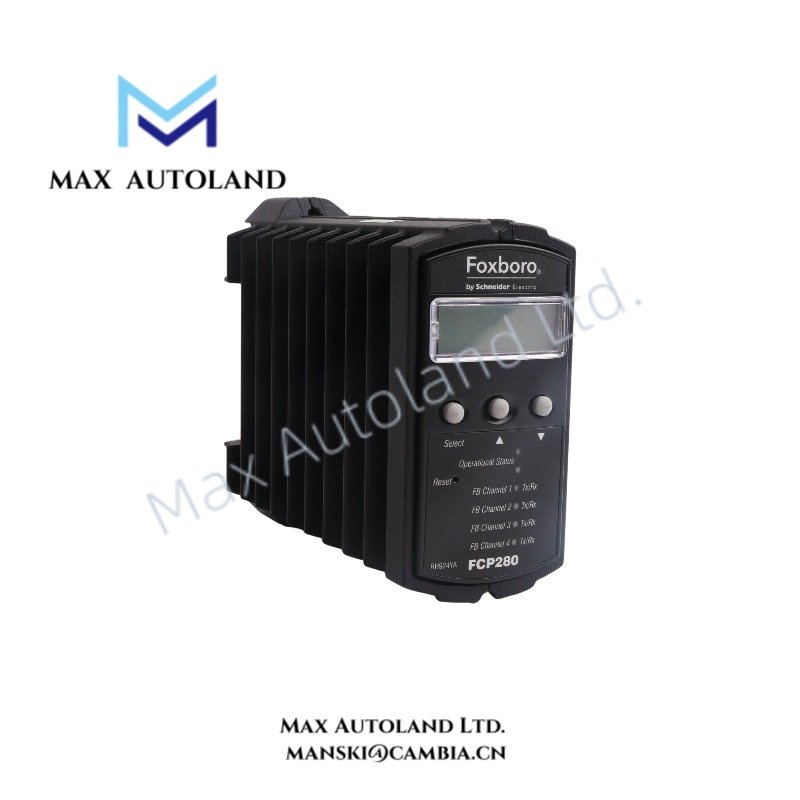
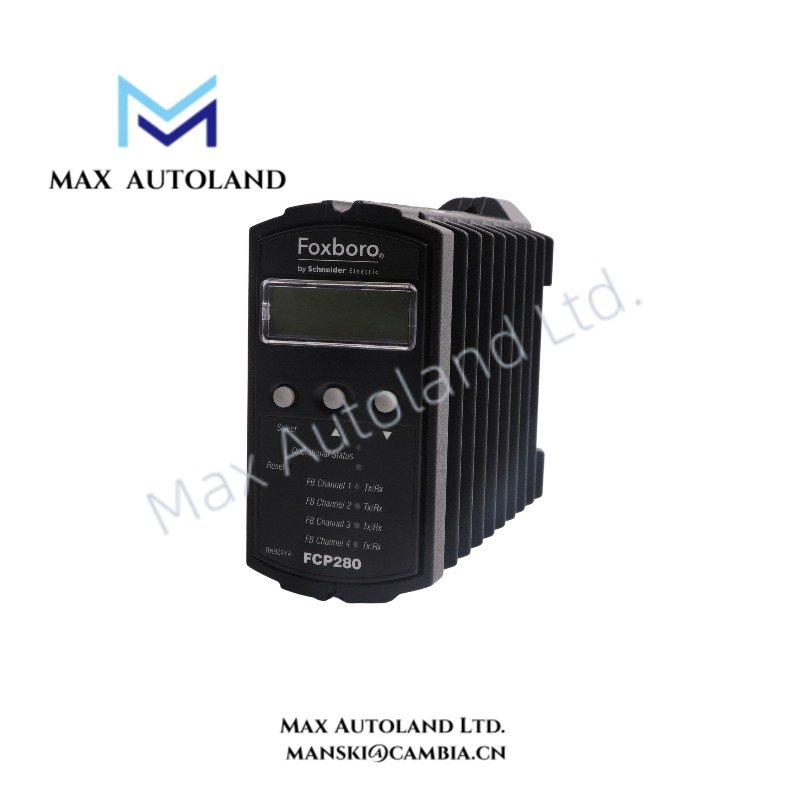
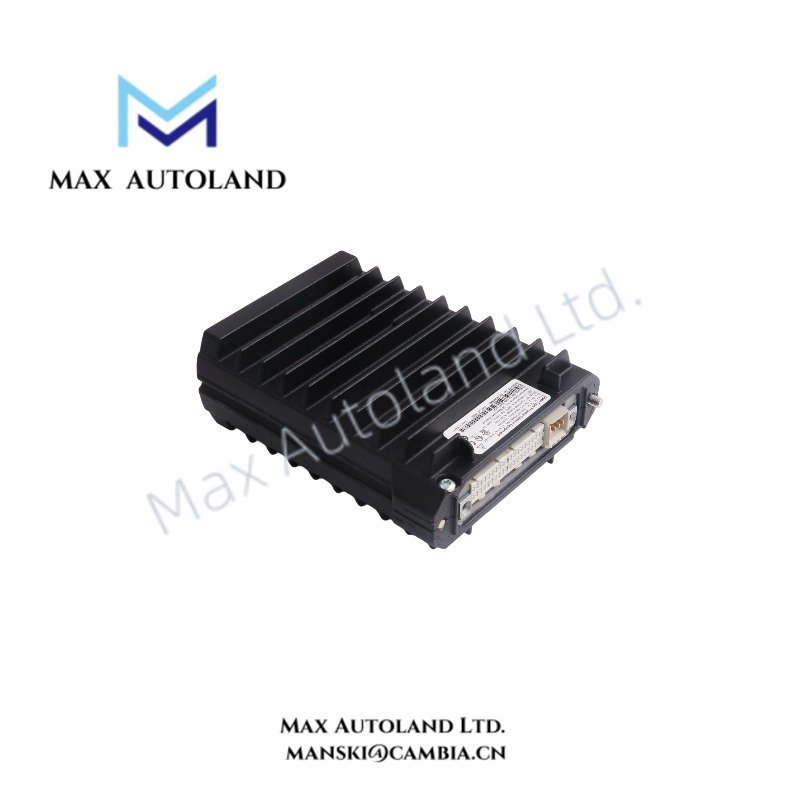
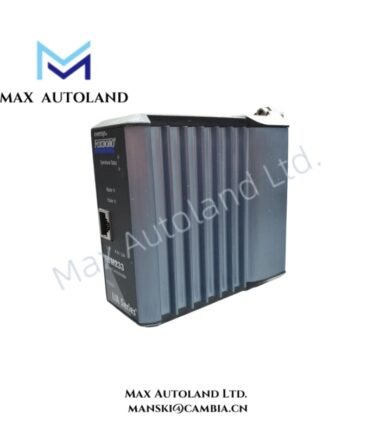
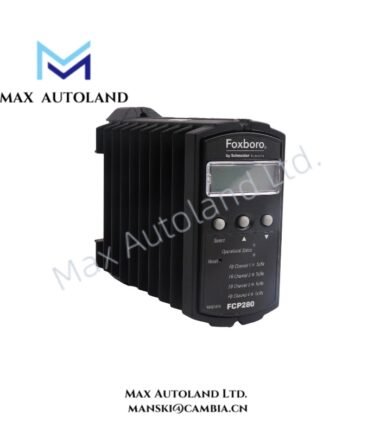
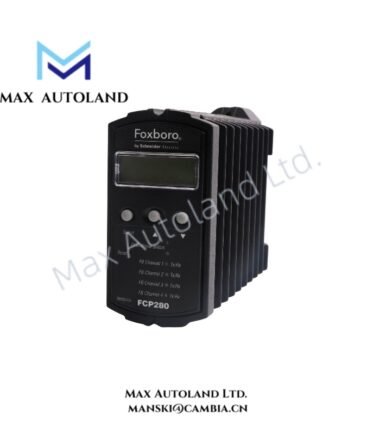
The Foxboro FCP280, also cataloged as the FCP280 Field Control Processor, operates as a dedicated hardware component for regulatory control execution, logic processing, and field data communication within the EcoStruxure Foxboro DCS Mesh control network. The processor manages control blocks, alarm functions, sequencing, and distributed I/O operations through Foxboro Fieldbus interfaces.
Hardware Specifications
| Parameter | Specification |
|---|---|
| Model | FCP280 Field Control Processor |
| Brand | Foxboro / Schneider Electric |
| Origin | USA |
| Weight | Approximately 0.8 kg |
| Dimensions | 105 mm H x 51.8 mm W x 147 mm D |
| Operating Temp | 0 deg C to 60 deg C |
| Power Consumption | 8.5 W to 11 W single module; up to 20 W redundant pair |
| Processor Type | Industrial ARM System-on-Chip / 32-bit RISC processor |
| Memory | 128 MB SDRAM and 128 MB Flash Memory |
| Error Detection | ECC supporting single-bit correction and multi-bit detection |
| Maximum Configured Blocks | Up to 8,000 control blocks |
| Block Execution Rate | Up to 16,000 blocks per second |
| Minimum Processing Cycle | 50 ms |
| Network Interface | 100 Mbps Ethernet Mesh control network |
| Fieldbus Interface | HDLC communication bus |
| Fieldbus Transmission Rate | 2 Mbps for 200 Series FBMs; 268 Kbps for 100 Series FBMs |
| Supported I/O Capacity | Up to 128 Fieldbus Modules |
| Communication Protocols | Foxboro DCS protocols and Modbus TCP/IP |
| Input Voltage | 24 VDC redundant power supply |
| Storage Temperature | -40 deg C to +70 deg C |
| Operating Humidity | 5% to 95% RH, non-condensing |
| Environmental Class | Class G3 industrial environment |
| Vibration Resistance | 0.5 g, 5 Hz to 500 Hz |
Foxboro DCS Process Control and Fieldbus Communication
The FCP280 performs distributed control processing through the Foxboro DCS architecture. It executes regulatory loops, sequential logic, timing functions, data acquisition, and alarm processing directly at the field control level. Furthermore, the processor communicates with Fieldbus Modules through HDLC channels and supports mixed FBM configurations including 200 Series, Compact, and 100 Series modules.
The controller connects to the Mesh control network through a 100 Mbps Ethernet interface. Therefore, it supports copper and fiber network infrastructures while maintaining distributed communication between control processors, operator stations, and I/O subsystems.
For process instrumentation integration, the FCP280 supports Foxboro DCS communication functions and Modbus TCP/IP connectivity. Channel-to-channel data handling supports structured process measurement exchange between field devices and higher-level control applications.
Frequently Asked Questions
Q: Does the FCP280 support redundant controller operation?
A: Yes. The FCP280 supports fault-tolerant redundant configurations using paired processor modules. A redundant pair can consume up to 20 W during operation.
Q: How many Fieldbus Modules can one FCP280 control?
A: The FCP280 supports up to 128 Fieldbus Modules, including 200 Series FBMs, Compact FBMs, and mixed 100 Series FBM configurations.
Q: What memory protection function is integrated into the processor?
A: The processor integrates ECC memory protection, which provides single-bit error correction and multi-bit error detection for SDRAM operation.
Field Installation Guidelines
Install the FCP280 on the specified Foxboro control system mounting baseplate with correct mechanical alignment and power connections. Verify that the redundant 24 VDC supply wiring maintains proper polarity before energizing the module.
Use approved industrial Ethernet cables for Mesh network connections. Maintain separation between communication wiring and high-voltage power conductors to reduce electrical interference.
For fieldbus wiring, confirm HDLC bus termination requirements and ensure cable routing follows Foxboro installation practices. Ground cable shields according to the system grounding design to minimize electromagnetic noise.
Before commissioning, verify module seating, power status indicators, network communication status, and Fieldbus Module recognition through the DCS engineering tools.


Reviews
There are no reviews yet.