
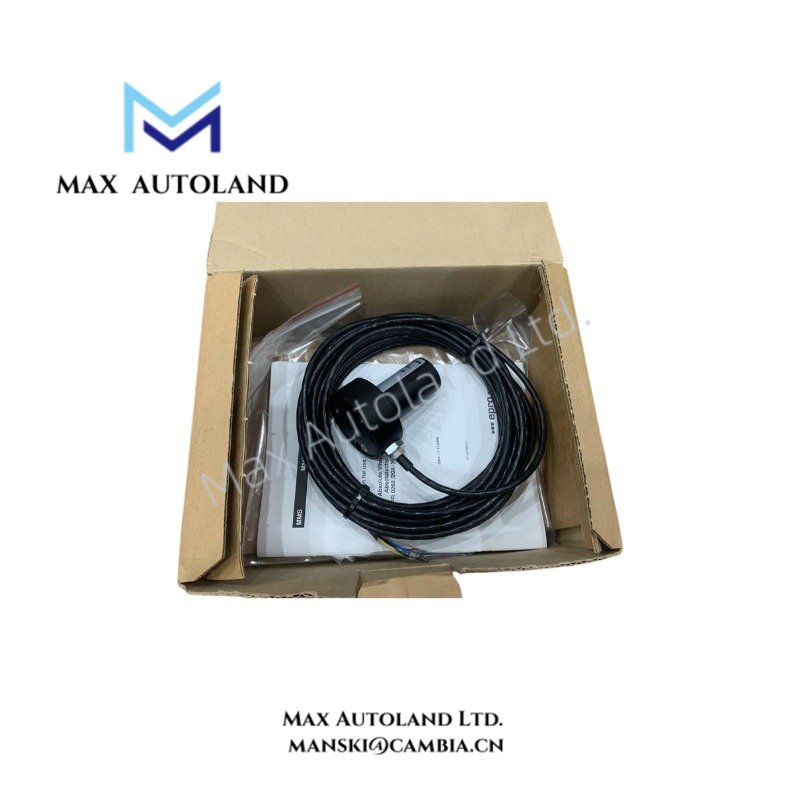
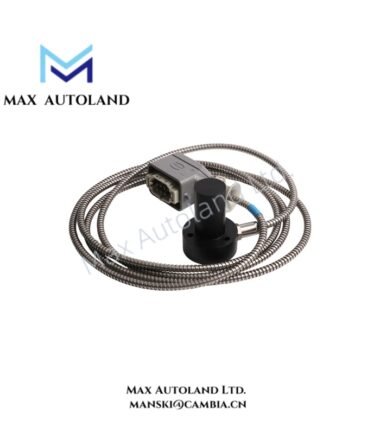
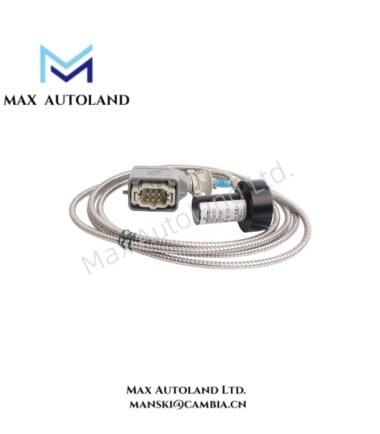
Overview
Configured for absolute casing vibration measurement in machinery protection systems, the Emerson EPRO PR9268/206-100 (PR9268 electrodynamic velocity sensor) converts mechanical vibration into a proportional AC voltage signal. Its self-powered moving-coil principle requires no external excitation.
Hardware Specifications
| Parameter | Specification |
|---|---|
| Model | PR9268/206-100 |
| Brand | Emerson / EPRO |
| Product Type | Electrodynamic Velocity Sensor |
| Measurement Principle | Self-powered electrodynamic moving coil |
| Measurement | Absolute bearing housing / casing vibration |
| Mounting Orientation | Vertical, +/- 30 deg deviation limit |
| Sensitivity | 28.5 mV/mm/s +/- 5% |
| Sensitivity, Imperial | 723.9 mV/in/s |
| Frequency Range | 4 to 1000 Hz |
| Natural Frequency | 4.5 Hz +/- 0.75 Hz at 20 deg C |
| Amplitude Linearity | < 2% |
| Maximum Acceleration | 10 g peak-peak continuous; 20 g intermittent |
| Transverse Acceleration | <= 2 g |
| Coil Resistance | 1875 ohm +/- 10% |
| Inductance | <= 90 mH, including cable |
| Cable Capacitance | < 1.2 nF, including cable |
| Operating Temp | -20 to +100 deg C |
| Protection Class | IP55 |
| Relative Humidity | 0 to 100%, non-condensing |
| Housing Material | Al-Mg-Si alloy |
| Cable | 6 m integrated PTFE cable with stainless steel armor |
| Connector | Heavy-duty Harting connector |
| Power Consumption | None; self-powered sensor |
| Weight | Approx. 0.93 kg |
EPRO Machinery Vibration Signal Characteristics
The PR9268/206-100 uses an electrodynamic moving-coil assembly to generate the vibration signal directly from relative mechanical motion. Therefore, the sensor does not require an external DC excitation supply.
The sensor provides a velocity-proportional AC output over the specified 4 to 1000 Hz frequency range. Its 4.5 Hz natural frequency supports measurement of low-frequency casing vibration.
The vertical mounting configuration limits the specified angular deviation to +/- 30 deg. The integrated armored PTFE cable maintains the electrical connection between the sensor and the monitoring system while providing mechanical protection.
The specified 1875 ohm coil resistance, inductance, and cable capacitance define the electrical loading characteristics that the connected monitoring input must accommodate.
Frequently Asked Questions
Q: Does the PR9268/206-100 require an external power supply?
A: No. The sensor uses an electrodynamic moving-coil principle and generates its measurement signal from mechanical motion.
Q: What type of vibration does the PR9268/206-100 measure?
A: It measures absolute bearing housing or casing vibration as a velocity-proportional AC signal.
Q: Can the sensor operate outside the specified vertical mounting orientation?
A: The supplied data specifies vertical mounting with a maximum deviation of +/- 30 deg. Installation should remain within this stated orientation range.
Field Installation Guidelines
- Mount the sensor on a mechanically rigid bearing housing surface.
- Maintain the specified vertical orientation and keep angular deviation within +/- 30 deg.
- Use a mounting surface that provides firm mechanical coupling between the casing and sensor body.
- Route the armored cable away from moving mechanical components, excessive heat sources, and sharp edges.
- Avoid unnecessary cable loops and mechanical tension at the sensor connection.
- Protect the Harting connector from impact, contamination, and unintended cable loading.
- Keep the sensor cable separated from high-current power conductors where practical to reduce electrical interference.
- Bond cable shielding and equipment grounding according to the machinery protection system grounding design.
- Verify connector seating and cable integrity before commissioning.
- Confirm that the receiving monitoring channel is compatible with the sensor’s 28.5 mV/mm/s sensitivity and specified electrical characteristics.


Reviews
There are no reviews yet.