
Overview
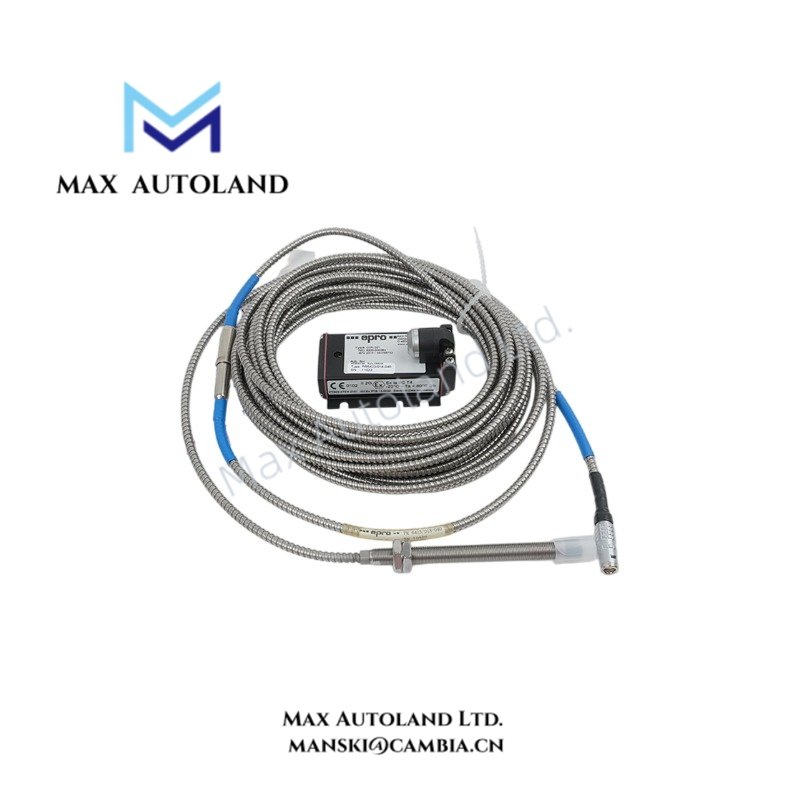
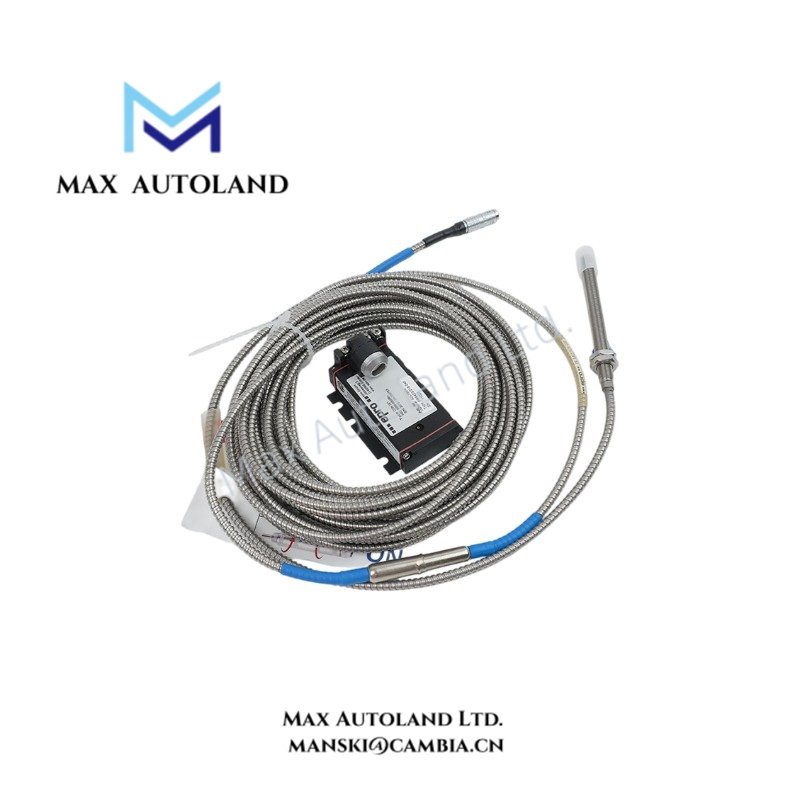
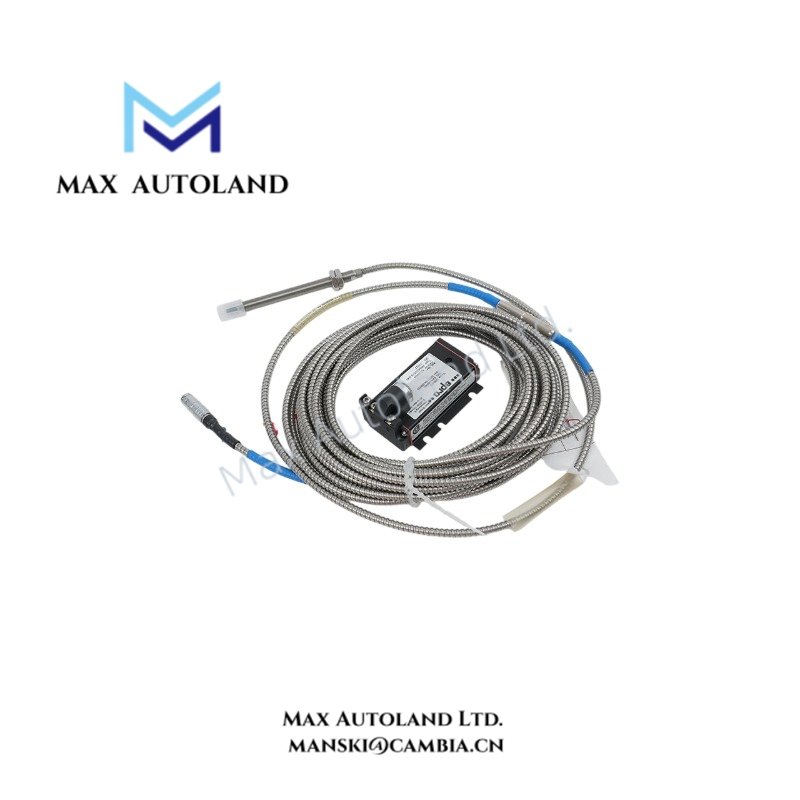
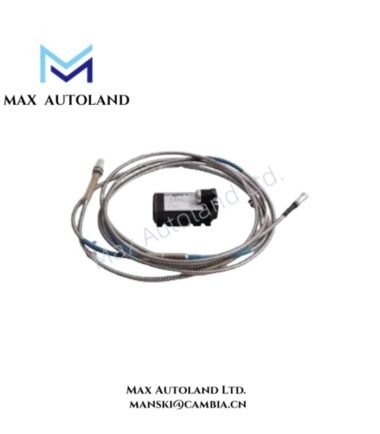
The Emerson Epro PR6423/016-030 + CON021, comprising the PR6423/016-030 eddy current probe and CON021 signal converter, measures non-contact shaft displacement and vibration. The probe detects changes in the electromagnetic field near a conductive target, while the converter conditions the sensor signal for connection to compatible machinery monitoring equipment.
Hardware Specifications
| Parameter | Specification |
|---|---|
| Model | PR6423/016-030 + CON021 |
| Brand | Emerson Epro |
| Product Type | Eddy Current Proximity Measurement System |
| Sensor Model | PR6423/016-030 |
| Converter Model | CON021 |
| Sensor Type | Eddy Current Proximity Probe |
| Probe Diameter | 8 mm |
| Measurement Principle | Non-contact electromagnetic induction |
| Measurement Function | Shaft vibration, relative displacement, axial position |
| Signal Processing | Sensor signal conditioning |
| Output Signal | Proportional electrical output; exact range requires verification |
| Power Supply | Industrial DC supply; exact voltage requires verification |
| Mounting | Industrial control cabinet; specific mounting arrangement requires verification |
Eddy Current Measurement and Signal Conditioning
The PR6423/016-030 probe generates an electromagnetic field near the conductive shaft surface. As the shaft moves, the probe detects changes in the electromagnetic response.
The CON021 converter processes the probe signal and provides a conditioned electrical output for compatible monitoring equipment.
During commissioning, technicians should verify the complete probe, converter, cable, and monitoring-channel configuration. In addition, they should confirm the applicable calibration data before interpreting displacement or vibration measurements.
The supplied information does not establish the converter’s exact output range, supply voltage, or measurement linearity. Therefore, technicians should verify these parameters against the applicable manufacturer documentation.
Frequently Asked Questions (FAQ)
Q: What measurement functions does the PR6423/016-030 + CON021 system support?
A: The system measures non-contact shaft vibration, relative displacement, and axial position. The exact measurement range depends on the configured probe and converter system.
Q: Can the CON021 connect directly to a PLC or DCS?
A: The converter provides a conditioned electrical output for compatible monitoring equipment. However, technicians must verify the output signal type, electrical range, and input compatibility before connecting it to a PLC, DCS, or machinery protection rack.
Q: Does the system require calibration during installation?
A: Yes. Technicians should verify probe-converter compatibility, cable configuration, sensor gap, and measurement scaling against the applicable manufacturer documentation before commissioning.
Field Installation Guidelines
1. Mechanical mounting: Install the PR6423/016-030 probe in the designated measurement position. Maintain the specified clearance from the rotating shaft and surrounding metallic structures.
2. Probe alignment: Position the sensing face toward the intended conductive target. Avoid contact between the probe and rotating components.
3. Electrical connections: Connect the probe and CON021 using the specified cable and termination arrangement. Confirm terminal assignments before energizing the circuit.
4. Signal routing: Separate sensor wiring from high-current power cables and switching conductors where practical. Use appropriate cable shielding to reduce electromagnetic interference.
5. Grounding: Apply the manufacturer’s shield termination and grounding arrangement. Avoid unintended ground loops between the converter, monitoring rack, and cabinet.
6. Commissioning: Verify supply voltage, signal polarity, sensor gap, and output response. Confirm that the receiving monitoring channel uses the correct scaling configuration.
7. Functional verification: Compare the conditioned output with the expected measurement response before placing the monitoring channel into service.


Reviews
There are no reviews yet.