AI Could Transform Industrial Automation
Siemens plans to increase factory automation to 70%–80% by applying artificial intelligence (AI) across manufacturing operations. The company currently estimates that automation covers approximately 30%–40% of factory production work. Cedrik Neike, a member of the Siemens Managing Board, believes AI can help close this gap. Moreover, the strategy could strengthen manufacturing competitiveness in Germany and other high-wage economies.The initiative combines industrial automation hardware, software, digital twins, and AI models. Together, these technologies aim to improve production efficiency while helping manufacturers maintain local operations.

Industrial Automation Faces Growing Productivity Pressure
Manufacturers in high-wage countries face rising labor costs and increasing international competition. Cedrik Neike estimates that factories must improve productivity by 7%–9% annually to remain competitive. However, conventional automation alone may not deliver these gains consistently across complex production environments.Therefore, Siemens sees AI as a way to accelerate factory modernization. Manufacturers can use intelligent control systems to optimize production sequences, reduce process interruptions, and improve resource utilization. In addition, AI-assisted analysis can help engineers identify bottlenecks and evaluate potential process improvements.For industrial facilities using PLC and DCS platforms, these developments could expand the role of data-driven optimization. Nevertheless, the actual benefits will depend on production requirements, equipment compatibility, and implementation quality.
Digital Twins Support AI-Driven Factory Automation
Siemens and Nvidia are developing technologies that combine digital twins with AI models. A digital twin creates a virtual representation of a physical factory, production line, or industrial process. Engineers can use this virtual environment to examine operating conditions and test proposed changes before implementation.The approach reduces the need to experiment directly on production equipment. For example, engineers can simulate workflow adjustments, evaluate equipment interactions, and identify potential production constraints. They can then assess the results before introducing validated changes to the physical facility.Siemens contributes industrial software, automation equipment, and manufacturing data. Nvidia provides computing infrastructure, simulation technologies, and AI capabilities. Their collaboration focuses on physical AI, which enables AI systems to understand and interact with real-world environments.This approach could support more flexible factory automation. However, manufacturers still need accurate models, reliable operational data, and suitable engineering validation. AI recommendations must also comply with established machine safety requirements and industrial control procedures.
PLC and DCS Systems in the Physical AI Era
The expansion of AI does not eliminate the need for established industrial control systems. PLCs continue to execute machine-level control logic, while DCS platforms coordinate processes across larger industrial installations. Both remain important components of modern manufacturing infrastructure.AI can complement these systems by analyzing operational data and identifying opportunities for improvement. For instance, manufacturers may combine historical production records, equipment condition data, and simulation results to refine operating strategies.However, engineers must distinguish between optimization functions and safety-critical control functions. AI-generated recommendations should not bypass validated control logic, protective interlocks, or established safety procedures. Instead, manufacturers should integrate AI through carefully designed interfaces and appropriate engineering reviews.Consequently, the future of industrial automation will likely combine conventional control systems with AI-based decision support. This model allows manufacturers to explore new capabilities without abandoning proven control architectures.
Siemens Erlangen Campus: A Manufacturing Investment Through 2030
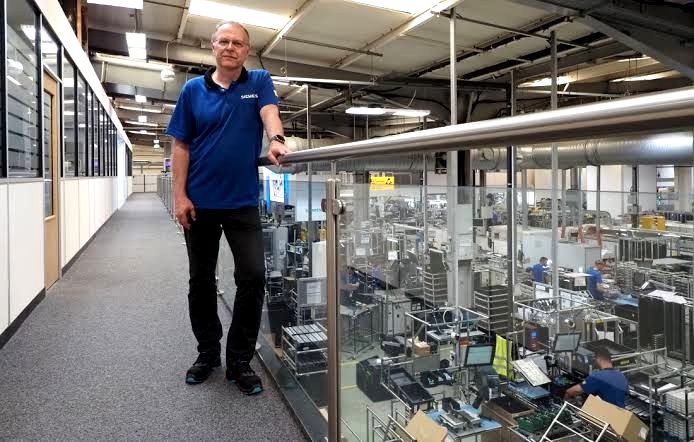
Siemens is investing €500 million to expand its Erlangen site by 2030. The development includes a technology campus, an innovation center, and additional production capacity. The company plans to strengthen its position in power electronics while expanding its AI-driven manufacturing capabilities.The existing Erlangen facility also provides a practical environment for testing digital manufacturing technologies. Siemens reports that AI, digital twins, and robotics have contributed to a 69% productivity increase and a 42% reduction in energy consumption.These figures illustrate the potential impact of coordinated digitalization. However, manufacturers should evaluate such results against their own production conditions, baseline measurements, and investment requirements.Siemens also reports more than 100 AI applications at the site. These applications demonstrate how manufacturers can introduce AI across multiple operational areas rather than treating it as a single automation project.
Power Electronics and Energy Transition Manufacturing
Power electronics play an important role in electrification, renewable energy integration, and modern power conversion systems. Siemens intends to expand its manufacturing capabilities in this area through its Erlangen investment.The initiative also connects factory automation with broader industrial energy objectives. More efficient production processes can help manufacturers manage energy consumption while increasing output. In addition, digital twins can help engineers evaluate production changes before committing resources to physical modifications.For manufacturers supplying electrical infrastructure and energy technology, these capabilities may support more responsive production planning. Nevertheless, output quality, product traceability, and process stability remain important performance requirements.
Automation Targets Raise Questions About Manufacturing Jobs
Siemens' automation strategy also raises questions about employment. In March 2025, the company announced plans to cut 5,600 jobs in its factory automation business by late 2027. The announcement included approximately 2,600 positions in Germany.This context highlights a central challenge for industrial manufacturers. Automation can help retain production in high-cost economies, but it can also reduce demand for certain tasks. The overall employment impact depends on investment decisions, production growth, workforce skills, and the creation of new technical roles.Therefore, companies pursuing higher automation levels must consider workforce development alongside technology deployment. Training in industrial software, robotics, data analysis, and AI integration could help employees adapt to changing production requirements.Labor representatives will likely assess Siemens' 80% automation target through its practical effects on staffing, job quality, and long-term manufacturing investment.
The Global Race for Physical AI
Siemens and Nvidia are not alone in pursuing AI technologies for physical operations. Robotics developers are also exploring AI models that help machines perform tasks in changing environments. These developments include synthetic training data, spatial sensing, and foundation models for robotic manipulation.Synthetic data can help developers generate training scenarios without collecting every example from physical equipment. Meanwhile, spatial sensors provide information about surrounding objects and environmental conditions. Foundation models can help robots interpret tasks and coordinate movements.These technologies may eventually support more adaptable industrial robots and automated production lines. However, practical deployment still requires appropriate sensing, motion control, system integration, and safety validation.For industrial automation suppliers, the wider trend creates opportunities across control hardware, industrial networking, sensors, simulation software, and intelligent robotics. Manufacturers will need to assess how these technologies fit existing PLC, DCS, and supervisory control architectures.
What Siemens' 80% Automation Goal Means for Manufacturers
Siemens' target reflects a broader shift from conventional automation toward AI-assisted industrial operations. Digital twins can help engineers test changes, while AI models can support analysis and process optimization. Meanwhile, established PLC and DCS platforms will continue to manage deterministic control and essential process functions.However, a higher automation percentage does not automatically guarantee better productivity. Manufacturers must also consider capital costs, equipment integration, cybersecurity, workforce training, and measurable operational results.The most practical strategy is to introduce AI where it addresses clearly defined production problems. Companies can begin with simulation, predictive analysis, and workflow optimization before expanding into more complex applications.Ultimately, Siemens' Erlangen project offers a useful example of how industrial automation and physical AI may develop together. Its long-term impact will depend on whether manufacturers can translate these technologies into measurable productivity gains while maintaining safe operations and sustainable employment.