
Overview
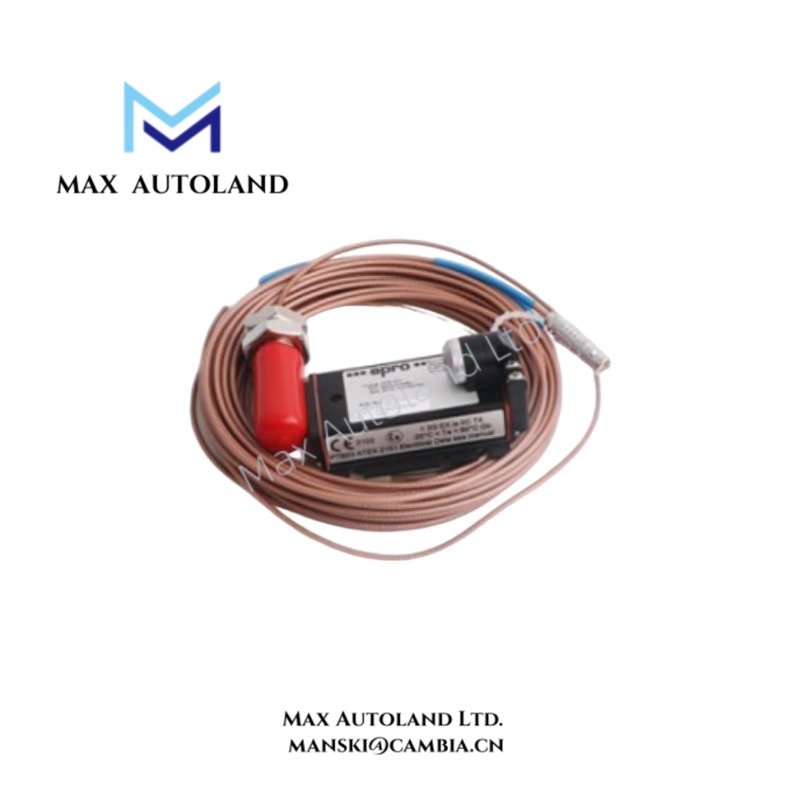
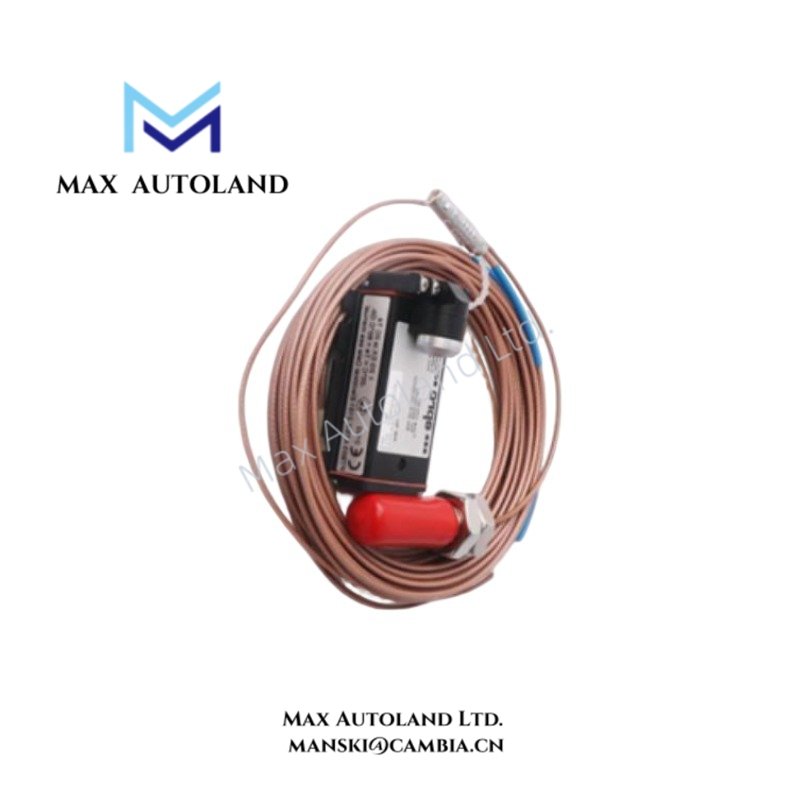
The Emerson EPRO CON021/916-200 + PR6426/010-140, also cataloged as the CON021/916-200 + PR6426/010-140 Eddy Current Measurement System, operates as a dedicated hardware component for non-contact shaft displacement and vibration measurement within EPRO machinery protection systems.
Hardware Specifications
| Parameter | Specification |
|---|---|
| Model | CON021/916-200 + PR6426/010-140 |
| Brand | Emerson EPRO |
| Origin | Germany |
| Weight | 0.88 kg |
| Dimensions | 29 x 23.5 x 4.7 cm |
| Operating Temp | CON021 converter: -30 deg C to +100 deg C |
| Power Consumption | -24 VDC supply input, exact consumption not specified |
| Measurement Principle | Non-contact eddy current displacement measurement |
| Sensor Type | PR6426/010-140 eddy current probe |
| Converter Type | CON021/916-200 signal converter / proximitor |
| Frequency Response | 0 to 20,000 Hz (-3 dB) |
| Protection Class | IP20 for signal converter |
Eddy Current Measurement and TSI Signal Processing
The Emerson EPRO CON021/916-200 converts the high-frequency carrier signal generated by the converter into a probe excitation signal for the PR6426/010-140 sensor. The probe detects changes in the distance between the sensing tip and the metallic shaft target through eddy current field variation.
The measurement chain requires correct eddy-current probe scaling and gap voltage validation to maintain displacement signal accuracy. During commissioning, technicians typically verify the probe operating point through gap voltage measurement, including standard -10 VDC target validation used in many EPRO proximity measurement configurations.
For turbomachinery monitoring applications, the sensor loop provides dynamic vibration signals and static position measurements required for rotor dynamics evaluation. Proper cable routing and shielding reduce electrical interference and signal cross-talk during operation.
Frequently Asked Questions
Q: What measurement principle does the PR6426/010-140 sensor use?
A: The PR6426/010-140 uses a non-contact eddy current principle to detect distance variations between the probe tip and a conductive machine target surface.
Q: What signal does the CON021/916-200 provide to the monitoring system?
A: The converter outputs a proportional negative DC voltage signal with a superimposed AC component representing dynamic shaft vibration.
Q: Does the CON021/916-200 require cabinet installation?
A: The converter uses an IP20 housing design and is normally installed inside an industrial control cabinet or equipment rack with appropriate wiring protection.
Field Installation Guidelines
Install the PR6426/010-140 probe with a stable mechanical mounting arrangement and maintain the sensing face alignment toward the monitored shaft surface. Avoid mechanical movement of the probe bracket after calibration.
Route probe cables separately from high-current power conductors and switching circuits to reduce electromagnetic interference. Connect cable shielding according to the monitoring system grounding practice while avoiding unwanted ground loops.
Before operation, verify probe wiring, converter power polarity, signal output connections, and the physical gap condition between the probe and target surface. Perform electrical validation of the measurement loop before connecting the signal to the machinery protection system.


Reviews
There are no reviews yet.