AI-Native Industrial Automation Gains New Investment
Neuron Industries has secured an oversubscribed $10 million seed funding round to develop a new generation of AI-native industrial automation technology. The company aims to simplify how engineers program, test, and deploy factory control systems.
FCVC and Obvious Ventures jointly led the investment. Other participants included Y Combinator, Thin Line Capital, Zee Prime Capital, and Founder Factor.
Founded in May 2026 by Dennis Ren and Kenneth Rhee, Neuron publicly launched in August 2026. The company focuses on combining artificial intelligence with industrial control hardware and software. Its goal is to reduce engineering time and simplify factory automation projects.
Cortex and Synapse Bring AI into PLC Programming
Neuron is developing two core products: the Cortex AI Industrial Controller and the Synapse software environment. Together, these technologies aim to change how engineers develop industrial control applications.
Instead of writing every control instruction manually, engineers can describe machine operations in plain English. Synapse then helps generate readable control code based on those instructions.
Moreover, engineers can inspect and modify the generated code. They can also simulate machine behavior before applying changes to physical equipment. This approach gives engineering teams more control over AI-assisted PLC programming and system development.
Cortex Integrates Industrial Control and Operator Interfaces
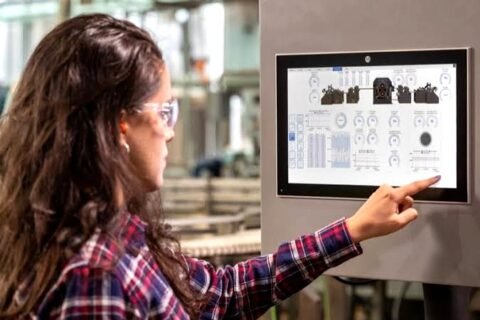
The Cortex controller combines several industrial automation functions in one device. These include real-time machine control, operator interfaces, development tools, and process data collection.
This integrated design aims to simplify system architecture. It may also reduce the need for separate hardware and software components in certain factory applications.
Neuron plans to expand the Cortex product family beyond its initial controller. Future development will include proprietary I/O hardware and Human Machine Interface (HMI) displays.
These additions could give manufacturers a more integrated platform for machine control, data acquisition, and operator interaction. However, industrial users will need to evaluate its compatibility with their existing PLC, DCS, and factory networks.
AI Automation Targets Faster Factory Commissioning
Neuron focuses on manufacturers building new factories, production lines, and industrial machinery. These projects often require extensive PLC programming, electrical integration, testing, and commissioning.
Traditional automation engineering can take considerable time. Engineers must configure I/O points, develop control logic, verify machine sequences, and test safety-related functions.
Neuron aims to shorten these processes through AI-assisted engineering. Engineers can describe machine requirements, generate control logic, and test changes through simulation.
As a result, manufacturers may bring new production capacity online faster. The approach also targets engineering bottlenecks that affect factory expansion and equipment deployment.
Siemens S5 Replacement Demonstrates Practical Industrial Applications
Neuron has already tested its technology on existing production equipment. One notable project involved CureWood Engineered Building Products.
At the facility, Neuron replaced a Siemens S5 controller installed in 1991. The production line contained 189 hardwired input and output points.
The migration required approximately three hours of human-agent engineering and eight hours of production downtime. According to Neuron, the project finished nearly ten times faster than conventional automation methods.
This case demonstrates the potential of AI-assisted control engineering for legacy PLC modernization. Many industrial facilities still operate older control platforms that require specialist programming and maintenance.
However, replacing legacy PLC hardware involves more than generating control code. Engineers must also verify I/O assignments, machine sequences, interlocks, electrical connections, and operational safety before restarting production.
Neuron Expands Its Industrial Automation Customer Base
Neuron currently works with more than a dozen manufacturing startups. Its customers and industry partners include Rise Reforming, Radify Metals, Lazarus Energy, and Nox Metals.
These projects provide opportunities to test AI-native automation in different manufacturing environments. They also help the company understand practical requirements for industrial control systems.
In addition, working with manufacturing startups allows Neuron to address automation requirements during new factory development. This market includes production equipment, process machinery, and integrated manufacturing lines.
Cortex Industrial Controller Targets a 2027 Release
Neuron plans to use its $10 million funding to expand its industrial control technology portfolio. The company also intends to develop its own I/O modules and HMI hardware.
Neuron expects to release the Cortex controller in the first quarter of 2027. Following the launch, the company plans to establish additional production capacity in the United States.
This development marks an important step in its commercial expansion. It also reflects growing interest in AI-assisted engineering across the industrial automation sector.
What AI-Native Control Systems Mean for the PLC and DCS Industry
AI-native industrial controllers represent an emerging direction in factory automation. They combine traditional machine control with natural-language interfaces, code generation, and simulation tools.
For PLC engineers, these capabilities could reduce repetitive programming tasks. They may also help engineering teams document, review, and modify control logic more efficiently.
For DCS and process automation applications, the wider opportunity involves simplifying system configuration and engineering workflows. However, real-time performance, deterministic control, cybersecurity, functional safety, and system availability remain essential requirements.
AI-generated control logic must undergo proper engineering review and validation. Manufacturers cannot rely on generated code alone when operating critical machinery or process equipment.
Neuron’s progress will therefore depend on how well Cortex performs in real production environments. Its upcoming 2027 release should provide a clearer view of its capabilities and industrial suitability.
Key Quotes from Neuron Industries Leadership
Dennis Ren, Co-Founder and CEO of Neuron Industries, highlighted the need to modernize industrial engineering tools:
“America’s next generation of factories won’t be running on the last generation’s programming tools.”
He also emphasized the importance of engineer control over AI-generated applications. Engineers can inspect and modify generated code before testing its behavior in simulation.
This approach reflects a broader industry direction. AI can support industrial engineers, while human expertise remains central to system validation and equipment deployment.
Conclusion: AI Could Reshape the Future of Industrial Automation
Neuron Industries is entering the industrial automation market with an AI-native controller and software development platform. Its $10 million seed funding will support product development, hardware expansion, and commercial deployment.
The Cortex and Synapse platform aims to make PLC programming and factory commissioning faster. Its Siemens S5 replacement project also provides an early example of AI-assisted legacy system modernization.
Nevertheless, industrial adoption will depend on performance, safety, compatibility, and long-term support. If Neuron meets these requirements, its technology could become an interesting development in the future of PLC programming and factory automation.