Robotics rental targets factory automation investment uncertainty
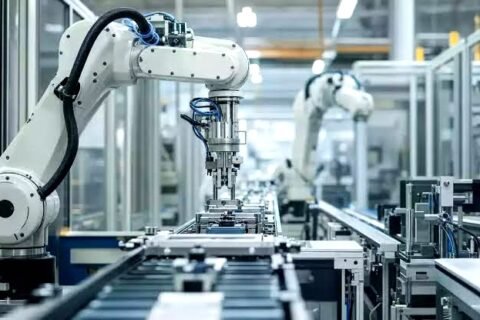
Yorkshire-based Total Automated Solutions (TAS) has launched a robotics Proof-of-Concept Rental Service. The service helps manufacturers test robotic automation before making major capital investments.
TAS operates from Tockwith, between York and Wetherby. The company provides industrial automation, electrical engineering, control systems, and systems integration services across the UK.
For many manufacturers, the technical feasibility of robotics does not guarantee a strong business case. Production teams must also verify productivity, quality, safety, labor requirements, and operating costs.
The new rental model addresses this evaluation challenge. Manufacturers can test a configured robotic system under real production conditions before committing to permanent deployment.
Industrial automation trials use real production conditions
Customers can typically rent a robotic solution for two to six months. TAS can install the system at the customer’s facility or test it within its own workshop.
This approach gives engineering teams access to practical production data. Moreover, teams can evaluate cycle times, product handling, process consistency, and operator interaction.
TAS engineers assess the application before configuring the robotic system. They can also program the robot and integrate suitable grippers, guarding, and safety systems.
As a result, manufacturers can evaluate the complete automation concept rather than testing the robot alone.
Robotics supports multiple factory automation applications
The rental service targets repetitive and labor-intensive production processes. Potential applications include:
- Repetitive product handling
- Pick-and-place operations
- Machine loading and unloading
- Packing and palletizing
- Production process support
- Ergonomically demanding tasks
- Applications involving workplace safety risks
- Production bottlenecks
These applications often involve clearly measurable production activities. Therefore, manufacturers can compare automation performance with existing manual processes.
For example, a machine-loading application can provide data on handling consistency and production flow. Similarly, palletizing trials can help teams examine throughput and operator requirements.
PLC and control systems remain important integration points
A robotic cell rarely operates as an isolated machine. In many industrial automation projects, the robot interacts with PLC control systems, machine interfaces, safety equipment, and production equipment.
The PLC may coordinate machine states, interlocks, sensors, and robot signals. Industrial communications can also connect robotic equipment with existing control architectures.
For larger production systems, SCADA platforms can provide additional process monitoring and production data. DCS platforms may also interact with robotic equipment in process industries, depending on the application.
Therefore, a proof-of-concept should consider the complete control architecture. Testing only the robot’s movement may overlook important integration constraints.
Safety engineering must accompany robotics deployment
Industrial robot trials also require appropriate attention to machine safety. Guarding, safety devices, access control, and emergency-stop functions can affect the final cell design.
The exact safety architecture depends on the application, equipment, and site requirements. Manufacturers should therefore assess the complete workcell rather than treating the robot as a standalone device.
This consideration becomes particularly important when robots operate near production personnel. A rental trial can reveal practical issues that may not appear during an initial engineering assessment.
Proof-of-concept data can support capital investment decisions
Kevin Chapman, Owner and Managing Director responsible for Robotics Rental at TAS, said manufacturers often need greater certainty before investing in robotics.
A concept can look technically suitable during an initial assessment. However, production data provides a stronger basis for evaluating the proposed solution.
The trial therefore creates an opportunity to measure actual results. Manufacturers can examine productivity, quality, workforce deployment, and process compatibility.
At the end of the rental period, customers can choose their next step. They may purchase the system, develop a permanent robotic cell, or reconsider the application.
Robotics rental may benefit smaller manufacturers
Small and medium-sized manufacturers often face tighter capital budgets than large industrial organizations. Consequently, a rental-based evaluation can reduce the commitment required during the initial assessment stage.
The model also gives production and engineering teams time to understand the technology. They can identify process changes before implementing a permanent automation solution.
From an industrial automation perspective, this staged approach can also expose integration requirements earlier. Teams can determine how robotics will interact with existing PLCs, control systems, machines, and operators.
Yorkshire strengthens its industrial automation ecosystem
TAS’s new service adds another robotics capability to Yorkshire’s manufacturing and engineering landscape. The region has a broad industrial base covering manufacturing, engineering, automation, and related technologies.
Moreover, robotics adoption increasingly connects with wider factory automation strategies. Manufacturers may combine robots with PLC systems, machine vision, industrial networks, SCADA, and data platforms.
The practical challenge remains application engineering. Selecting a robot represents only one part of a successful automation project.
Existing automation services support permanent deployment
The robotics rental service complements TAS’s existing engineering capabilities. These include control panel and MCC manufacture, PLC and SCADA software, electrical installation, industrial communications, and systems integration.
This combination can support a transition from an initial proof of concept to a permanent production installation.
In practical projects, that transition requires more than demonstrating robot motion. Engineers must also address electrical interfaces, control logic, safety functions, communications, mechanical integration, and production requirements.
Application scenario: testing machine loading automation
Consider a manufacturer that manually loads components into a production machine. The company may understand the potential value of robotic handling but lack sufficient production data.
A rental cell could reproduce the loading process within the actual production environment. Engineers could then monitor the robot’s interaction with the machine and surrounding equipment.
The manufacturer could compare the trial against its existing process. Relevant measurements might include cycle performance, operator involvement, production flow, and process consistency.
If the results support further investment, the company could then develop a permanent factory automation solution based on measured requirements.
Industry perspective: automation evaluation is becoming more data-driven
Robotics projects increasingly require both engineering validation and commercial justification. A robot can perform a task successfully while still failing to deliver the expected production value.
Therefore, proof-of-concept testing has an important role in industrial automation planning. It connects technical feasibility with real operating conditions and measurable production results.
For manufacturers considering robotics, the most useful trial is not necessarily the most sophisticated one. Instead, the trial should reproduce the target process accurately and generate meaningful operational data.