KUKA Robotics Showcases Advanced Automation at Advanced Design & Manufacturing Expo 2025
KUKA Industrial Automation Showcases Smart Robotics at ADM 2025
KUKA will present advanced industrial automation solutions at ADM 2025 in Toronto.
The event runs from October 21 to 23 at the Toronto Congress Centre.
The company will demonstrate technologies that simplify factory automation workflows.
Moreover, it will highlight practical integration across modern production environments.
KUKA will share booth space with system partners DGT Solutions and OptiMach.
Therefore, visitors will see real-world industrial automation applications in action.
SCARA Robotics and High-Speed Factory Automation Performance
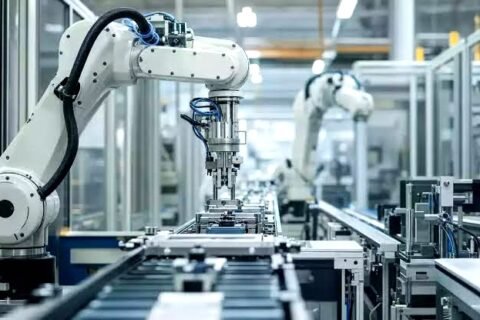
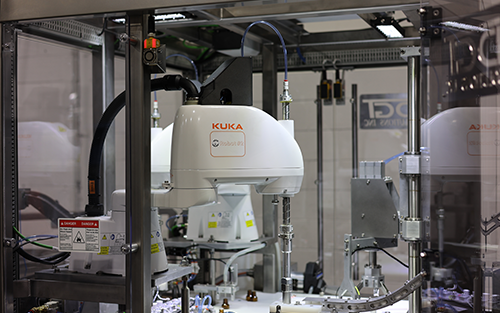
KUKA will feature the KR 6 R500 Z200-2 SCARA robot during live demonstrations.
This system supports ultra-fast cycle times below 0.36 seconds.
It handles small spray bottle capping with high precision and stability.
In addition, it delivers a payload capacity of 6 kg and a 500 mm reach.
The SCARA architecture uses rotational joints for speed and efficiency.
As a result, it improves throughput in packaging and light assembly lines.
These robots support flexible integration in industrial automation systems.
They also offer HO variants for food and beverage compliance.
DGT Solutions and PLC-Based Engineering Integration
DGT Solutions will configure the capping cell.
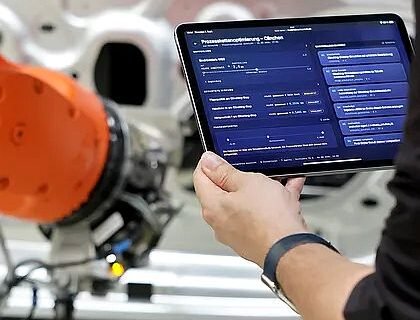
The team uses the KUKA.WorkVisual engineering suite.
This platform supports offline programming and online diagnostics.
Therefore, engineers reduce commissioning time and system errors.
It also improves PLC-based integration for complex factory automation lines.
Moreover, it enables structured troubleshooting during deployment.
In practice, this reduces downtime in high-volume production environments.
It also increases commissioning efficiency across robotic cells.
OptiMach AI Welding Systems and Control Systems Innovation
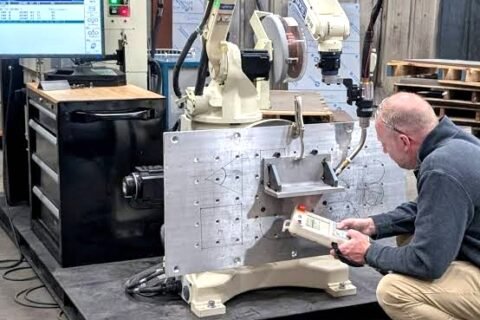
OptiMach will present AI-driven welding solutions.
The system uses a KUKA KR10 R1440-2 industrial robot.
It integrates real-time vision systems and artificial intelligence algorithms.
Therefore, it automatically adjusts welding paths based on part variation.
The solution eliminates traditional CAD-based programming requirements.
In addition, it enables plug-and-play deployment for industrial users.
This approach reflects a broader shift in industrial automation.
Control systems now rely more on adaptive AI than fixed logic.
AMR Technology and Smart Factory Automation Trends
KUKA will also display an autonomous mobile robot (AMR).
This system supports flexible material handling in smart factories.
AMRs improve internal logistics in modern industrial automation environments.
Moreover, they integrate easily with PLC and DCS infrastructures.
Therefore, manufacturers gain higher flexibility in production layouts.
This supports rapid reconfiguration in Industry 4.0 factories.
In my view, AMR adoption signals a major shift in factory automation.
Production systems are becoming more modular and software-defined.
Industrial Automation Support Ecosystem and Digital Services
KUKA provides full lifecycle support for automation systems.
This includes training, simulation, and spare parts availability.
Engineers also access services through my.KUKA.com.
Therefore, system maintenance becomes more efficient and transparent.
In addition, KUKA supports refurbishment and system upgrades.
This extends equipment lifecycle and improves return on investment.
Such service ecosystems are essential for industrial automation reliability.
They also reduce operational risks in high-demand production environments.
Author Insight on Industrial Automation and AI Integration
Industrial automation is shifting toward AI-assisted decision systems.
Robots now adapt dynamically instead of following static programs.
Moreover, integration between robotics and control systems is tightening.
This includes deeper connectivity with PLC and factory automation platforms.
However, successful adoption still requires strong system engineering expertise.
Therefore, integrators play a critical role in deployment quality.
Overall, ADM 2025 highlights a clear trend.
Automation is moving toward intelligence, flexibility, and real-time optimization.
Application Scenarios in Factory Automation Systems
The SCARA system improves high-speed packaging lines.
It supports beverage and consumer goods manufacturing environments.
AI welding systems enhance metal fabrication accuracy.
They also reduce dependency on manual programming expertise.
AMR solutions optimize warehouse and production logistics.
Therefore, factories achieve smoother material flow and reduced downtime.
These technologies support next-generation smart manufacturing strategies.
They also strengthen competitiveness in global industrial automation markets.