Caterpillar and FieldAI Combine Physical AI with Industrial Automation
Caterpillar and FieldAI have announced a collaboration focused on AI-powered industrial automation across construction, mining, and manufacturing environments.
The partnership combines Caterpillar’s engineering knowledge, manufacturing experience, and operational data with FieldAI’s physical AI and autonomous robotics technologies.
Together, the companies aim to improve productivity, safety, and operational visibility in demanding industrial environments.
Moreover, the initiative addresses growing labour shortages and increasing pressure on industrial organisations to improve efficiency.
The collaboration also reflects a broader shift toward intelligent industrial automation systems that combine robotics, AI, real-time data, and autonomous decision-making.
Physical AI Expands the Scope of Industrial Automation
Traditional industrial automation often relies on PLC, DCS, sensors, and predefined control systems.
However, complex industrial sites present challenges that conventional factory automation cannot always address efficiently.
Construction sites, mines, and large manufacturing facilities constantly change their operating conditions.
Physical AI provides autonomous machines with the ability to perceive their surroundings and respond to changing conditions.
FieldAI develops robot-agnostic autonomy technologies for complex physical environments.
Therefore, autonomous platforms can potentially support different machines, robotic systems, and industrial applications without requiring identical hardware architectures.
This approach could help industrial operators integrate AI capabilities across diverse equipment fleets.
Autonomous Inspection Supports Safer Industrial Operations
One early application involves autonomous inspection across industrial sites and facilities.
Industrial inspections often require workers to enter difficult or potentially hazardous areas.
Autonomous robots can collect operational data while reducing unnecessary human exposure to certain workplace risks.
These systems may inspect equipment, infrastructure, production areas, and operational conditions.
In addition, AI-powered analysis can help identify abnormal conditions more quickly.
For example, autonomous inspection systems could support monitoring of heavy equipment, electrical infrastructure, production machinery, and remote industrial assets.
The collected data can then support maintenance planning and operational decision-making.
From an industrial automation perspective, autonomous inspection could become an additional data layer above existing PLC and DCS architectures.
Digital Twins Create Real-Time Industrial Visibility
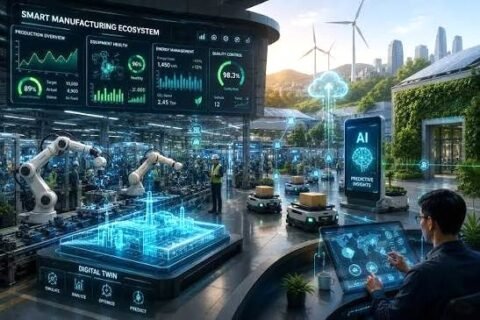
Digital twin technology represents another major focus of the Caterpillar and FieldAI collaboration.
A digital twin creates a virtual representation of physical equipment, facilities, or complete industrial operations.
The system can combine operational data from sensors, machines, control systems, and other connected assets.
As a result, engineers can gain a more complete view of industrial processes.
For construction and mining operations, digital twins may represent equipment locations, infrastructure conditions, and workflow activities.
For manufacturing facilities, digital twins can support production analysis, material flow evaluation, and equipment performance monitoring.
Moreover, digital twins can connect operational technology with simulation and AI-driven analytics.
This combination gives engineers new tools for evaluating operational changes before applying them in physical environments.
AI Enhances Situational Awareness for Industrial Control Systems
Industrial operations generate large volumes of information from equipment, sensors, PLC systems, DCS platforms, and enterprise software.
However, collecting data alone does not automatically improve operational performance.
Operators need systems that convert complex information into useful insights.
The Caterpillar and FieldAI initiative will explore enhanced situational awareness technologies for industrial environments.
These tools can help identify changing conditions and potential operational risks more quickly.
Therefore, engineers and operators can receive better information when making decisions.
In practical applications, AI systems may analyse multiple data streams simultaneously.
For example, an AI platform could combine equipment status, environmental data, location information, and operational history.
This approach could complement existing industrial control systems rather than replace them.
PLC and DCS platforms will continue managing deterministic control functions.
Meanwhile, AI can support higher-level analysis, optimisation, and autonomous operations.
Operational Optimisation Combines Simulation and AI
The partnership will also explore operational optimisation technologies.
These technologies can combine simulation, automation, and AI-driven analysis.
Industrial organisations often need to balance productivity, equipment availability, energy use, workforce resources, and safety requirements.
AI systems can analyse operational patterns and identify possible improvement opportunities.
Simulation tools can then evaluate different operational scenarios.
For example, engineers could analyse alternative equipment schedules or production workflows.
They could also evaluate material movement and machine utilisation.
As a result, industrial teams may improve planning before making operational changes.
This capability could become increasingly valuable for large facilities with complex equipment interactions.
Caterpillar Continues Its Industrial Digital Transformation Strategy
Caterpillar has already outlined its long-term vision for more intelligent industrial operations.
The company focuses on connected machines, integrated workflows, operational data, and improved productivity.
The FieldAI collaboration adds physical AI and autonomous robotics to this broader strategy.
According to Jaime Mineart, Caterpillar’s chief technology officer, AI should support practical improvements across industrial operations.
The company specifically focuses on improving safety, productivity, and operational value.
This direction aligns with current developments across industrial automation.
Manufacturers increasingly combine traditional control systems with edge computing, AI analytics, robotics, and connected industrial platforms.
However, successful implementation requires strong integration between these technologies.
Manufacturing Automation Moves Beyond Conventional Factory Systems
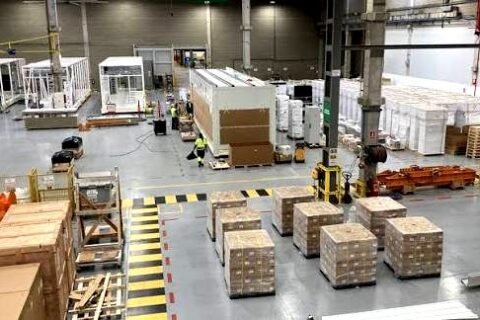
The collaboration also targets Caterpillar’s manufacturing operations.
Modern manufacturing increasingly depends on connected equipment and data-driven decision-making.
Factory automation traditionally uses PLC systems, motion controllers, industrial networks, and supervisory control platforms.
Today, manufacturers are adding AI technologies to these established architectures.
AI can support production analysis, quality improvement, predictive maintenance, and workflow optimisation.
In addition, autonomous systems can perform inspections and repetitive operational tasks.
John Tuntland, senior vice president of Caterpillar’s integrated components division, highlighted the company’s focus on technology and continuous improvement.
The company aims to improve visibility across manufacturing operations and respond more effectively to changing requirements.
This approach demonstrates an important trend within factory automation.
Manufacturers no longer evaluate individual machines in isolation.
Instead, they increasingly optimise complete production systems.
FieldAI Brings Robot-Agnostic Autonomy to Heavy Industry
FieldAI brings a different technology capability to the collaboration.
The company focuses on autonomous systems for complex physical environments.
Its robot-agnostic approach allows autonomy software to operate across different types of robotic platforms.
This flexibility may benefit industrial organisations with mixed equipment fleets.
Heavy industry rarely uses a single equipment type or automation platform.
Mining operations may include mobile equipment, fixed infrastructure, autonomous vehicles, and remote monitoring systems.
Construction sites also involve constantly changing physical environments.
Therefore, adaptable autonomy software could provide advantages over highly specialised robotic solutions.
FieldAI also uses foundation models designed for physical and operational environments.
These technologies aim to transform large volumes of industrial data into actionable operational insights.
NVIDIA Technologies Support Digital Twins and AI Computing
The collaboration will also use NVIDIA accelerated computing and NVIDIA Omniverse technologies.
These platforms can support simulation, AI development, and high-fidelity digital twin applications.
High-performance computing plays an important role in modern industrial AI systems.
Digital twins can require significant computing resources when processing complex operational data.
Moreover, simulation environments can model equipment interactions and operational scenarios before physical deployment.
NVIDIA technologies can provide computing infrastructure for these applications.
The combination of AI computing, digital twins, robotics, and industrial automation creates a more integrated technology environment.
However, companies must still establish strong data governance and cybersecurity practices.
Industrial data accuracy remains particularly important for AI-driven operational decisions.
Industrial Automation Requires Strong Integration with PLC and DCS Systems
AI and robotics will not eliminate the need for established industrial control systems.
PLC and DCS platforms remain responsible for many deterministic control and safety-related functions.
For example, a PLC can manage machine sequences, interlocks, and real-time control signals.
A DCS can coordinate complex process control across large industrial facilities.
AI technologies can operate above or alongside these systems.
They can analyse historical and real-time data to identify patterns and optimisation opportunities.
Therefore, the strongest industrial architectures will likely combine conventional control systems with AI capabilities.
A typical architecture may include field sensors and instruments at the lowest level.
PLCs, DCS systems, and industrial controllers manage control functions.
Industrial networks connect equipment and operational systems.
Edge platforms process selected data near the physical environment.
AI platforms then analyse larger operational datasets and support optimisation.
This layered architecture can help organisations introduce AI without replacing existing automation infrastructure.
Application Scenario: Autonomous Mining Operations
Mining operations represent a strong application area for this technology collaboration.
A mining site may include autonomous equipment, conveyor systems, processing plants, and remote infrastructure.
Autonomous inspection robots could monitor equipment conditions across difficult areas.
Sensors and control systems could provide operational data from pumps, motors, conveyors, and processing equipment.
Digital twins could then create a virtual representation of the complete operation.
AI platforms could analyse equipment utilisation and workflow patterns.
As a result, operators could gain improved visibility across multiple operational areas.
Engineers could also simulate changes before modifying physical operations.
This approach may support better equipment utilisation and more efficient maintenance planning.
Application Scenario: Intelligent Manufacturing Facilities
Manufacturing facilities could also benefit from the combined technologies.
An intelligent factory may include PLC-controlled production equipment, industrial robots, machine vision systems, and connected manufacturing software.
Autonomous systems could perform inspections and collect operational information.
Digital twins could model production lines and equipment relationships.
AI analytics could identify bottlenecks and workflow inefficiencies.
In addition, simulation could help engineers evaluate production changes.
For example, a manufacturer could test alternative material flows before changing the physical production layout.
This process may reduce implementation risks and improve engineering efficiency.
Industry Perspective: Physical AI Could Become the Next Automation Layer
The Caterpillar and FieldAI partnership highlights an important industrial technology trend.
Industrial automation is moving beyond fixed sequences and predefined machine responses.
The next development stage may combine deterministic control with systems that understand changing physical environments.
Physical AI could become an additional intelligence layer for industrial operations.
However, industrial organisations should adopt these technologies carefully.
AI systems require accurate operational data and well-defined deployment objectives.
Companies should first identify specific operational problems.
They should then evaluate whether AI, robotics, digital twins, or conventional automation provides the best solution.
In many cases, the strongest results will come from combining several technologies.
For example, PLC systems can manage machine control.
DCS platforms can manage process operations.
Digital twins can support simulation and visibility.
AI can analyse complex operational information.
Autonomous robots can extend data collection into physical environments.
Therefore, successful industrial automation will increasingly depend on technology integration rather than individual products.
Conclusion: AI, Robotics and Digital Twins Reshape Heavy Industry
The Caterpillar and FieldAI collaboration demonstrates how heavy industry is adopting new forms of industrial intelligence.
The partnership combines engineering knowledge, operational data, autonomous robotics, physical AI, and digital twin technologies.
Its initial focus includes autonomous inspections, situational awareness, digital twins, and operational optimisation.
These applications could support construction, mining, and manufacturing organisations facing productivity and workforce challenges.
Moreover, the collaboration shows how industrial automation continues to evolve.
Future industrial sites may combine PLC, DCS, control systems, autonomous machines, AI platforms, and real-time digital twins.
The technology alone will not guarantee better performance.
However, well-integrated systems can provide engineers with better operational visibility and decision support.
For industrial organisations, the key challenge will be integrating AI into existing automation architectures safely and practically.
The companies that successfully connect physical operations with digital intelligence may gain significant long-term operational advantages.