The Humanoid Supply Paradox: Why Tech is Outpacing Trust
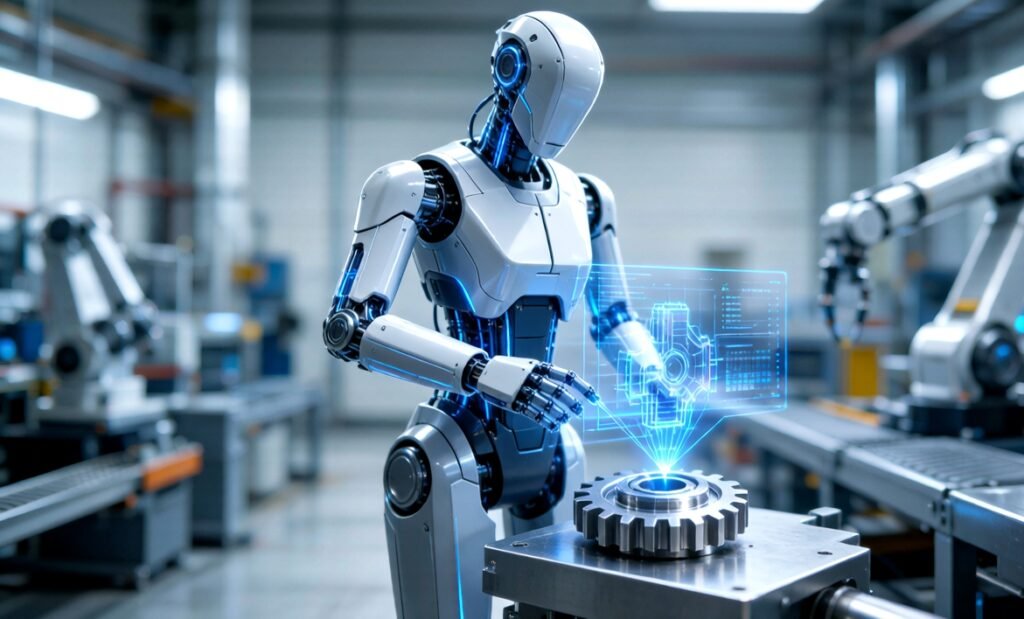
The $5 trillion projection for the global humanoid robot market paints a dazzling future, but as an engineer on the ground, the current reality looks vastly different. The rapid rise of facilities like China’s LY iTech “Embodied AI” factory highlights an unusual inversion: supply capacity is currently outstripping actual commercial demand.
In traditional industrial hardware, production trails behind a massive backlog of orders. With humanoids, venture capital has built the factories before the end-users have validated the use cases. Industrial buyers are inherently risk-averse; they aren’t just buying a cool machine, they are looking for precise, repeatable ROI. Until we establish standardized testing frameworks and clear deployment blueprints, these advanced humanoids will remain high-tech shelfware rather than factory-floor staples.
Breaking the Soft-Material Barrier in Apparel Manufacturing
Automating apparel assembly has long been the holy grail—and the bane—of robotics engineers. Because fabrics are flexible, porous, and highly unpredictable, traditional rigid automation fails miserably. The partnership between Jack Technology and Siemens is a massive stress test for modern AI.
By integrating Siemens’ advanced AI with robotics, the system shifts from pre-programmed trajectories to real-time, perception-driven adjustments. This isn’t just about faster sewing; it’s a fundamental leap toward adaptive robotics. If AI can successfully master the chaotic dynamics of soft textiles, it proves that modern vision and tactile algorithms are mature enough to handle almost any variable material across broader manufacturing sectors.
From Pilot to Proving Ground: AMRs and the Automotive Supply Chain
While humanoids capture the headlines, Autonomous Mobile Robots (AMRs) are doing the heavy lifting right now. Geekplus deploying its Moving-Type AMRs across Toyota plants proves that the industry has officially moved past the “pilot phase” into full-scale production.
High-traffic intersections in automotive plants—where forklifts, tuggers, and pedestrians converge—are notorious for accidents. AMRs succeed here because they operate on predictive spatial awareness, bringing a level of deterministic safety that human-driven traffic simply cannot match. Concurrently, Formic’s expansion into machine tending via an Automation-as-a-Service (AaaS) model is a brilliant financial lubricant. By shifting Capex to Opex, mid-sized auto suppliers can finally modernize their CNC lines without betting the farm on uncertain EV timelines.
The Silent Bottleneck: Facility Readiness and the Data Imperative
Everyone wants to talk about the “brain” of industrial AI, but few are talking about the “nervous system.” The hard truth highlighted by the Control System Integrators Association is that a shiny AI layer is utterly useless without foundational data quality, documented processes, and uncompromising cybersecurity.
Introducing AI or autonomous asset optimization tools (like Honeywell’s latest maintenance platforms) into a legacy facility with fragmented sensor data and weak Operational Technology (OT) security is a recipe for disaster. Garbage in, garbage out—except in a factory, “garbage out” means a line stoppage or a catastrophic cyber breach. True operational readiness requires clean, unified, real-time data pipelines (such as MQTT Sparkplug or unified namespaces) before the AI algorithm is ever switched on.
Reshoring and the Physical Footprint of Modern Automation
Automation cannot exist in a vacuum; it requires a robust, localized physical infrastructure. Heavy investments like FTI’s $80 million electrical facility in Louisiana and Deutronic USA’s expansion in South Carolina are direct responses to a fragmented global supply chain.
Tariffs and logistical bottlenecks have taught large buyers that proximity equals security. By expanding domestic production of power electronics and electrical solutions, the automation supply chain is hardening itself against geopolitical shocks. For engineers, this localized footprint means shorter lead times, better component support, and the ability to iterate facility designs at a much faster cadence.