Industrial Automation Moves From Innovation Concepts to Factory Reality
Industrial automation is entering a new phase where artificial intelligence, digital twins, cyber security, and advanced control systems are becoming practical tools for manufacturers.
For decades, PLC, DCS, SCADA, and industrial control systems have supported production operations. However, modern factories now require deeper integration between automation platforms, data analytics, and intelligent decision-making systems.
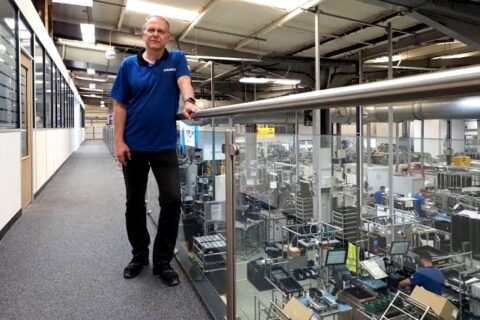
At Siemens Transform in Manchester, industry leaders highlighted a clear trend: manufacturers no longer ask whether digital technologies matter. Instead, they ask how to deploy them effectively across real production environments.
From my experience working with industrial automation systems, successful transformation depends less on adopting the newest technology and more on integrating solutions that improve measurable operational results.
Industrial AI and Automation Adoption Becomes a Business Priority
Industrial AI has moved beyond research projects and entered daily manufacturing discussions. Companies are exploring AI applications in predictive maintenance, quality inspection, production planning, and energy management.
However, industrial environments differ significantly from consumer technology applications. Factory automation requires strict control, high availability, and predictable performance.
For example, an AI system supporting a DCS platform must work alongside existing process control strategies. It must also respect operational limits defined by engineers and safety procedures.
Therefore, manufacturers increasingly focus on practical AI deployment rather than experimental technology demonstrations.
The key question is no longer “Can AI work?” but “Where can AI create reliable operational value?”
PLC and DCS Systems Become the Foundation of Digital Manufacturing
Modern manufacturing transformation still depends heavily on proven automation architectures. PLC systems continue to control machines, production lines, and discrete manufacturing processes.
Meanwhile, DCS platforms remain central in industries such as oil and gas, chemical processing, power generation, and pharmaceutical manufacturing.
Leading automation suppliers, including Siemens, Emerson, Schneider Electric, ABB, Honeywell, and Yokogawa, continue improving their control platforms by adding industrial networking, edge computing, and advanced analytics capabilities.
Moreover, modern control systems increasingly support communication standards such as PROFINET, EtherNet/IP, FOUNDATION Fieldbus, and industrial Ethernet protocols.
These developments allow factories to connect field devices, controllers, and enterprise systems while maintaining operational security.
Digital Twins Improve Factory Automation Performance
Digital twin technology has become an important component of industrial automation strategies. A digital twin creates a virtual representation of equipment, production lines, or complete facilities.
Manufacturers use digital twins to simulate production changes before implementing them on the factory floor. As a result, companies can reduce commissioning time, improve maintenance planning, and optimize production performance.
For example, engineers can test PLC logic changes or DCS configuration updates inside a virtual environment before applying modifications to live systems.
However, digital twins deliver value only when companies maintain accurate equipment data and strong integration between engineering systems and operational technology.
Cyber Security Becomes Essential for Connected Control Systems
As factories become more connected, industrial cyber security has become a major concern.
Traditional isolated automation networks are gradually evolving into connected industrial environments. This change improves visibility and efficiency, but it also introduces additional security challenges.
Manufacturers must protect PLC networks, DCS servers, engineering workstations, and industrial communication systems from cyber threats.
Therefore, modern automation projects increasingly follow security frameworks such as IEC 62443 industrial cyber security standards.
In practical projects, I have observed that cyber security works best when engineers include protection measures during system design instead of adding them after installation.
Industrial Electrification Supports Energy Efficiency Goals
Electrification is another important factor influencing industrial automation development.
Manufacturers are investing in energy monitoring systems, intelligent motor control, variable frequency drives, and automated power management solutions.
Advanced automation platforms now help companies analyze energy consumption at equipment and production-line levels.
Moreover, integrating electrical systems with PLC and SCADA platforms allows operators to identify energy losses and improve operational efficiency.
This approach supports both productivity improvement and long-term sustainability objectives.
UK Manufacturing Faces Real Implementation Challenges
Although industrial automation technologies continue advancing, adoption remains challenging for many UK manufacturers.
Legacy equipment remains common across factories. Many companies still operate machines designed decades ago, making integration with modern systems complex.
In addition, skilled automation engineers remain in high demand. Companies need professionals who understand both traditional control systems and emerging digital technologies.
The challenge is not simply installing new hardware or software. Successful transformation requires engineering knowledge, operational experience, and long-term planning.
Therefore, manufacturers should prioritize realistic automation roadmaps instead of pursuing technology adoption without clear business objectives.
Industry Experience: Moving From Pilot Projects to Production Deployment
Many industrial companies have already completed small automation trials. However, moving from pilot projects to full-scale deployment remains difficult.
A successful industrial AI or automation project must solve a specific operational problem.
For example:
- A power plant may use predictive analytics to identify turbine vibration issues before equipment failure.
- A chemical facility may optimize process parameters through DCS data analysis.
- A manufacturing plant may improve production quality using machine vision and PLC-based control integration.
These examples demonstrate that automation value comes from practical application rather than technology itself.
In my view, the next generation of industrial automation will belong to companies that combine engineering fundamentals with digital capabilities.
Advanced Engineering Events Highlight the Future of Industrial Automation
Industry events such as Advanced Engineering at NEC Birmingham provide an important platform for manufacturers, technology providers, and engineering specialists to exchange practical knowledge.
The discussion around Siemens Transform reflects a broader industrial movement. Companies are shifting from exploring digital possibilities toward implementing measurable solutions.
Moreover, collaboration between automation suppliers, manufacturers, research organizations, and engineering communities will determine how quickly industrial transformation progresses.
Practical Solutions for Future Smart Factories
Manufacturers preparing for future automation projects should consider several key areas:
Factory automation modernization:
Upgrade existing PLC, DCS, and SCADA systems while maintaining production continuity.
Industrial data integration:
Connect field devices, control systems, and enterprise platforms to create usable operational data.
Predictive maintenance:
Combine condition monitoring, vibration analysis, and AI models to reduce unexpected downtime.
Cyber security improvement:
Protect industrial networks through structured security policies and IEC 62443 practices.
Workforce development:
Train engineers in both traditional automation technologies and digital manufacturing tools.
The future factory will not rely on automation alone. Instead, it will combine intelligent systems, skilled engineers, secure networks, and proven industrial practices.
Conclusion: Industrial Transformation Requires Action, Not Only Innovation
Industrial AI, digital twins, electrification, and advanced automation are changing manufacturing strategies worldwide.
However, technology adoption alone does not guarantee success. Manufacturers must connect innovation with practical engineering requirements.
The companies that achieve the greatest benefits will be those that understand their operational challenges and apply automation solutions with clear objectives.
Industrial transformation is no longer a future concept. It is becoming a measurable engineering process happening across factories today.