Emerson DeltaV Automation Platform for AI Data Centers
AI Data Center Growth Drives New Requirements for Industrial Automation
The rapid expansion of artificial intelligence (AI) workloads is changing how companies design and operate modern data centers. Large-scale AI facilities require higher computing capacity, stronger thermal management, and faster project execution.
As a result, engineering teams, electrical contractors, system integrators, and equipment suppliers face increasing coordination challenges. They must deliver complex infrastructure within shorter schedules while maintaining operational stability, scalability, and long-term efficiency.
From an industrial automation perspective, AI data centers are becoming more similar to process industries. They require integrated control systems, real-time monitoring, and intelligent optimization to manage critical infrastructure continuously.
Emerson DeltaV Automation Platform Supports Next-Generation Data Center Control
Emerson has introduced the DeltaV Automation Platform for Data Centers to address the growing automation requirements of AI-driven facilities. The platform applies proven distributed control system (DCS) technology to data center infrastructure management.
Unlike traditional projects that rely on multiple independent monitoring solutions, the DeltaV platform provides a unified automation architecture. Therefore, engineering teams can reduce system complexity and improve coordination between mechanical, electrical, and facility operations.
The platform combines process control methods with modern digital technologies. It helps operators manage cooling systems, power-related processes, and facility equipment through a consistent control environment.
Integrated DCS and PLC Architecture Improves Facility Management
The Emerson DeltaV Automation Platform includes the DeltaV distributed control system (DCS) and DeltaV programmable logic controllers (PLCs). These systems work together to provide coordinated facility-wide automation.
The DCS manages supervisory control, data integration, and operational visibility. Meanwhile, PLC systems handle equipment-level control tasks that require fast response and deterministic execution.
This combination creates a flexible control systems architecture for complex data center environments. Moreover, it supports future expansion by allowing additional equipment and automation functions to integrate into the existing platform.
In industrial applications, similar architectures have been widely used in power generation, oil and gas, chemical processing, and pharmaceutical manufacturing. These industries require continuous operation, precise control, and strong lifecycle management.
Real-Time Control Helps Optimize Cooling and Variable Loads
AI computing environments generate highly dynamic thermal loads because server utilization changes rapidly. Therefore, cooling infrastructure must adjust continuously to maintain equipment performance.
The DeltaV platform provides real-time monitoring and control capabilities for cooling systems and facility equipment. Operators can analyze operating conditions and adjust control strategies according to changing requirements.
From practical automation experience, thermal management is one of the most challenging areas in AI data center operation. Small inefficiencies in cooling control can significantly increase energy consumption across large facilities.
By applying industrial automation principles, data centers can improve energy management and maintain more stable operating conditions.
AI-Assisted Engineering Enhances Automation Workflows
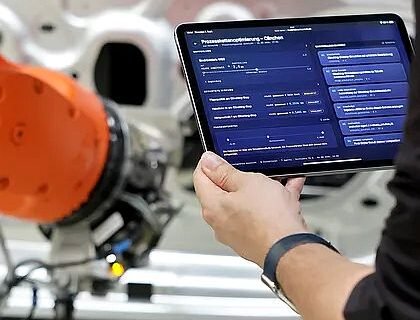
The DeltaV DCS and PLC platforms include AI-based tools designed to support engineering activities, process optimization, and system integration.
These tools can assist engineers with configuration tasks, operational analysis, and optimization models. However, AI does not replace automation expertise. Instead, it provides additional support for engineers who manage complex industrial control environments.
In my view, the combination of AI technology and traditional automation engineering represents a major direction for future control systems. Experienced engineers will continue to play an important role in system design, cybersecurity, commissioning, and operational decision-making.
Standardized Project Execution Reduces Data Center Deployment Risks
Modern AI data center projects often involve multiple contractors and suppliers. Therefore, standardized automation designs become increasingly important.
Emerson’s DeltaV approach focuses on repeatable engineering methods and structured project execution. This strategy can help teams reduce integration problems, shorten commissioning periods, and improve startup consistency.
For large facilities, standardized control system designs provide additional advantages. They simplify operator training, maintenance procedures, spare parts management, and future expansion planning.
Reliability and Lifecycle Support for Global Data Center Operations
AI data centers require continuous operation because service interruptions can create significant financial and operational impacts.
The DeltaV Automation Platform provides operational visibility that helps teams identify abnormal conditions and respond quickly. Moreover, centralized control information supports maintenance planning and long-term facility optimization.
For companies operating multiple data centers across different regions, a unified automation strategy can improve management consistency. It allows engineering teams to apply common operating models while adapting to local requirements.
Application Scenarios: Industrial Automation Solutions for AI Infrastructure
The DeltaV Automation Platform can support several data center automation scenarios:
- AI computing facilities requiring advanced cooling control and energy optimization.
- Hyperscale data centers needing standardized automation across multiple locations.
- Edge computing facilities requiring compact PLC and DCS integration.
- Critical infrastructure environments requiring high availability and continuous monitoring.
These applications demonstrate how industrial automation technologies are expanding beyond traditional manufacturing industries. Data centers are becoming another important field where PLC, DCS, and intelligent control systems create operational value.
Industry Perspective: Automation Becomes a Foundation for AI Infrastructure
The growth of AI workloads is accelerating the transformation of data center engineering. Future facilities will require more than computing hardware. They will need intelligent automation platforms capable of managing complex physical systems.
Emerson’s DeltaV Automation Platform represents this shift by applying established industrial control technologies to digital infrastructure.
However, successful implementation still depends on engineering discipline, proper system architecture, and experienced automation professionals. The future of AI data centers will likely combine artificial intelligence, industrial automation, and human expertise to achieve higher efficiency and operational resilience.