Industrial Automation Is Entering a Data-Driven Transformation Era
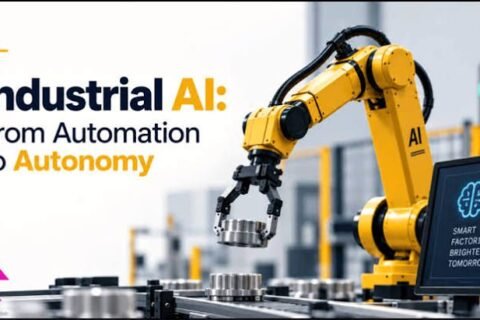
The industrial automation industry is moving toward autonomous factories, intelligent production systems, and AI-driven operations. Manufacturers now expect machines, control systems, and enterprise platforms to work together with minimal human intervention.
However, many companies still struggle to scale these technologies across entire plants. The main barrier is not a lack of automation hardware or artificial intelligence capability. Instead, fragmented industrial data prevents organizations from building a complete operational view.
Modern factories generate enormous amounts of information from PLCs, DCS platforms, SCADA systems, sensors, robots, and enterprise software. Yet, this data often remains isolated inside separate systems. Therefore, manufacturers cannot fully use data analytics or AI to improve production performance.
From years of experience working with industrial automation projects, I have found that successful digital transformation depends less on adding new devices and more on creating a unified data architecture.
Fragmented Data Limits AI Applications in Manufacturing
Industrial AI requires consistent, structured, and accessible information. Unfortunately, many factories still operate with disconnected automation environments.
For example, a production line may use PLC systems for machine control, a DCS platform for process management, and separate maintenance software for asset information. These systems often use different data formats, naming methods, and communication structures.
As a result, AI applications can only analyze limited sections of the operation. They may identify problems inside one machine or process area, but they cannot understand the complete production environment.
Moreover, many older industrial facilities rely on legacy control systems installed decades ago. These systems continue to perform well but were not designed for modern data integration requirements.
A strong industrial data foundation must connect existing control systems with modern analytics platforms. This approach allows manufacturers to protect previous investments while enabling future automation upgrades.
PLC, DCS, and Control Systems Need Better Data Integration
The traditional automation architecture includes PLCs, DCS platforms, SCADA systems, and field instrumentation. These technologies remain fundamental for factory automation and process industries.
PLCs continue to provide fast machine control for discrete manufacturing applications. Meanwhile, DCS platforms manage complex continuous processes in industries such as oil and gas, chemicals, power generation, and pharmaceuticals.
However, the value of automation is gradually moving beyond the control layer. Manufacturers increasingly focus on collecting, organizing, and analyzing operational data.
Industrial communication standards such as OPC UA, MQTT, PROFINET, EtherNet/IP, and industrial edge computing platforms help connect different automation environments.
Therefore, companies should not replace every existing control system. Instead, they should build a flexible data layer that connects PLC, DCS, and enterprise applications.
In practical projects, this strategy often reduces implementation risks and provides faster returns compared with complete system replacement.
Software-Defined Automation Is Changing the Industrial Value Chain
The industrial automation market is experiencing a significant shift. Traditional hardware-based control systems are becoming increasingly standardized, while software and data platforms are gaining strategic importance.
Leading automation suppliers are investing heavily in digital platforms and industrial software ecosystems.
For example, Schneider Electric expanded its software capabilities through the acquisition of AVEVA. This move strengthened its position in asset lifecycle management, industrial data platforms, and software-driven automation.
Similarly, Siemens continues to develop its industrial digital twin strategy by combining engineering data, simulation technologies, and artificial intelligence.
In addition, Emerson Electric has increased its focus on industrial software through its investment in Aspen Technology.
These strategies show a common industry direction: automation companies are moving upward from hardware control toward software intelligence and data services.
Industrial AI Requires Standardized Operational Data
Artificial intelligence can improve manufacturing efficiency, but only when it receives high-quality industrial data.
A factory may collect thousands of signals from vibration sensors, temperature transmitters, motor drives, protection relays, and control modules. However, inconsistent naming and incomplete asset information reduce the value of this data.
For example, one plant may identify a pump vibration signal as “P-101_VIB,” while another system records the same asset as “Pump01_Vibration.” AI systems cannot easily combine these datasets without proper standardization.
Therefore, manufacturers need industrial data models that define assets, signals, relationships, and operating conditions.
Standards such as ISA-95, OPC UA information models, and asset management frameworks provide important foundations for this process.
From an engineering perspective, data governance has become as important as hardware selection in modern automation projects.
Industrial Automation Companies Are Investing in Digital Platforms
The global automation industry is investing billions of dollars to capture the growing value of industrial software.
Major automation suppliers recognize that future competitiveness depends on connecting physical assets with digital intelligence.
The control system remains important, but the industry is expanding toward:
- Industrial IoT platforms
- Digital twins
- Edge computing
- Predictive maintenance
- AI-based optimization
- Cloud-connected asset management
However, manufacturers should evaluate digital strategies carefully. New technology alone cannot solve outdated processes or poor data management.
Successful transformation requires three elements:
- A clear automation architecture.
- Standardized industrial data.
- Skilled engineering teams.
Technology investment without operational planning often creates additional complexity.
Factory Automation Requires a Balanced Modernization Strategy
Many manufacturers face a difficult decision: replace existing automation systems or integrate them into new digital platforms.
In most cases, a gradual modernization strategy provides better results.
For example, a factory can maintain existing PLC and DCS equipment while adding industrial gateways, edge computing devices, and centralized data platforms.
This method reduces production downtime and allows engineers to upgrade systems step by step.
Moreover, experienced automation teams can identify which assets require immediate improvement and which systems can continue operating safely.
The future factory will not depend on replacing every traditional control system. Instead, it will combine proven automation technology with intelligent data management.
Application Scenario: Building an Intelligent Manufacturing Data Platform
A global process manufacturer recently faced challenges caused by isolated automation systems.
The plant operated multiple PLC networks, a DCS platform, and independent maintenance databases. Engineers spent significant time collecting information manually before analyzing equipment performance.
The company implemented an industrial data platform that connected control systems, field devices, and enterprise software.
The solution included:
- PLC and DCS data integration through industrial communication protocols.
- Edge devices for real-time data processing.
- Asset data models for equipment identification.
- AI analytics for predictive maintenance.
As a result, engineers gained a complete operational view and improved maintenance planning.
This example demonstrates that industrial intelligence begins with connected and standardized data.
Expert View: Data Infrastructure Will Define the Next Automation Competition
The next generation of industrial automation competition will not only focus on faster controllers or smarter sensors.
The key advantage will come from organizations that can transform industrial data into operational knowledge.
PLC, DCS, and control systems will continue supporting manufacturing operations. However, their future value will increasingly depend on how effectively they connect with software platforms and AI technologies.
Manufacturers that build strong data foundations today will have greater flexibility in adopting future automation technologies.
The industrial automation market is moving from hardware-centered control toward data-driven intelligent operations. Companies that understand this transition will lead the next phase of factory transformation.