Rockwell Automation to Power Industry’s First Full Automated Bacon Line
Industrial Automation Transforms Food Processing Efficiency
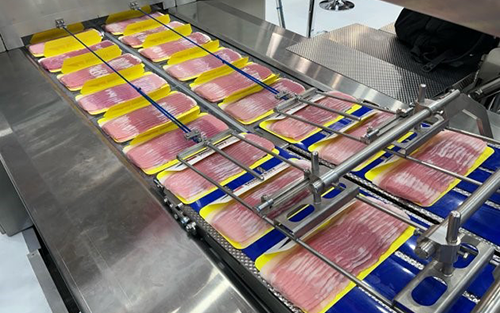
Rockwell Automation has partnered with Middleby Food Processing to launch a fully automated bacon production line. The system debuted at IFFA Frankfurt.
As demand for efficient and sustainable production grows, manufacturers seek smarter factory automation. Therefore, this collaboration highlights how industrial automation can modernize traditional food processing.
Scalable Factory Automation Addresses Industry Challenges
Middleby operates from Elgin, Illinois, and leads innovation in food processing equipment. However, customers face rising labor costs and limited factory space.
Therefore, the company required scalable control systems that support flexible production. Rockwell delivered a solution that integrates PLC and DCS architectures. In addition, the platform supports long-term expansion and digital transformation goals.
Integrated Control Systems Ensure Flexibility and Interoperability
According to Middleby leadership, seamless integration across equipment influenced the decision. Moreover, consistent programming improves interoperability between machines.
Rockwell’s engineering teams designed unified control systems using standardized PLC frameworks. As a result, operators gain better system visibility and simplified maintenance workflows.
FactoryTalkOptix Enhances HMI and Real-Time Data Capabilities
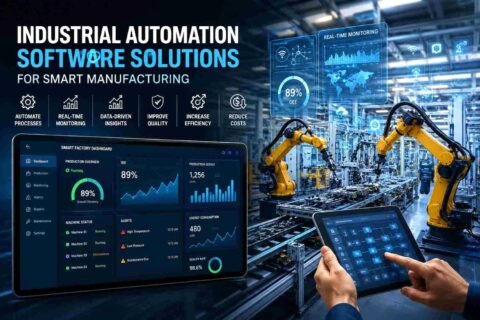
The solution includes FactoryTalk Optix, which standardizes human-machine interfaces. In addition, it uses libraries such as Machine Builder Library and Device Objects.
These tools create a consistent programming structure across production lines. Therefore, technicians can troubleshoot systems faster and remotely. Moreover, real-time data improves decision-making and production agility.
Automation Improves Throughput and Sustainability
This automated bacon line increases throughput while reducing labor dependency. In addition, it lowers water consumption and wastewater generation.
Such improvements align with global sustainability goals in food manufacturing. As a result, companies can meet regulatory requirements while improving operational efficiency.
Expanding Automation Across Food Industry Segments
Although the bacon line marks a milestone, Middleby continues to expand automation into bakery and protein sectors. Moreover, its modular systems allow customization for different production needs.
This flexibility helps manufacturers stay competitive in rapidly changing markets. Therefore, factory automation becomes a strategic investment rather than a short-term upgrade.
About Middleby Food Processing: Advanced Food Manufacturing Solutions
Middleby Food Processing delivers end-to-end solutions for industrial food production. Its equipment supports every stage, from raw material handling to packaging.
In addition, the company showcases innovations through its Middleby Innovation Kitchens. These facilities demonstrate practical applications of advanced food processing technologies.
About Rockwell Automation: Global Leader in Industrial Automation
Rockwell Automation specializes in industrial automation, PLC, and digital transformation solutions. Headquartered in Milwaukee, the company serves customers in over 100 countries.
Moreover, its technologies connect people, processes, and data to improve productivity and sustainability across industries.
Expert Insight: The Future of PLC and DCS in Food Automation
From an industry perspective, this project reflects a broader shift toward integrated control systems. PLC and DCS platforms now converge to support flexible manufacturing.
In addition, standardized programming reduces engineering time and lifecycle costs. Therefore, companies investing in unified automation platforms gain a long-term advantage.
However, successful implementation requires strong system integration expertise. Companies should prioritize vendors with proven experience in factory automation and digital transformation.
Application Scenario: Fully Automated Food Production Line
In a typical deployment, sensors collect real-time data across processing stages. PLC systems control equipment such as slicers, conveyors, and packaging units.
Meanwhile, DCS platforms manage plant-wide coordination and process optimization. Operators monitor performance through HMI systems like FactoryTalk Optix.
As a result, manufacturers achieve consistent product quality, reduced downtime, and improved resource efficiency.