Rising Demand for Green Technologies Drives Danfoss to Open Its Largest Production Facility in China
Danfoss Strengthens Presence in China’s Industrial Automation Market
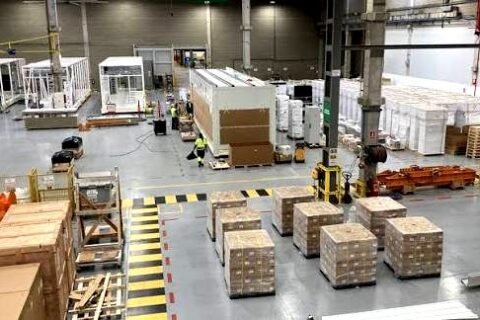
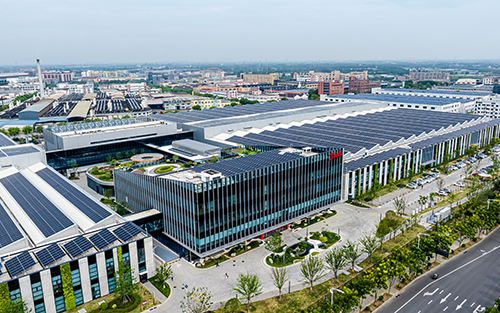
Danfoss, the Danish engineering leader, recently opened its largest global production facility in Haiyan, China. Covering 126,000 square meters, the new Haiyan Second Campus doubles the company’s regional manufacturing capacity. This expansion highlights Danfoss’ long-term commitment to supporting China’s green transition and advancing industrial automation technologies.
Comprehensive Manufacturing for Advanced Control Systems
The campus integrates production for all three Danfoss business segments and hosts two Application Development Centers (ADCs) for Power Solutions and Climate Solutions. Built to match world-class European and U.S. standards, the facility produces energy-efficient technologies such as drives, commercial compressors, hydraulic pumps, motors, valves, and heat exchangers. These components are crucial for decarbonizing buildings, transportation, and energy systems through modern PLC and DCS-based control solutions.
Leadership Insights on China’s Green Future
Kim Fausing, President and CEO of Danfoss, emphasized China’s strategic importance: “This campus reflects our confidence in China’s green development. Through innovation and industrial automation, we support low-carbon growth alongside local partners.” The inauguration showcased collaboration between Danfoss leadership, Chinese officials, and Danish diplomatic representatives, reinforcing bilateral efforts toward sustainable industrial development.
Strategic Partnership Between China and Denmark
Anders Siegumfeldt, Deputy Head of Mission at the Danish Embassy in Beijing, stated: “Danfoss’ expansion demonstrates shared ambitions for a greener future. Industrial automation solutions help translate climate targets into economic competitiveness.” This collaboration highlights how advanced manufacturing technologies, including factory automation and control systems, contribute to regional sustainability goals.
Enhancing Local Development and Workforce Skills
Arthur Xu, President of Danfoss China, highlighted the company’s two decades of local experience: “The new campus strengthens our ability to provide energy-efficient solutions. It also supports local job creation, skill development, and supplier growth.” Haiyan County Party Secretary Wang Suishe added that Danfoss’ investment significantly contributes to economic and social development.
Decarbonization at the Core of Operations
The campus follows Danfoss’ three-step decarbonization strategy: Reduce, Reuse, and Re-source. A 20-year green power purchase agreement ensures the facility operates entirely on renewable energy. By integrating industrial automation systems and green technologies, Danfoss provides cost-effective solutions for clients seeking sustainable control and factory automation solutions.
Danfoss’ Expanding Industrial Automation Network in China
Currently, Danfoss operates 11 production sites and four innovation centers across China, employing over 5,000 professionals. The Haiyan campus exemplifies how leading industrial automation companies combine advanced PLC, DCS, and control system technologies with sustainability to meet market demand and regulatory requirements.
Author’s Perspective on Industry Trends
The Haiyan expansion illustrates a growing global trend: industrial automation companies are investing in green manufacturing to meet decarbonization and digitalization targets. Integrating energy-efficient production with advanced control systems is no longer optional but a competitive necessity. Companies adopting this dual strategy will likely lead in China’s industrial automation and factory automation sectors.
Application Scenarios
- Factory Automation: Optimized production lines using advanced drives and motor control for energy efficiency.
- Building Decarbonization: Climate solutions with PLC/DCS-based HVAC and energy management systems.
- Transportation Electrification: Efficient hydraulic and motor systems for electric vehicles and charging infrastructure.
- Energy Sector: Heat exchangers and valves supporting renewable energy plants and low-carbon grids.