
Overview
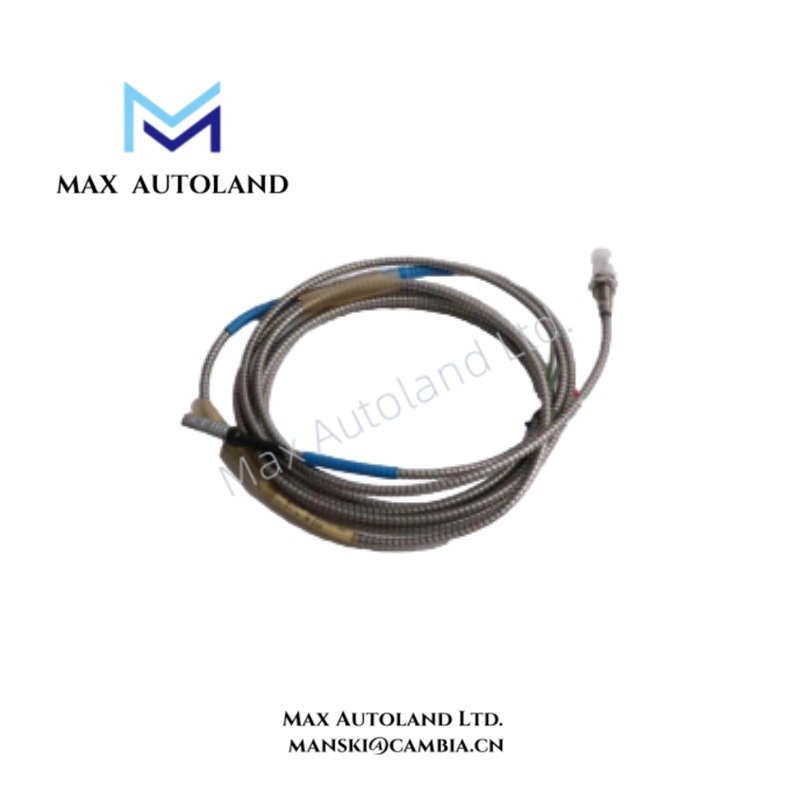
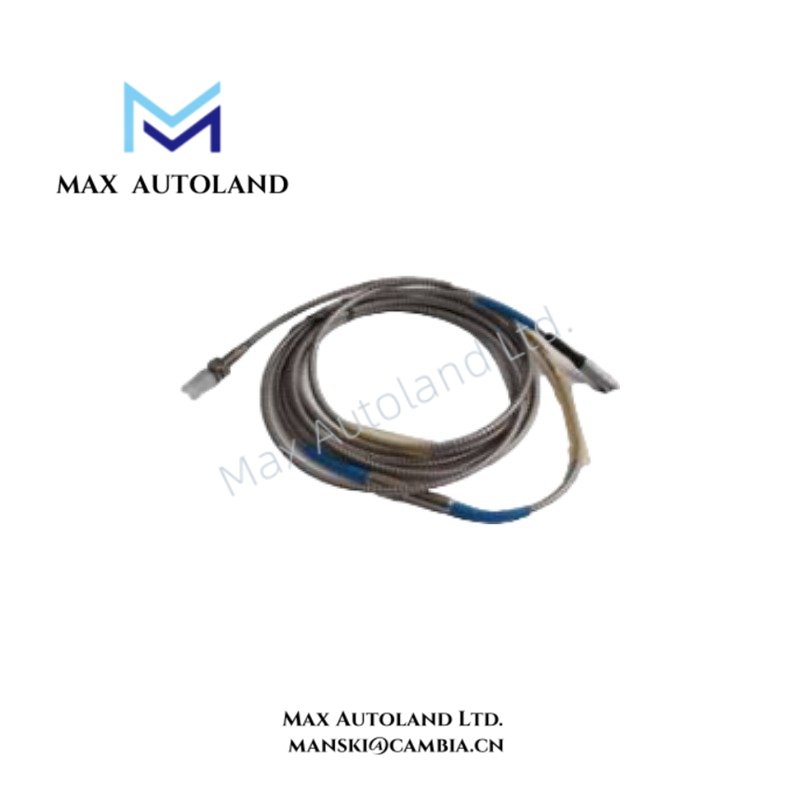
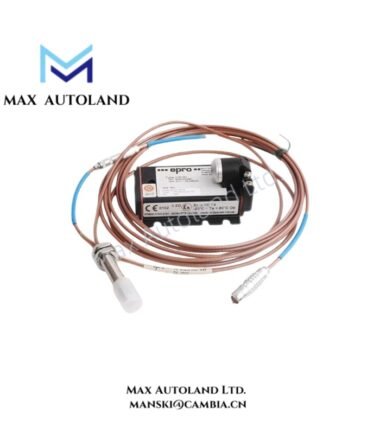
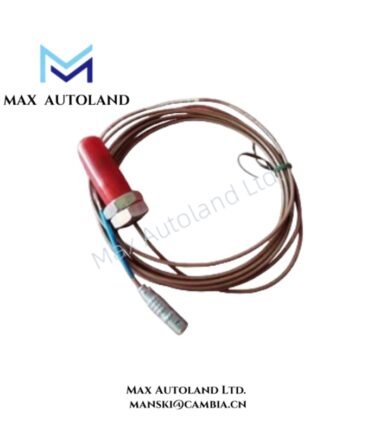
The Emerson Epro PR6423/10R-131 (-CN), also cataloged as the PR6423/10R-131 8 mm eddy current displacement sensor, measures shaft displacement through non-contact electromagnetic induction. Its reverse-mount configuration supports probe installation within compatible mechanical assemblies. The sensor provides displacement signals for turbomachinery vibration monitoring and rotor position measurement.
Hardware Specifications
| Parameter | Specification |
|---|---|
| Model | PR6423/10R-131 |
| Full Model | PR6423/10R-131 (-CN) |
| Brand | Emerson / Epro |
| Product Type | Eddy Current Displacement Sensor |
| Sensor Technology | Non-contact eddy current |
| Probe Tip Diameter | 8 mm |
| Mounting Configuration | Reverse mount |
| Linear Measurement Range | 2 mm |
| Static Measurement Range | +/- 1.0 mm |
| Dynamic Measurement Range | 0 to 500 um |
| Incremental Scale Factor (ISF) | 8 V/mm (203.2 mV/mil) |
| ISF Tolerance | +/- 5% at 0 to 45 deg C |
| Linearity Deviation (DSL) | +/- 0.025 mm (+/- 1 mil) |
| Frequency Response | 0 Hz to 20 kHz, system dependent |
| Target Material | Ferromagnetic steel |
| Factory Calibration Material | 42CrMo4 / AISI 4140 |
| Minimum Shaft Diameter | 25 mm |
| Case Thread Type | 3/8″-24 UNF |
| Operating Temperature | Sensor and cable: -35 to +180 deg C |
| Cable and Connector Temperature | -35 to +150 deg C |
| Protection Class | IP66, IEC 60529 |
| Housing Material | Stainless steel |
| Sensor Tip Material | PEEK |
| Weight | Approximately 100 g, excluding extended cable |
| Output | Displacement signal; electrical output configuration requires system verification |
| Application | Shaft vibration, displacement, eccentricity, and rotor position monitoring |
Eddy Current Measurement and Signal Scaling
The PR6423/10R-131 operates through electromagnetic coupling between the probe coil and a conductive shaft target. As the shaft moves relative to the probe, the coupling changes and produces a corresponding measurement signal.
The nominal incremental scale factor is 8 V/mm. Therefore, the associated measurement system must use the correct scaling configuration when converting probe output into displacement values.
The specified linear measurement range is 2 mm. However, the actual operating range depends on the probe position, target material, and compatible signal conditioning equipment.
The supplied specifications identify 42CrMo4 / AISI 4140 as the factory calibration material. Consequently, users should verify target material compatibility before commissioning.
Frequently Asked Questions
Q: What is the measurement range of the PR6423/10R-131?
A: The specified linear measurement range is 2 mm, with a static range of +/- 1.0 mm. The stated dynamic measurement range is 0 to 500 um.
Q: Can the PR6423/10R-131 measure shaft vibration without physical contact?
A: Yes. The eddy current sensing principle measures shaft displacement without mechanical contact between the probe tip and the target surface.
Q: What should engineers verify when replacing an existing probe?
A: Verify the complete model number, reverse-mount configuration, thread compatibility, cable termination, target material, and associated signal conditioner. Also confirm the measurement system scaling before returning the monitoring channel to service.
Field Installation Guidelines
- Confirm the complete probe designation and mechanical mounting arrangement before installation.
- Inspect the probe housing, sensing tip, cable, and connector for physical damage.
- Verify the 3/8″-24 UNF thread compatibility with the existing mounting assembly.
- Position the probe according to the applicable system installation documentation.
- Maintain clearance between the probe tip and rotating shaft throughout the operating range.
- Verify the target material against the factory calibration specification.
- Route sensor cables separately from high-power conductors where practical to reduce electrical interference.
- Maintain cable shielding and grounding according to the associated monitoring system installation requirements.
- Confirm probe gap voltage and signal scaling using the compatible signal conditioning equipment.
- Verify the measurement channel response before enabling machinery protection functions.


Reviews
There are no reviews yet.