


Overview
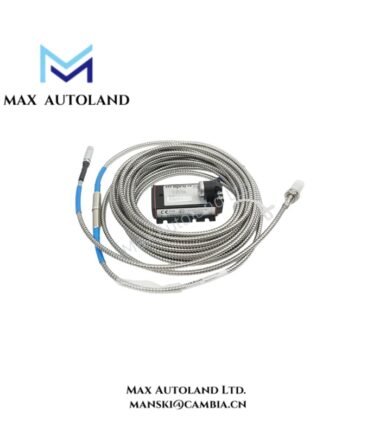
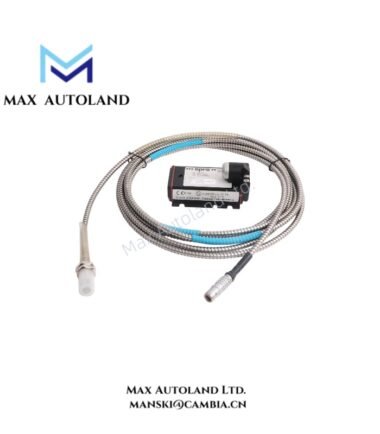
The PR6423/010-040-CN + CON021 is an eddy-current proximity measurement assembly designed to detect shaft displacement without physical contact. The configuration combines a PR6423 series proximity probe with a CON021 signal conditioning unit, converting mechanical movement into an electrical signal for monitoring and protection systems. Correct probe-driver matching and calibration are important when selecting the assembly for a specific measurement range.
Technical Specifications
| Parameter | Specification |
|---|---|
| Model | PR6423/010-040-CN + CON021 |
| Brand | Emerson Epro |
| Product Type | Eddy Current Proximity Probe System |
| Measurement Principle | Eddy-current, non-contact displacement measurement |
| Probe Model | PR6423/010-040-CN |
| Signal Converter | CON021 |
| Probe Diameter | 8 mm |
| Linear Measurement Range | 2 mm (80 mils) |
| Initial Air Gap | 0.5 mm (20 mils) |
| Incremental Scale Factor | 8 V/mm (203.2 mV/mil), +/- 5% |
| Scale Factor Temperature Condition | 0 to 45 deg C |
| Linearity Deviation | +/- 0.025 mm (+/- 1 mil) from best-fit straight line |
| Minimum Shaft Diameter | 25 mm |
| Target Material | Ferromagnetic steel |
| Probe Operating Temperature | -35 to +180 deg C |
| Cable and Connector Temperature | -35 to +150 deg C |
| Probe Protection Class | IP66 |
| Converter Supply Voltage | -23 to -32 VDC |
| Converter Output Range | -4 to -20 VDC |
| Converter Frequency Range | 0 to 20,000 Hz (-3 dB) |
| Converter Rise Time | Less than 15 us |
| Converter Operating Temperature | -30 to +100 deg C |
| Converter Protection Class | IP20 |
Measurement Principle and Signal Output
The PR6423 probe generates an electromagnetic field that interacts with a conductive, ferromagnetic shaft target. Changes in the probe-to-target gap alter the electrical characteristics of the sensing circuit. The CON021 converter processes this response and produces a voltage signal proportional to displacement within the calibrated linear range.
The specified scale factor is 8 V/mm, equivalent to 203.2 mV/mil, with a tolerance of +/- 5% under the stated temperature conditions. This relationship supports shaft displacement and vibration monitoring, provided the probe, converter and target material match the required measurement configuration.
Probe and Converter Configuration
The PR6423/010-040-CN and CON021 serve different functions within the assembly. The probe performs the physical measurement, while the CON021 supplies the associated signal conversion. Both components must be matched to the intended measuring range and electrical interface.
The specified converter uses a negative DC output range of -4 to -20 VDC and operates from a negative DC supply. Verify the receiving monitor’s input range and polarity before connecting the assembly. The stated converter supply and output values should not be replaced with generic 24 VDC or 0-20 V signals.
Installation and Measurement Conditions
The initial air gap is a key setup parameter because it determines the probe’s operating position within the linear measurement range. The specified 2 mm range and 0.5 mm initial air gap should be used when checking the installation and calibration requirements.
The probe and converter have different environmental ratings. The probe is rated IP66, whereas the CON021 converter is rated IP20. The converter therefore requires an installation location that provides suitable protection against dust and water ingress.
Frequently Asked Questions
Q: What does the PR6423/010-040-CN + CON021 assembly measure?
A: It measures shaft displacement without physical contact using eddy-current technology. The resulting signal can support displacement and vibration monitoring when connected to a compatible monitoring system.
Q: What is the linear measurement range of this assembly?
A: The specified linear measurement range is 2 mm (80 mils), with an initial air gap of 0.5 mm (20 mils). The probe must be calibrated and positioned correctly to maintain measurement within this range.
Q: Can the CON021 operate from a standard 24 VDC supply?
A: The documented supply range is -23 to -32 VDC. Confirm the converter’s supply requirements and output polarity before installation rather than assuming compatibility with a standard positive 24 VDC supply.


Reviews
There are no reviews yet.