
Overview
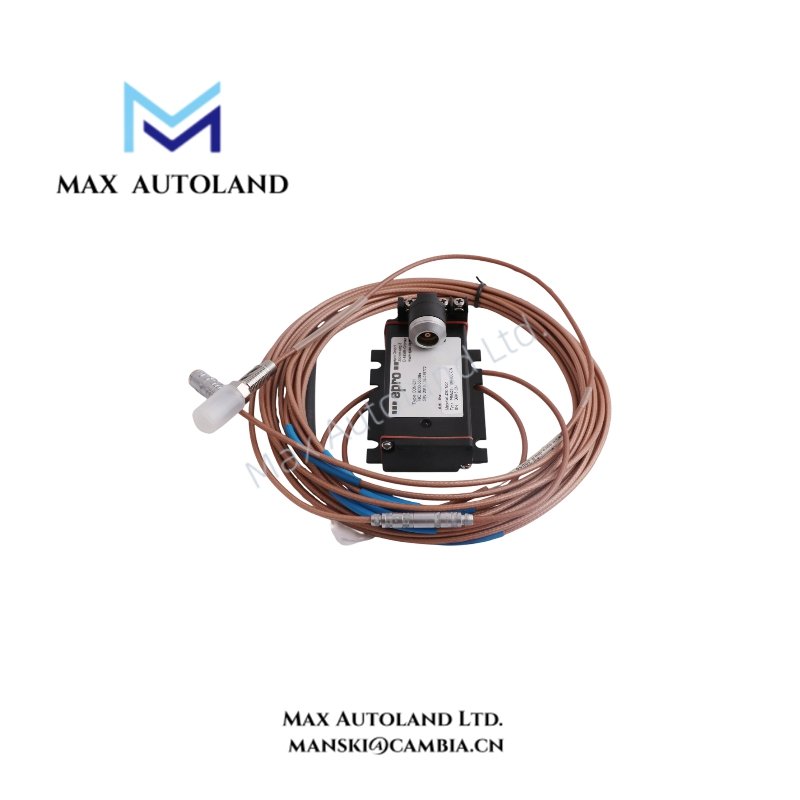
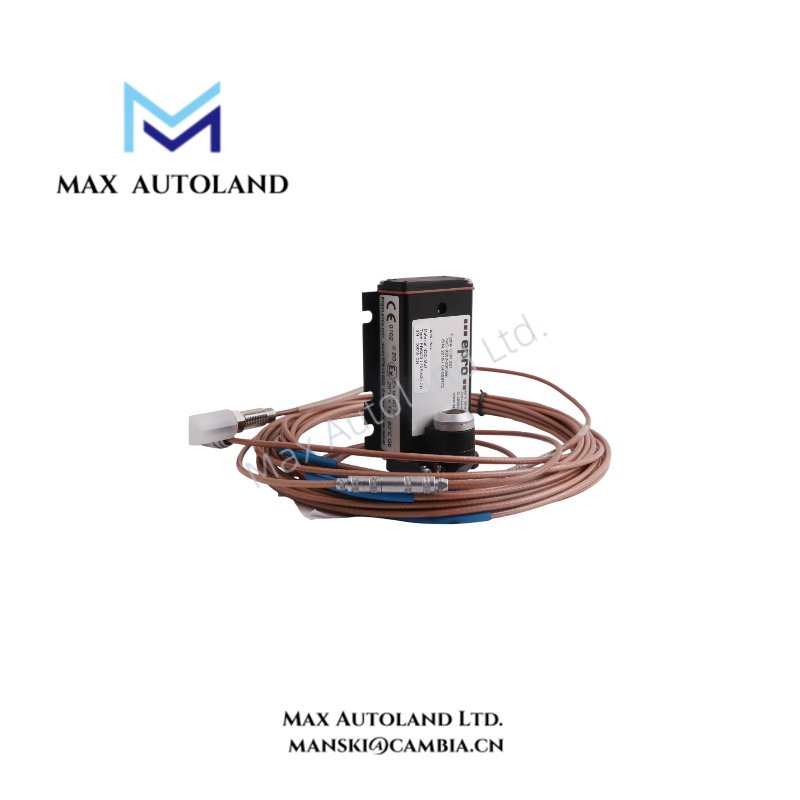
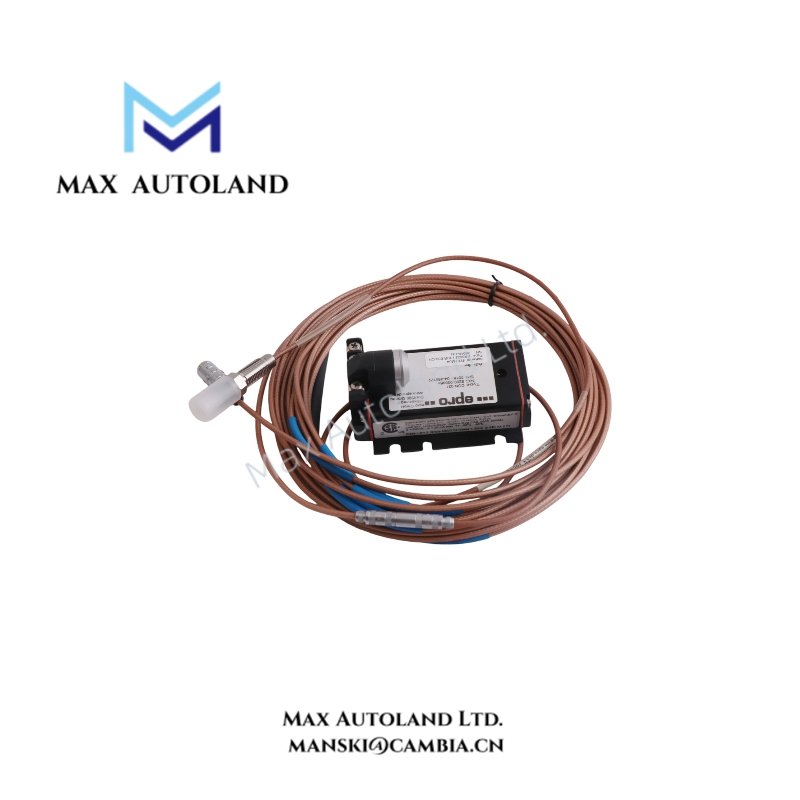
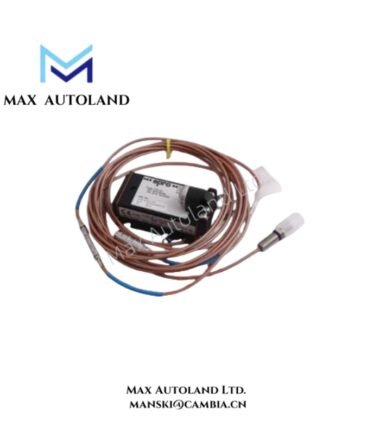
The EPRO CON021 + PR6423/10R-030-CN is an eddy-current measurement system consisting of a CON021 signal converter and a PR6423/10R-030-CN 8 mm proximity probe. It provides non-contact measurement of shaft displacement, position, eccentricity, and speed in rotating machinery. Furthermore, the system combines a 2 mm measurement range with a 0 to 20 kHz frequency response for dynamic shaft monitoring.
System Configuration
The system contains two separate components that perform different functions. The PR6423/10R-030-CN detects changes in the distance between the probe tip and the conductive shaft surface. Meanwhile, the CON021 converts the probe signal into an electrical output for connection to monitoring or measurement equipment.
- PR6423/10R-030-CN: 8 mm eddy-current proximity sensor for shaft displacement measurement.
- CON021: Eddy-current signal converter that processes signals from compatible PR6422 through PR6426 sensors.
PR6423/10R-030-CN Sensor Specifications
| Parameter | Specification |
|---|---|
| Model | PR6423/10R-030-CN |
| Brand | EPRO |
| Product Type | 8 mm Eddy Current Proximity Sensor |
| Measurement Range | 2 mm (80 mils) |
| Initial Air Gap | 0.5 mm (20 mils) |
| Incremental Scale Factor (ISF) | 8 V/mm (203.2 mV/mil) |
| ISF Tolerance | +/- 5% at 0 to 45 deg C |
| Deviation from Best Fit Straight Line (DSL) | +/- 0.025 mm (+/- 1 mil) at 0 to 45 deg C |
| Minimum Shaft Diameter | 25 mm |
| Target Material | Ferromagnetic steel (42CrMo4) |
| Environmental Protection | IP66, IEC 60529 |
| Operating Temperature | -35 to 200 deg C |
| Weight | Approx. 100 g |
CON021 Signal Converter Specifications
| Parameter | Specification |
|---|---|
| Model | CON021 |
| Brand | EPRO |
| Product Type | Eddy-Current Signal Converter |
| Sensor Input | PR6422 through PR6426 eddy-current sensors |
| Sensor Connector | Self-locking LEMO socket |
| Nominal Supply Voltage | -24 VDC |
| Supply Voltage Range | -23 to -32 VDC |
| Standard Output | -4 to -20 V or -2 to -18 V |
| Frequency Response | 0 to 20 kHz |
| Rise Time | Less than 15 us |
| Gain Error | Less than 1% from 0 to 1000 Hz |
| Operating Temperature | -30 to +100 deg C |
Measurement Principle and Signal Processing
The PR6423/10R-030-CN uses the eddy-current principle to measure the distance between the probe and a ferromagnetic target. As the shaft moves, the gap changes and produces a corresponding change in the probe signal.
Furthermore, the CON021 processes this signal and provides a voltage output proportional to the measured displacement. Its frequency response of 0 to 20 kHz supports dynamic signal measurement, while the specified rise time of less than 15 us describes its response to rapid input changes.
Measurement Conditions
The sensor specifications include temperature-dependent accuracy conditions. The ISF tolerance and DSL deviation apply specifically within the 0 to 45 deg C range. Therefore, these accuracy figures should not be assumed to apply across the entire probe operating temperature range of -35 to 200 deg C.
In addition, the specified target material is 42CrMo4 ferromagnetic steel, with a minimum shaft diameter of 25 mm. Target material and geometry should be considered when evaluating measurement performance.
Frequently Asked Questions
Q: What is the difference between PR6423/10R-030-CN and CON021?
A: The PR6423/10R-030-CN is the proximity sensor that detects shaft displacement. The CON021 is the signal converter that processes the sensor signal and provides a voltage output.
Q: Can the CON021 work with other EPRO proximity sensors?
A: The specified sensor input supports PR6422 through PR6426 eddy-current sensors. However, the exact probe configuration and electrical matching should be checked before replacing an existing sensor.
Q: What is the measurement range of this system?
A: The PR6423/10R-030-CN has a nominal measurement range of 2 mm (80 mils), with an initial air gap of 0.5 mm (20 mils). Its stated ISF and DSL accuracy specifications apply at temperatures between 0 and 45 deg C.


Reviews
There are no reviews yet.