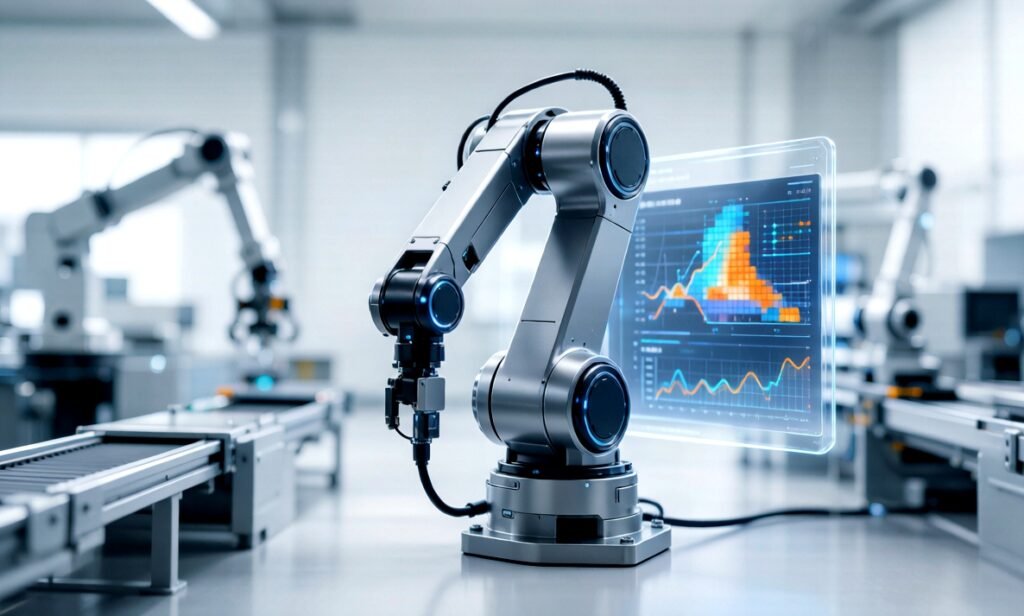
AI-Driven Industrial Automation: Toward Autonomous Factories in 2026
From Automation to Autonomy: The Industry’s New Direction
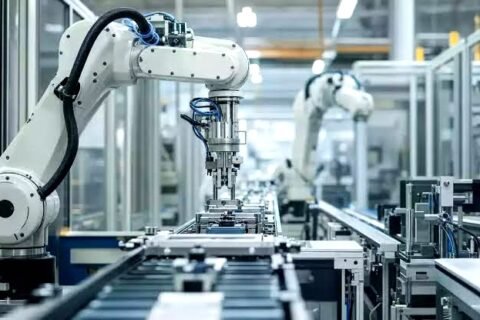
Industrial automation is no longer just about controlling machines—it is rapidly shifting toward systems that can interpret, predict, and act with minimal human intervention. The mid-2026 trajectory shows a clear convergence of AI-driven decision-making and industrial control systems, pushing factories closer to semi-autonomous operations.
From my perspective as an automation engineer, the real transformation is not in the “smartness” of individual devices, but in how well entire production ecosystems are being synchronized through data. Many plants still underestimate how fragmented data pipelines limit AI performance on the shop floor.
Honeywell’s Data-First Strategy Toward Autonomous Operations
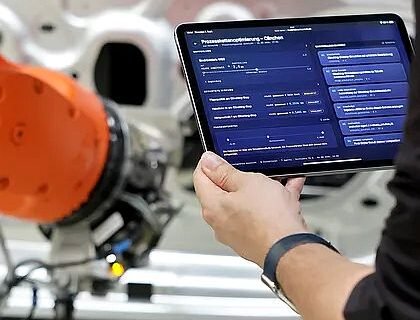
Honeywell is placing its long-term bet on building a strong data foundation before scaling AI-driven autonomy. The company’s approach emphasizes predictive and prescriptive analytics aimed at reducing unplanned downtime and moving toward self-optimizing assets.
What stands out here is the architectural discipline behind the strategy. Instead of rushing into advanced AI features, Honeywell is reinforcing the idea that unreliable or poorly structured industrial data will inevitably lead to fragile automation outcomes.
In practice, I’ve seen many plants struggle at exactly this point—AI pilots succeed in isolated environments but fail when exposed to real operational noise. Honeywell’s approach acknowledges this gap more directly than most vendors.
Vertical AI in Action: Infinite Uptime and Crane-Centric Intelligence
Infinite Uptime is taking a more focused route by developing domain-specific AI, particularly with its Crane AI Shield solution for heavy industrial crane systems.
Unlike generic predictive maintenance platforms, this approach recognizes that cranes have highly specialized failure patterns and safety constraints. Training models specifically on crane behavior improves detection precision and reduces false positives that often plague generalized systems.
From an engineering standpoint, this shift toward vertical AI is significant. It suggests the industry is moving away from “one-size-fits-all” predictive models toward tightly scoped intelligence layers optimized for specific assets.
Compliance Becomes a Competitive Advantage
Certification is increasingly shaping procurement decisions, not just technical specifications. Schneider Electric achieving NEMA certification across U.S. manufacturing sites reflects how compliance is becoming embedded in product strategy rather than treated as an afterthought.
Similarly, Carlo Gavazzi expanding certification coverage for its soft starter product line highlights how regulatory alignment directly enables market expansion into new regions and industries.
In my view, certification is quietly becoming a form of “industrial currency.” Vendors that can demonstrate consistent compliance readiness are increasingly favored in risk-sensitive sectors like energy, water treatment, and heavy manufacturing.
Quality Systems Under Pressure in High-Speed Manufacturing
As production throughput increases, traditional quality control systems are struggling to keep pace. Manual inspection and post-process validation are no longer sufficient in high-speed environments, pushing manufacturers toward inline inspection, sensor fusion, and AI-based quality assurance.
What’s often overlooked is that quality automation is not just a technical upgrade—it is a throughput enabler. Without it, higher production speed simply amplifies defect rates rather than improving output efficiency.
From field experience, the biggest bottleneck is rarely sensor capability; it is integration latency between quality systems and production control loops.
My Take: The Real Battle Is for the Industrial Data Layer
Looking across all these developments, the competitive frontier is clearly shifting away from hardware differentiation and toward control over the industrial data layer.
The winners will not necessarily be those with the most advanced sensors or AI models, but those who can ensure clean, contextual, and continuously enriched operational data across the entire asset lifecycle.
Another important trend is specialization. General-purpose industrial AI is gradually giving way to asset-specific intelligence, where domain knowledge matters as much as algorithmic sophistication.
In short, industrial automation is evolving into a layered intelligence system—where hardware stability, data integrity, and AI specificity must align for true operational autonomy.