The Power of IT-OT Convergence in Driving Manufacturing Innovation
IT/OT Convergence in Industrial Automation and Factory Automation Transformation
Manufacturers are rapidly merging Information Technology (IT) and Operational Technology (OT).
This shift reshapes modern industrial automation and factory automation strategies.
Moreover, it connects enterprise systems with shop floor control environments.
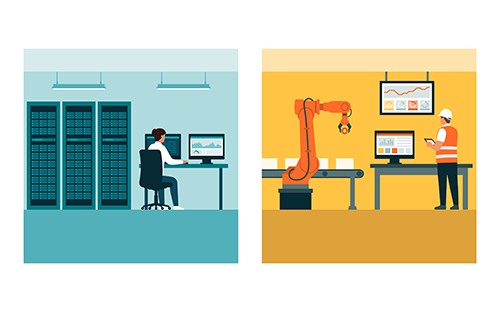
IT systems handle data, analytics, and enterprise planning.
OT systems manage physical operations using PLC, DCS, and SCADA control systems.
Therefore, convergence creates a unified data and operations ecosystem.
In addition, companies such as Dassault Systèmes and Schneider Electric support this transformation through digital manufacturing platforms.
These platforms improve decision-making speed and production visibility.
As a result, manufacturers gain stronger competitiveness in global markets.
What IT/OT Integration Means for Industrial Automation Systems
IT/OT convergence integrates two previously separate technology domains.
IT focuses on ERP systems, PLM platforms, and enterprise analytics.
OT focuses on sensors, PLCs, industrial control systems, and real-time machine operations.
Moreover, this integration enables continuous data flow from machines to cloud platforms.
Therefore, engineers can analyze production performance in real time.
In addition, operators can adjust processes based on live feedback.
From an industrial automation perspective, this shift improves coordination between planning and execution layers.
However, successful integration requires strong data architecture and cybersecurity design.
Virtual Twin and Digital Twin in Control Systems Optimization
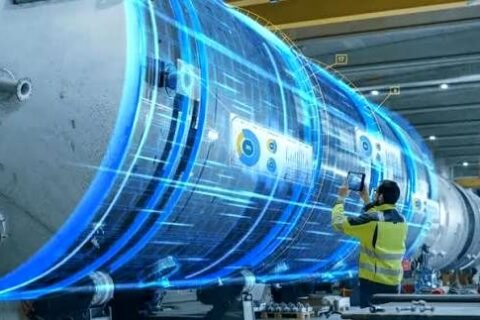
The Virtual Twin concept extends traditional digital twin technology.
It creates a dynamic digital replica of physical assets and production systems.
Moreover, it connects engineering, manufacturing, and operational data in real time.
For example, platforms like DELMIA Apriso help synchronize global manufacturing operations.
These systems improve visibility across distributed factory automation networks.
Therefore, companies can simulate production scenarios before execution.
In addition, Virtual Twins support predictive modeling and performance optimization.
As a result, manufacturers reduce downtime and improve system reliability.
This approach also strengthens decision-making in control systems engineering.
Unified Namespace and Edge Computing in Industrial Automation
Modern IT/OT convergence relies on unified data architectures.
Unified Namespace (UNS) replaces traditional hierarchical communication models like Purdue architecture.
Moreover, it enables real-time data sharing across enterprise systems.
Edge computing also plays a critical role in factory automation.
It processes data near machines and reduces latency significantly.
Therefore, control systems respond faster to production changes.
In addition, this architecture supports PLC and SCADA integration with cloud analytics.
As a result, manufacturers achieve faster operational responsiveness and higher efficiency.
Business Value of IT/OT Convergence in Manufacturing Operations
IT/OT integration delivers measurable improvements in industrial performance.
Predictive maintenance reduces unplanned downtime by up to 40 percent.
Moreover, automation reduces operational costs by 15 to 20 percent.
Real-time dashboards help engineers identify production bottlenecks quickly.
Therefore, decision-making becomes faster and more accurate.
In addition, energy monitoring improves sustainability performance in factories.
From my professional perspective, the real value lies in operational transparency.
When IT and OT systems share data, manufacturers gain end-to-end visibility.
However, many organizations still struggle with system interoperability challenges.
Industry Challenges in Industrial Automation Digital Transformation
Despite strong benefits, IT/OT convergence faces several barriers.
Cybersecurity risks remain a major concern in connected control systems.
According to industry reports, over 20 percent of OT environments experienced cyberattacks recently.
Moreover, legacy PLC and DCS systems often lack modern connectivity.
Therefore, companies must adopt incremental modernization strategies.
Event-driven architectures such as MQTT help bridge this gap.
In addition, cultural resistance slows digital transformation in many factories.
Around half of organizations still separate IT and OT teams.
As a result, collaboration gaps reduce efficiency in automation projects.
Skill shortages also limit adoption of advanced industrial automation systems.
Therefore, companies invest in cross-functional training and digital upskilling programs.
Strategic Outlook for Smart Manufacturing and Control Systems
IT/OT convergence is now a strategic requirement, not an option.
Moreover, Virtual Twin technology strengthens long-term manufacturing competitiveness.
Companies like Siemens, Rockwell Automation, and Dassault Systèmes lead this transformation.
In addition, integration of PLC, DCS, and cloud systems enables intelligent production.
Therefore, factories become more adaptive and resilient.
From an expert standpoint, the future of industrial automation depends on data convergence.
Manufacturers that delay integration risk losing competitiveness.
However, organizations that invest early will lead smart manufacturing innovation.
Application Scenarios in Factory Automation and Industrial Control
IT/OT convergence applies across multiple industrial environments.
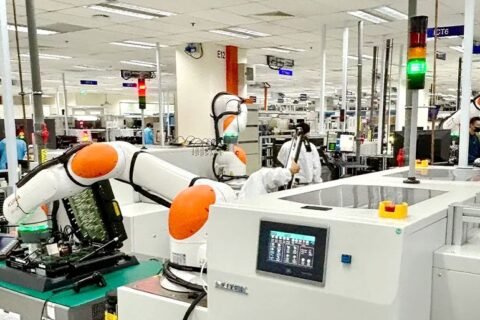
For example, semiconductor manufacturing uses real-time machine vision and control systems.
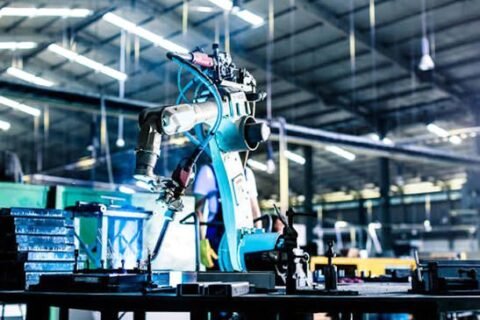
Moreover, automotive factories use PLC-driven robotics with cloud analytics.
In energy systems, DCS platforms optimize plant performance and safety.
In addition, pharmaceutical manufacturing uses digital twins for compliance and quality control.
Therefore, convergence supports both high-precision and high-volume industries.
Overall, integrated IT/OT architectures define the future of industrial automation.
They create smarter, more efficient, and more resilient manufacturing ecosystems.