
Global Manufacturing Sector Growth Slows in Q2 Amid Trade Uncertainty
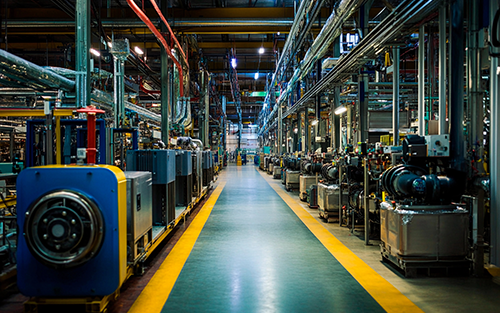 Manufacturing Sector Growth Remains Stagnant in Q2 Amid Ongoing Uncertainty
Stagnant Growth in Industrial Automation and Factory Output
In Q2 2025, global manufacturing growth remained stagnant, with minimal improvement since Q1. Industrial automation investments and PLC/DCS upgrades show caution due to trade policy uncertainties. However, despite fears of a recession from new US tariffs, manufacturing output continues to stabilize. Analysts project modest global growth of approximately 2% in 2025, led by China and the United States, while Europe faces slight contraction.US Tariffs and Market Uncertainty Affect Global Production
The ongoing US tariff uncertainty has dampened capital expenditure across the industrial sector. Companies hesitate to place new orders for machinery and control systems, slowing output in factory automation and DCS-related applications. Nevertheless, nearshoring initiatives in the Americas could provide opportunities for reshoring production and stabilizing regional growth. Uncertainty around US tariffs seems to be dampening growth in the global manufacturing industry
Regional Variations in Manufacturing Performance
Europe shows mixed results: Germany, France, the UK, and Italy experience stagnation, whereas smaller economies like Poland, Spain, and the Czech Republic gain momentum. In contrast, APAC nations, particularly semiconductor and electronics hubs, benefit from AI-driven automation investments and geopolitical diversification. As a result, industrial automation growth in Asia-Pacific remains strong, supporting PLC and DCS deployment.Machinery Sector Faces Destocking Challenges
Elevated interest rates over recent years led to machinery overproduction, resulting in inventory buildup. Destocking is slowing the sector’s recovery, although recent interest rate cuts may create opportunities for renewed investments. Moreover, some pre-tariff machinery orders temporarily increased, highlighting the sector’s sensitivity to trade policy changes.Expert Commentary on Industrial Automation Trends
Jack Loughney, lead analyst at Interact Analysis, states: “Despite tariff-driven uncertainty, the global manufacturing sector is expected to achieve 2.1% growth in 2025. Companies should focus on automation and factory optimization to mitigate risk.” Industrial automation, including PLC and DCS systems, remains a critical driver for maintaining output efficiency during market fluctuations.Strategic Outlook and Recommendations
Manufacturers should evaluate automation and control system upgrades to enhance operational resilience. In addition, nearshoring and regional diversification of production can buffer against trade uncertainty. As industrial technology adoption accelerates, companies integrating PLC, DCS, and smart factory solutions will be better positioned for sustained growth.Application Scenarios and Use Cases
- Factory Automation: Implement PLC-based control systems to optimize production line efficiency.
- DCS Integration: Deploy distributed control systems in chemical, power, or energy sectors to improve process stability.
- Industrial Machinery: Utilize predictive maintenance and automation to reduce downtime and inventory risks.
- Global Supply Chain: Leverage nearshoring and AI-driven automation for responsive and resilient manufacturing networks.


