SVS-Vistek SWIR Cameras Identify Subsurface Defects in Semiconductor Wafers
Importance of Subsurface Inspection in Semiconductor Fabrication
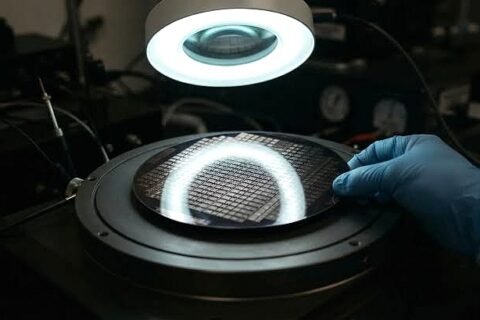
In semiconductor production, identifying both surface and subsurface defects is critical. Flaws in wafers, ingots, or dies can degrade electrical performance, reduce structural integrity, and lower downstream yield. Therefore, precise optical inspection is essential to maintain quality and reliability in advanced chips.
Why SWIR Cameras Are Ideal for Semiconductor Inspection
Short Wavelength Infra-Red (SWIR) cameras are uniquely suited for detecting internal defects. Silicon is transparent to SWIR wavelengths around 1,100 nm, allowing engineers to visualize micro-cracks, particles, and impurities invisible to visible-light cameras. As a result, manufacturers can identify critical flaws without physically disrupting the wafer.
The Foundation of Modern Electronics
Silicon wafers form the core of nearly all electronic devices, from computers and smartphones to industrial robots and medical equipment. With growing demand for AI and high-performance computing chips, global semiconductor sales are projected to reach $728 billion. In this high-volume industry, even minor defects can create costly chain reactions, emphasizing the role of advanced inspection systems.
SVS-Vistek SenSWIR FXO Camera Features
SVS-Vistek’s SenSWIR FXO cameras provide high-resolution imaging up to 5.2 megapixels. Their extended 400–1700 nm wavelength range captures both visible and SWIR images simultaneously, eliminating the need for dual-camera setups. High-speed interfaces like 10GigE Vision and CoaXPress CXP-12 ensure rapid sensor readout, accelerating inspection processes in automated manufacturing environments.
Precision Imaging for Defect Detection
Models such as the SenSWIR FXO 992 (5.2MP @ 132 fps) and FXO 993 (3.1MP @ 173 fps) feature 3.45 µm pixels, ideal for capturing fine details with C-Mount lenses. Two-Point Non-Uniformity Correction enhances image homogeneity, while advanced thermal management ensures consistent dynamic range. These features allow semiconductor fabs to detect subtle defects reliably.
Enhanced Functionality for Industrial Automation
SVS-Vistek cameras integrate seamlessly into factory automation systems. GenICam 3.0 and GenTL provide standardized software interfaces, and the built-in 4-channel strobe controller supports complex illumination setups. Optional Thermoelectric Cooling (TEC) reduces sensor noise, further improving image quality. Such capabilities align with modern PLC, DCS, and control system environments.
Expert Insight: Digital Imaging in Semiconductor Industry
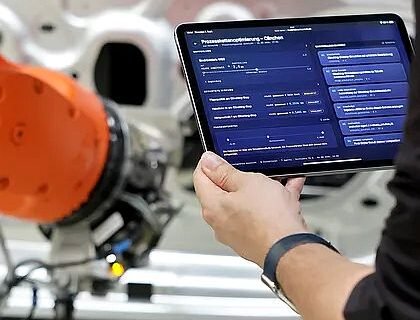
SWIR cameras represent a broader trend in industrial automation: using virtual and optical inspection to reduce defects, minimize rework, and increase throughput. Implementing these technologies enables manufacturers to improve yield, ensure quality, and maintain competitive advantage. In addition, SWIR imaging contributes to sustainable practices by reducing the need for physical testing.
Application Scenario: Improving Yield in Automated Chip Production
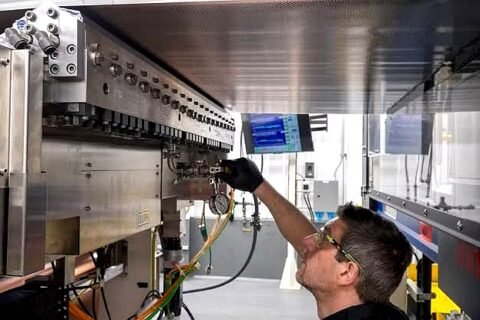
In practice, semiconductor fabs can integrate SWIR cameras into automated inspection lines. For instance, wafers can be scanned at high speeds to detect micro-cracks or impurities before packaging. Combined with PLC-controlled transport and DCS-monitored process variables, this approach enhances efficiency and reduces scrap rates. This solution demonstrates how advanced imaging complements factory automation and control systems.