Embracing Network Segmentation for Warehouse Cybersecurity
Cybersecurity Challenges in Automated Warehouses
Warehouse automation accelerates efficiency and productivity in modern industrial environments. However, integrating industrial automation, PLCs, and DCS systems with IT networks exposes facilities to cyberattacks. The convergence of operational technology (OT) and information technology (IT) creates new vulnerabilities, demanding proactive security measures.
Understanding Network Segmentation for Industrial Control Systems
Network segmentation divides an industrial network into smaller, isolated zones. Each segment functions independently, restricting access and controlling data flow. Microsegmentation takes this further by defining permissions at the application layer. As a result, critical OT systems gain additional protection against unauthorized access and lateral movement by attackers.
Expert Insight: Combining Segmentation with Access Controls
John Adams, CEO of Mission Secure, emphasizes that network segmentation must align with traffic requirements. Deploying firewalls and filtering traffic between segments reduces exposure to sensitive data. However, he warns that segmentation alone cannot prevent attacks—it primarily slows adversaries and limits damage. Therefore, warehouses should integrate segmentation into a broader cybersecurity strategy.
How Network Segmentation Operates in Warehouses
Managers can implement segmentation using VLANs, access control lists, or firewalls. Modern software-defined access technology allows dynamic grouping of network traffic and automated enforcement of security policies. Moreover, adaptive segmentation can respond to changes in device security posture, enhancing overall resilience against cyberthreats.
The Growing Need for Segmentation in Automated Facilities
The warehouse automation market reached an estimated $24.09 billion in 2025, fueled by benefits like 99% error reduction, 60% labor optimization, and 30% productivity gains. However, as industrial automation adoption grows, cyber risk rises. Attackers exploit complex, high-volume network traffic, making detection increasingly challenging. Segmentation helps maintain operational continuity while mitigating these risks.
Benefits of Segmenting Industrial Networks
Segmenting networks prevents lateral movement, limiting attackers’ ability to compromise multiple systems. In addition, it improves network performance and supports business continuity during security incidents. By tailoring controls to device function and risk level, facilities balance protection with operational efficiency, avoiding congestion in critical control systems.
Implementing Effective Network Segmentation
Warehouse managers can follow three steps to deploy segmentation successfully:
- Map the Network and Data Flow
Identify all devices and their connections. Understand which assets are critical and the types of data they exchange. Mapping ensures segmentation strategies target high-risk areas effectively. - Define Segmentation Policies
Segment by device type, sensitivity, criticality, or department function. Manual VLAN configuration works, but software-defined access automates enforcement. Adaptive approaches adjust to security posture changes, although centralized controllers may create potential weaknesses. - Monitor and Maintain Controls
Segmentation requires ongoing management. Regular audits and automated monitoring using AI or robotic process automation can maintain security without overloading IT staff. Continuous oversight ensures that protection adapts to evolving industrial threats.
Enhancing Security Posture in Industrial Automation
Industrial automation networks, including PLCs, DCS, and factory control systems, increasingly face cyber risks. Network segmentation is not a complete solution, but it significantly improves a facility’s resilience. By limiting attack surfaces and isolating high-priority systems, warehouses can safeguard both IT and OT assets while maintaining operational efficiency.
Application Scenario: Protecting Critical Warehouse Systems
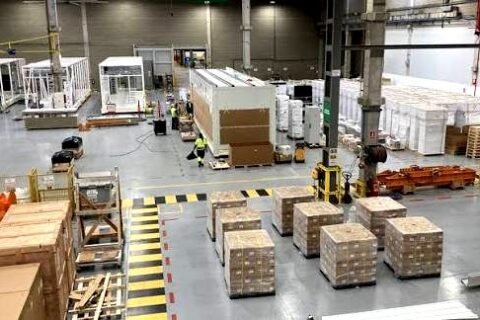
For example, a fully automated distribution center can segment inventory management systems from robotics control networks. Segmentation ensures that a compromise in one network does not impact other critical systems. Similarly, industrial facilities can adopt this approach to secure manufacturing lines, control panels, or energy management systems, demonstrating the versatility of segmentation in industrial automation.