Honeywell Technology to Optimize Production at AMIGO LNG Export Terminal in Mexico
Enhancing LNG Productivity through Modular Pretreatment Technology
Honeywell will deliver its modular LNG pretreatment system and advanced control solutions to the AMIGO LNG export terminal in Guaymas, Sonora, Mexico. This joint venture, established by Epcilon LNG LLC and LNG Alliance Pte Ltd., aims to improve production performance and support the growth of clean energy. The initiative aligns with global energy diversification goals and reduces industrial emissions through optimized processing.
Honeywell’s modular pretreatment technology removes contaminants before the liquefaction stage. Therefore, it protects key equipment and lengthens operating life cycles. Moreover, the modular architecture accelerates installation and simplifies future expansion, which minimizes construction delays and reduces project execution risk. In industrial automation, modular deployment has become a strategic advantage for operators seeking faster time to market and reliable capacity scaling.
Integrated ICSS and Distributed Control Systems Improve Operational Safety
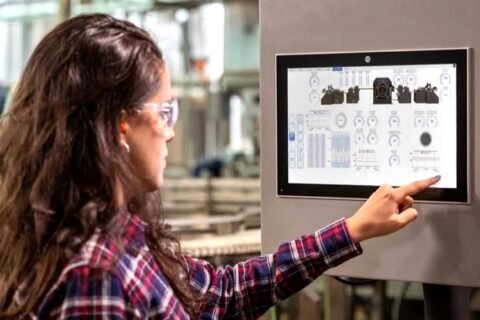
Honeywell will also implement its Integrated Control and Safety Systems (ICSS) and the Experion Distributed Control System (DCS). These industrial control systems provide unified command over all LNG plant functions. In addition, the automation platform integrates fire and gas detection with real-time monitoring and emergency response logic.
As a result, plant personnel gain complete situational awareness, strengthened asset protection, and improved risk management. Companies worldwide rely on advanced DCS architectures to enhance system availability and maintain safe operations under demanding process conditions.
Accelerating LNG Delivery and Competitive Export Capability
According to Dr. Muthu Chezhian, CEO of LNG Alliance, adopting proven modular process technology significantly shortens construction schedules. Therefore, the AMIGO facility expects to begin LNG exports sooner and at a more competitive cost. The project will also support Mexico’s industrial economy by generating employment and creating long-term energy infrastructure.
From an industrial automation perspective, faster deployment and predictable commissioning schedules represent a major competitive advantage for large-scale energy projects. This approach helps project teams mitigate risks commonly associated with traditional construction and integration.
Supporting Mexico’s National Energy Strategy
The AMIGO LNG project reinforces Mexico’s “Plan Sonora,” which positions Sonora as a regional energy hub. Designed to export up to 7.8 MTPA, the terminal will begin commercial operations in 2028. Moreover, it will expand Mexico’s role in international LNG trade by offering flexible delivery and reliable export capability.
This project demonstrates how integrated automation, DCS platforms, and modular construction strategies accelerate national energy initiatives while maintaining strong safety and quality standards.
Honeywell’s Global Leadership in LNG Automation
Honeywell remains a recognized authority in industrial automation and LNG processing. The company provides complete technology coverage from pretreatment to liquefaction and control systems. Its modular systems are fabricated off-site and shipped ready for installation, which reduces on-site construction complexity and schedule risk.
Globally, Honeywell solutions pretreat about 40% of LNG, support automation for more than 80 baseload production trains, and deliver liquefaction technology to nearly two-thirds of global capacity. These achievements highlight Honeywell’s long-standing expertise in large-scale industrial energy infrastructure.
Author Insights: Modular Automation Accelerates Industry Transformation
The AMIGO LNG terminal illustrates a clear trend: modular automation and integrated DCS platforms are becoming essential tools for industrial project execution. Operators gain immediate benefits such as rapid deployment, real-time visibility, and predictable performance. In my experience in the industrial automation field, modular execution can reduce commissioning time significantly, while integrated control systems improve reliability and lower lifecycle cost.
Forward-looking energy infrastructure will increasingly depend on modular engineering, standardized control interfaces, and digital monitoring to meet efficiency and sustainability targets.
Application Scenarios and Industrial Use Cases
- LNG liquefaction train process control and substation automation
- Real-time SCADA integration for safety, fire, and gas detection
- Smart plant automation with PLC, DCS, and industrial control networks
- Modular deployment strategies to shorten construction and commissioning schedules
- Remote operations and digital performance monitoring for large-scale energy plants